







AI & Emerging Tech
TCS in advanced talks with global tech firms to build more AI data centres in India






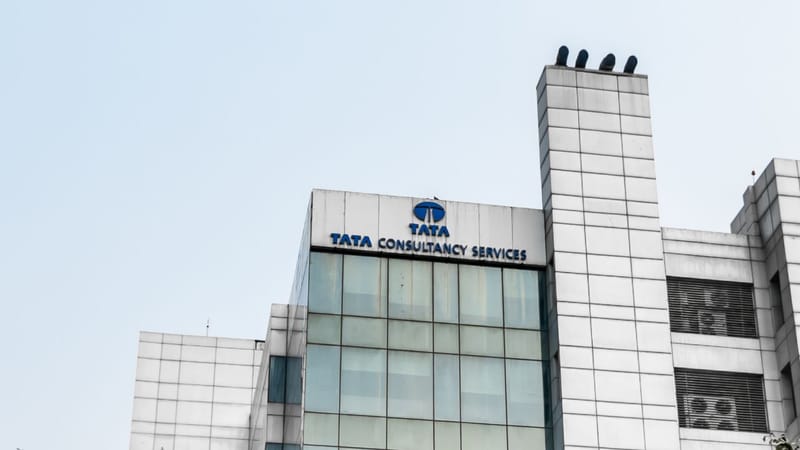
TCS is negotiating with global hyperscalers to expand AI data centre capacity as India races to meet rising demand for computing infrastructure.
Tata Consultancy Services Ltd (TCS) is in advanced discussions with global technology firms to build additional artificial intelligence data centres in India, signalling a deeper push by the country’s largest IT services company into AI infrastructure.
Chief executive K Krithivasan said the company is negotiating with multiple hyperscale technology providers, according to an interview with Bloomberg. The move follows TCS’s recent agreement with OpenAI to build AI data centres in India and reflects the company’s strategy to reposition itself around the rapidly expanding AI ecosystem.
“We are in advanced discussions with multiple hyperscalers,” Krithivasan told Bloomberg in an interview in London.
India’s growing AI infrastructure gap
The discussions come as India faces a widening gap between projected AI infrastructure demand and currently announced capacity.
According to Bloomberg, India is expected to require around 10 gigawatts of AI data centre capacity by 2030, driven by the rapid adoption of artificial intelligence across industries. So far, only 5 to 6 gigawatts of capacity have been announced, leaving a substantial shortfall.
“There is going to be a lot of latent demand or unmet demand by 2030,” Krithivasan said, highlighting the scale of the opportunity for infrastructure developers and technology providers.
TCS aims to position itself as a key partner in closing that gap by helping design, build and operate AI data centres capable of supporting advanced computing workloads.
Strategic pivot toward AI infrastructure
The initiative marks a broader shift for TCS, historically known for providing technology services to global clients such as banks, airlines and large enterprises.
The company has been under pressure from rising competition, changes in US visa policies and the disruptive potential of artificial intelligence, according to Bloomberg. As clients redirect budgets toward AI investments, IT services firms are being forced to rethink their traditional outsourcing models.
Bloomberg Intelligence analyst Anurag Rana noted that client spending patterns are changing, with companies prioritising AI infrastructure and innovation. “Clients are cutting budgets because they’re investing in AI. If clients are not spending, companies like TCS cannot do much,” Rana said, according to Bloomberg.
Industry observers say building AI infrastructure could allow TCS to move further up the technology value chain.
Partnerships and large-scale investments
At the India AI Impact Summit in February, TCS announced a partnership with OpenAI to develop data centres ranging from 100 megawatts to 1 gigawatt in capacity.
A 1-gigawatt facility could cost between $35 billion and $50 billion, according to Bloomberg. TCS expects its own investment in such projects to be around $1 billion, with partner investment from private equity firm TPG Inc and additional funding raised through debt financing.
Krithivasan said the long-term objective is to create end-to-end AI capabilities, combining infrastructure, model training and enterprise applications.
“The real payoff is distinguishing ourselves with AI infrastructure and access to leading models and Nvidia chips,” he told Bloomberg. “We can offer end-to-end services: infrastructure, model training, agents, and application intelligence.”
Talent and future growth
TCS’s AI push is unfolding alongside continued workforce expansion. The company employs about 600,000 people globally and hired around 85,000 employees in 2025, while already issuing 20,000 job offers for 2026, according to Bloomberg.
Krithivasan indicated that the company will increasingly look for employees with creative, analytical and business-oriented skills as artificial intelligence reshapes the technology workforce.
Market response and outlook
Despite its strategic pivot, TCS has faced investor scrutiny as markets try to assess the company’s AI strategy. According to Bloomberg, the firm’s shares have fallen about 20% this year and roughly 23% since Krithivasan became chief executive in June 2023.
On Thursday, TCS shares closed 0.35% lower at ₹2,578.80 on the National Stock Exchange, reflecting broader market volatility.
As the race to build global AI infrastructure intensifies, TCS’s discussions with hyperscalers signal that India could become a major hub for AI computing capacity over the coming decade.
Topics
Author
Loading...