







Appointments
YES Bank names SBI veteran Vinay Tonse as next CEO






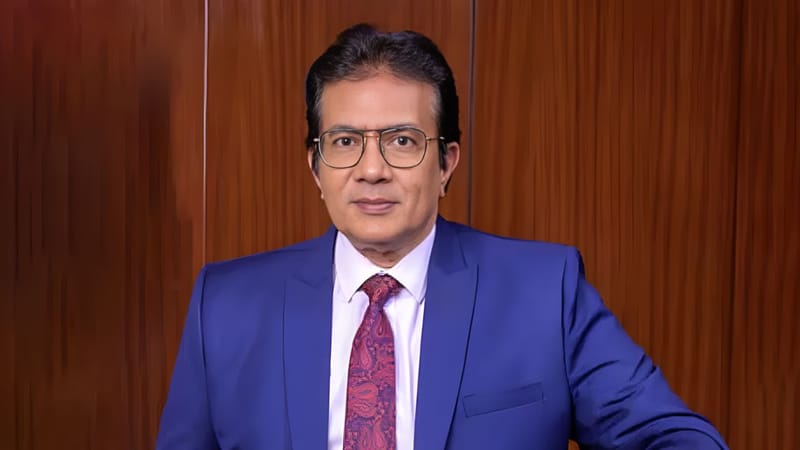
YES Bank appoints Vinay Tonse as CEO-designate for a three-year term, marking a leadership transition after its stabilisation phase.
YES Bank’s decision to appoint Vinay Muralidhar Tonse as its next Managing Director and Chief Executive Officer marks a strategic pivot—from recovery to expansion—as the lender seeks to consolidate its turnaround and accelerate growth.
The appointment, cleared by the Reserve Bank of India, saw Tonse take over from Prashant Kumar on 6 April 2026 for a three-year term, according to the bank’s official statement.
FROM TURNAROUND TO GROWTH MODE
Tonse’s elevation comes at a moment when YES Bank is attempting to move beyond crisis management. Since 2020, under Prashant Kumar, the bank has focused on stabilising its balance sheet, strengthening governance and restoring depositor confidence after a period of acute financial stress.
With that phase largely complete, the board appears to be recalibrating its priorities towards scaling the franchise, improving profitability and deepening market share—particularly in retail and corporate banking.
WHY TONSE, WHY NOW
Tonse’s most recent role as Managing Director at State Bank of India offers a clue to the bank’s thinking. At SBI, he oversaw retail operations and managed a portfolio of around $800 billion, the largest in the country, according to the company statement.
That scale matters. YES Bank, while significantly smaller, is attempting to expand its retail base, improve deposit granularity and build a more diversified balance sheet—areas where SBI has long held an advantage.
His prior experience across treasury, corporate banking and international operations also suggests the board is looking for a generalist operator with cross-functional depth, rather than a specialist leader focused on a single segment.
A key question will be how much of Tonse’s experience at SBI can translate to YES Bank’s context.
At SBI, growth is supported by scale, legacy customer relationships and a deep distribution network. YES Bank, by contrast, is still rebuilding its franchise and must compete more aggressively for deposits and lending opportunities.
Tonse’s tenure at SBI Mutual Fund, where assets under management grew from ₹4.32 trillion to ₹7.32 trillion, points to his ability to scale businesses over time.
However, replicating that trajectory in a mid-sized private bank with tighter capital constraints will require a different execution strategy.
BOARD EXPECTATIONS AND GOVERNANCE SIGNALS
The messaging from the board underscores continuity as much as change.
Chairman Rama Subramaniam Gandhi said Tonse’s experience would help drive the bank’s next phase of growth, while the Nomination and Remuneration Committee highlighted a structured succession process and strong governance credentials.
That emphasis is deliberate. YES Bank’s recent history has made governance a central concern for regulators and investors alike. Any growth strategy will need to remain tightly aligned with risk discipline and regulatory expectations.
Tonse inherits a bank that is no longer in crisis, but not yet fully competitive with the top tier of private lenders.
His success will depend less on stabilising the institution and more on scaling it sustainably—expanding the balance sheet, improving returns, and strengthening market positioning without compromising on governance.
In that sense, the real test begins now.
Topics
Author
Loading...