







Business
2025 biggest tech news: U.S. government acquires 10% stake in Intel





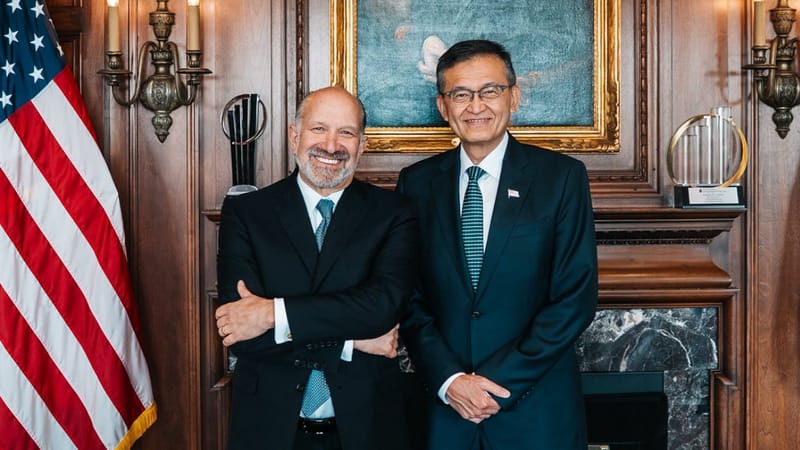
Washington takes a $10 billion equity stake in Intel, reshaping the balance between public policy and private enterprise.
The United States government has acquired a 10 per cent equity stake in Intel Corporation, a holding valued at around $10 billion, President Donald Trump confirmed on 22 August. The deal marks the most significant federal intervention in private industry since the 2009 financial crisis and positions Washington as Intel’s largest single shareholder.
Trump announced the move at the White House, saying Intel’s chief executive, Lip-Bu Tan, had agreed to the arrangement. “This is a historic day for America and for American workers,” Trump declared, describing the stake as a safeguard for U.S. technological leadership.
Commerce Secretary Howard Lutnick confirmed the development later the same day, calling it “a bold decision” designed to reinforce domestic chipmaking capacity and protect taxpayers’ interests.
The announcement sent Intel’s shares higher. The Wall Street Journal reported a rise of about 5.5 per cent, while The Washington Post and Bloomberg cited gains closer to 7 per cent. The Times put the increase at 7.3 per cent, with the stock closing at $25.20. Analysts described the rally as a sign of renewed investor faith in Intel’s turnaround and in Washington’s commitment to rebuilding the U.S. semiconductor sector.
The news followed a $2 billion investment from Japan’s SoftBank, announced earlier in the week. SoftBank chairman Masayoshi Son said he was confident in Intel’s ability to revive its manufacturing dominance. The twin moves – international backing and government ownership – represent a major stabilising boost for a company that has struggled to match Asian rivals in recent years.
The stake is tied to the CHIPS and Science Act of 2022, which set aside more than $50 billion to strengthen U.S. semiconductor manufacturing. Intel had been earmarked to receive more than $10 billion in subsidies under the programme. Reports from Bloomberg and The Washington Post said the administration opted to convert part of this support into equity, effectively turning taxpayer funding into an ownership stake.
Such a strategy departs from decades of U.S. economic policy, where government has typically avoided direct equity holdings in technology companies. Analysts have drawn parallels with the 2009 rescue of General Motors, when Washington took a 60 per cent stake to prevent collapse. That intervention ultimately ended in losses for taxpayers.
A strategic turning point
Intel has been struggling to reclaim leadership in semiconductor manufacturing, falling behind Taiwan’s TSMC and South Korea’s Samsung. Analysts suggest that government backing will accelerate its plans for new fabrication plants in Arizona and Ohio, while also supporting the development of next-generation chip nodes.
The move also carries geopolitical significance. With semiconductors at the centre of U.S.–China competition, Washington’s direct ownership of Intel sends a strong signal about the government’s determination to secure supply chains at home and reduce reliance on overseas foundries.
The government’s decision to become Intel’s largest shareholder could set a precedent for future interventions in other strategic sectors. For now, officials insist the stake is unique, justified by Intel’s critical role in national security and advanced manufacturing.
Whether the deal will ultimately be judged a bold success or an expensive gamble depends on Intel’s ability to regain its competitive edge. For Washington, the intervention reflects a fundamental shift in industrial strategy — one that blurs the line between public policy and private enterprise.
Intel has so far declined to comment publicly on the deal, and the White House has not provided further details beyond Trump’s remarks and Lutnick’s confirmation.
Topics
Author
Loading...