







Business
Ahmedabad enters India’s GCC race with ₹15,000 crore Million Minds Tech City






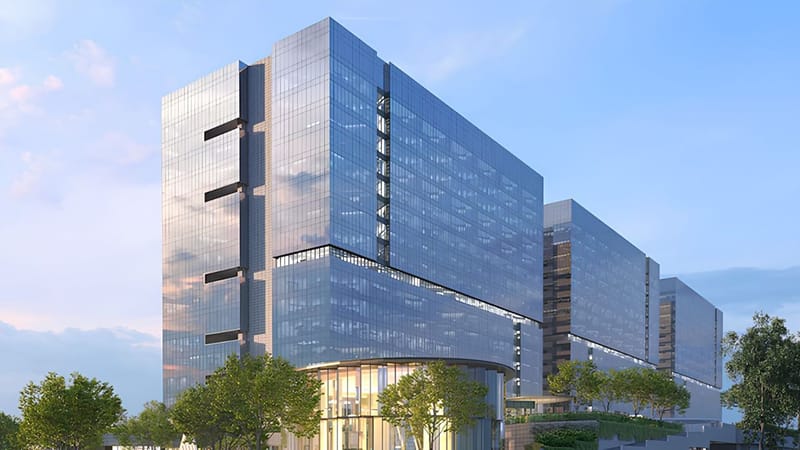
Ganesh Housing has unveiled a ₹15,000 crore integrated technology township in Ahmedabad as the city positions itself as an emerging destination for Global Capability Centres and technology firms.
Ahmedabad is making an aggressive push to join India’s growing network of Global Capability Centre hubs with the launch of Million Minds Tech City, a ₹15,000 crore integrated technology township being developed by Ganesh Housing Limited.
The project signals a broader attempt to reposition Ahmedabad beyond its traditional identity as a manufacturing and trading centre and place it alongside established technology and GCC destinations such as Bengaluru, Hyderabad and Pune.
Speaking to UNI, Shekhar Patel, Managing Director of Ganesh Housing, described the project as one of the company’s largest developments and a long-term play on India’s expanding role in global services and technology operations.
“This is one of our largest developments. The total area is 65 acres. It is an integrated technology township,” Patel said.
Mixed-use technology ecosystem planned
The development is being positioned as a full-scale mixed-use technology ecosystem rather than a standalone commercial project.
According to Patel, the total planned built-up area spans 18 million square feet, divided across commercial, residential and hospitality infrastructure.
Project allocation includes:
- 10 million square feet of commercial development
- 6 million square feet of residential space
- 2 million square feet for retail, hotels and serviced apartments
The company said the township is being designed primarily for Global Capability Centres, technology firms and IT companies seeking integrated campuses outside India’s saturated technology metros.
“Most GCCs, IT companies and technology firms are coming to us as customers,” Patel said.
Early leasing momentum drives expansion plans
Ganesh Housing said leasing activity in the first phase has already exceeded expectations.
Patel stated that out of 13.5 lakh square feet in Phase 1, approximately 8 lakh square feet has already been leased.
He added that more than 90 per cent of the first tower was leased even before its official launch.
The strong pre-leasing response has accelerated plans for additional construction.
“Because of strong demand, we are going to start construction of the next two towers as soon as possible,” Patel said.
The company pegged the Phase 1 investment at around ₹1,100 crore, while the broader township development is estimated at approximately ₹15,000 crore across multiple phases.
Ganesh Housing also confirmed that the project is fully owned by the group without external investment partners.
Ahmedabad positions itself against established GCC hubs
Patel said Ahmedabad’s emerging appeal lies in advantages that are becoming harder to replicate in larger and more congested technology cities.
According to him, multinational firms are increasingly evaluating:
- Lower operational costs
- Faster execution timelines
- Availability of large integrated land parcels
- Reduced congestion
- Stable infrastructure and policy support
He also cited Gujarat’s connectivity infrastructure and the rise of the Ahmedabad-Gandhinagar corridor anchored by GIFT City as important structural advantages.
“GIFT City is the anchor development for the Ahmedabad-Gandhinagar corridor. We are complementing it. GIFT is finance, we are technology and GCCs,” Patel said.
The project is being positioned as complementary to Gujarat’s broader economic strategy rather than a standalone real estate initiative.
GCC expansion reshapes India’s urban map
India currently hosts around 1,700 Global Capability Centres, according to Patel, with multinational companies increasingly expanding operations beyond traditional metropolitan clusters.
He said post-pandemic shifts in corporate strategy, geopolitical uncertainty and disruptions in global supply chains had accelerated the movement of multinational firms towards stable and scalable Indian cities.
“Post-COVID, the world has changed. GCCs are coming to India in a big way, and we feel this is the right time to build for that demand,” Patel said.
The company believes Ahmedabad can emerge as a lower-cost and policy-aligned alternative to established GCC markets.
Patel also pointed to the participation of Union Home Minister Amit Shah at the launch event as evidence of the broader political and policy attention being given to large-scale technology and infrastructure developments in Gujarat.
He said the visibility surrounding the project reflected growing confidence in Gujarat’s ability to attract global firms and absorb part of India’s next GCC expansion cycle.
Ahmedabad seeks long-term place in India’s tech services landscape
The Million Minds Tech City project reflects a wider shift underway in India’s commercial real estate and technology sectors, where second-generation technology corridors are beginning to emerge outside traditional hubs.
As multinational corporations continue expanding back-office operations, engineering centres and technology support functions in India, cities offering lower costs, infrastructure readiness and large-scale integrated campuses are increasingly competing for investment.
For Ahmedabad, the success of projects such as Million Minds Tech City could determine whether the city can evolve from a regional commercial centre into a nationally recognised GCC and technology destination over the next decade.
Author
Loading...