







Business
Air India delays hikes by one quarter as CEO pushes cost discipline during aviation crisis






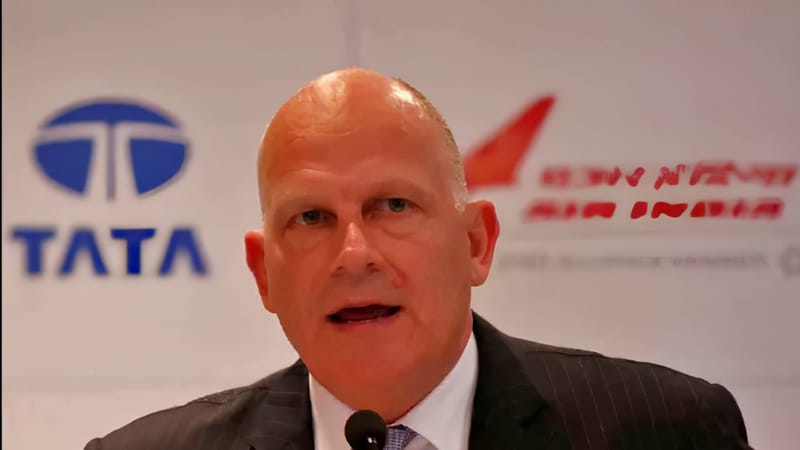
Air India has deferred annual salary increments amid rising fuel costs and geopolitical disruption, while CEO Campbell Wilson told employees the airline had already terminated more than 1,000 staff over ethical violations in the last three years.
Air India has deferred annual salary increments for employees by at least one quarter as mounting geopolitical tensions, rising fuel prices and airspace disruptions increase pressure on the airline’s finances.
At the same time, chief executive Campbell Wilson sought to reassure employees that the Tata Group-owned carrier is not planning layoffs, even as he disclosed that more than 1,000 staff have already been terminated over ethical breaches during the past three years.
The announcements were made during an internal townhall meeting attended by Wilson, chief financial officer Sanjay Sharma and chief human resources officer Ravindra Kumar GP, according to reports by The Telegraph and PTI citing company sources.
The developments underscore the difficult balancing act facing Air India as it attempts to manage rising operational costs while continuing an ambitious transformation programme under Tata Group ownership.
Airline delays increments as financial pressure intensifies
Air India’s management told employees that annual salary increments would be deferred by at least one quarter because of the uncertain business environment.
However, the airline said it would proceed with variable pay payouts for the previous financial year and continue with planned employee promotions.
“We don’t anticipate layoffs,” CHRO Ravindra Kumar GP said during the townhall, according to sources cited by The Telegraph.
The airline appears keen to prevent anxiety among staff at a time when the aviation sector is facing renewed turbulence linked to the escalating conflict in West Asia.
The global aviation industry has come under pressure due to rising aviation turbine fuel costs, one of the largest expense components for airlines. At the same time, Indian carriers continue to face operational disruption because of the closure of Pakistan’s airspace, which has forced longer flight routes on several sectors.
According to reports, Wilson described the current environment as a potentially “very, very difficult year” for the airline if conditions in the Middle East fail to improve.
Air India pushes austerity measures across operations
Alongside the salary hike delay, Air India has initiated broader cost-control measures across the organisation.
Wilson reportedly asked employees to:
• Reduce discretionary spending
• Renegotiate vendor and operational rates where possible
• Defer non-critical expenditure
• Focus aggressively on reducing wastage and leakages
“There must be a laser sharp focus on eliminating wastage and leakages,” Wilson told employees, according to The Telegraph.
Despite the austerity measures, management also emphasised the need to continue improving customer experience while maintaining financial discipline.
The airline said it remains focused on protecting its core business, optimising deployment and strengthening what Wilson described as a future-ready network.
The reference to “optimising deployment” reflects ongoing efforts to improve utilisation of aircraft, crew and operational resources as airlines contend with higher fuel expenses and route disruptions caused by geopolitical instability.
CEO says over 1,000 employees terminated
During the same townhall, Wilson also addressed internal disciplinary actions taken by the airline over the past three years.
According to PTI, the Air India CEO said the company had terminated more than 1,000 employees for ethical breaches since the Tata Group took over the airline.
“The airline’s CEO and MD said that over the past three years, we have terminated more than 1,000 people for ethical breach,” PTI reported.
The violations included:
• Smuggling items off aircraft
• Allowing excess baggage without proper charges
• Misuse of the Employee Leisure Travel system
• Other forms of non-compliance and misconduct
Wilson reportedly told staff that hundreds of employees are terminated every year for non-compliance issues and stressed the importance of ethical behaviour even when supervision is absent.
The airline had earlier identified large-scale discrepancies linked to its Employee Leisure Travel policy.
In March, PTI reported that Air India had detected irregularities involving more than 4,000 employees connected to misuse of the travel system and had initiated corrective action, including penalties against staff found violating policy norms.
Aviation sector faces mounting cost pressures
The latest measures at Air India come amid growing financial strain across the aviation industry globally.
Airlines are grappling with:
• Elevated aviation fuel prices
• Geopolitical instability in West Asia
• Longer flight routes due to restricted airspace
• Volatile travel demand and consumer sentiment
• Rising operating and financing costs
For Indian carriers, the closure of Pakistan’s airspace has added another layer of operational complexity by increasing flight duration and fuel burn on several international routes.
According to reports, the combined Air India Group, which includes Air India and Air India Express, is projected to have incurred losses exceeding Rs 22,000 crore in the financial year ended March 2026.
That financial pressure is unfolding even as the Tata Group continues investing heavily in fleet modernisation, operational integration and customer service improvements aimed at rebuilding the airline’s long-term competitiveness.
Transformation push enters a tougher phase
Since returning to private ownership under the Tata Group, Air India has pursued one of the aviation sector’s most ambitious turnaround plans, including large aircraft orders, network expansion and operational restructuring.
But the latest townhall signals that the transformation effort is entering a more difficult phase shaped by external economic shocks and internal cost discipline.
The company’s message to employees appears carefully calibrated: layoffs are not currently planned, but financial caution is becoming unavoidable.
At the same time, Wilson’s remarks around ethical breaches indicate that management is also attempting to reinforce accountability standards as the airline continues its restructuring journey.
For employees, the combination of delayed salary hikes, tighter cost controls and intensified scrutiny reflects the pressures now facing airlines globally as geopolitical tensions and rising fuel costs reshape the economics of aviation once again.
Topics
Author
Loading...