







Business
Elon Musk’s high-profile DOGE experiment shut down eight months early






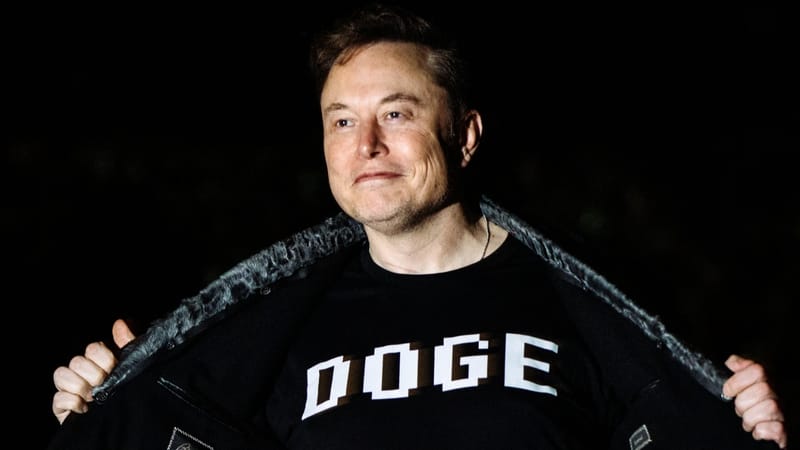
Trump’s cost-cutting agency has faded from view eight months before its charter ends, as responsibilities quietly shift across government.
The Department of Government Efficiency, a high-profile cost-cutting unit created by US President Donald Trump, has effectively ceased to exist with eight months still remaining on its mandate, the Office of Personnel Management’s chief has confirmed.
OPM Director Scott Kupor told Reuters that DOGE “doesn’t exist” as an operating entity and is no longer functioning as a centralised agency. His comments mark the first public acknowledgement by the administration that the initiative, launched with considerable fanfare in January, has wound down quietly.
DOGE was established early in Trump’s second term to aggressively shrink federal departments, cut budgets and redirect resources toward administration priorities. For months, Trump officials — including Elon Musk, who initially helped lead the unit — spotlighted its work on social media. At one point, Musk held up a chainsaw on stage at a conservative gathering to symbolise DOGE’s mission to reduce government jobs.
But Kupor said OPM has now absorbed much of the unit’s responsibilities. Documents reviewed by Reuters show that several DOGE staff have already transitioned into new roles across government.
At least two senior DOGE figures are now connected to the National Design Studio, a new body created by Trump in August and led by Airbnb co-founder Joe Gebbia. The administration has tasked the studio with improving the visual design of federal websites. DOGE veteran Edward Coristine, known online as “Big Balls”, has encouraged recruits to apply.
The rapid fading of the unit contrasts sharply with the attention it once drew. DOGE claimed to have cut tens of billions of dollars in government expenditure, though external analysts noted that the unit never provided detailed public accounting to substantiate the figures.
The White House defended the administration’s broader push for savings. A spokesperson told Reuters that Trump “continues to actively deliver” on his mandate to reduce waste, fraud and abuse.
Signals of DOGE’s demise have grown since early summer. Acting administrator Amy Gleason formally shifted into a broader advisory role at the Department of Health and Human Services in March, while Musk’s public feud with Trump in May prompted further doubts. Federal hiring restrictions linked to DOGE have also lapsed. Kupor said there is now “no target around reductions”, lifting a freeze that once required DOGE approval for most new hires.
Other former DOGE staff are now embedded throughout the government. Gebbia has launched redesigned websites to recruit law-enforcement officers in Washington, while Zachary Terrell and Rachel Riley have taken senior technology and research roles at HHS and the Office of Naval Research respectively. At the State Department, Jeremy Lewin now oversees foreign assistance after previously helping dismantle the US Agency for International Development.
The administration continues to pursue another DOGE priority: rolling back regulations. The White House budget office has tasked Scott Langmack, formerly DOGE’s liaison to the Department of Housing and Urban Development, with developing AI tools to analyse and flag federal rules for deletion.
DOGE’s quiet disbandment underscores the challenges of sustaining broad restructuring drives across the federal government. With months left on its charter, attention has already shifted to AI-driven regulatory cuts and other administrative initiatives — even as Musk, once the face of DOGE, re-emerges in Washington political circles.
Topics
Author

Loading...