







Business
Jio aims to make AI tokens cheaper as the next major disruption after cheap mobile data






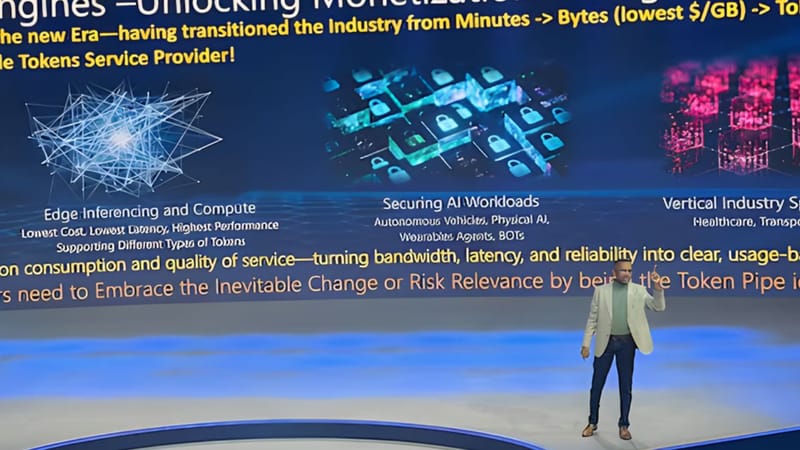
Jio plans to slash the cost of AI tokens and embed artificial intelligence into telecom networks, positioning tokens as the next currency of the digital economy.
Reliance Jio is preparing its next technology disruption: making artificial intelligence tokens cheaper and widely accessible, positioning them as the next economic layer of telecom networks after voice calls and mobile data.
Jio Platforms Group CEO Mathew Oommen said the company aims to reduce the cost of AI tokens dramatically, replicating the strategy that helped it make voice calls free and push mobile data prices in India to among the lowest globally. The remarks were made in an interview with Moneycontrol during the Mobile World Congress in Barcelona.
“The new currency of telecom will be tokens,” Oommen said, referring to the basic units of computation used by artificial intelligence systems to process and generate outputs.
Tokens emerging as the new digital currency
In AI systems, tokens represent fragments of text, images or commands that models process when generating responses. As AI adoption expands across businesses and consumers, tokens effectively act as the meter that determines the cost of AI services.
Jio believes the telecom sector is entering a shift where traditional billing metrics such as minutes of voice and gigabytes of data will gradually be replaced by token-based computation usage.
“Jio fundamentally transformed the voice and data industry,” Oommen told Moneycontrol. “We made voice free and disrupted the cost per gigabyte. Now we want to bring the cost of tokens to the lowest level.”
The strategy reflects Jio’s ambition to evolve beyond a connectivity provider into what Oommen described as a “token value” company, controlling not just data transport but also the economics of AI computation.
Building an AI-native telecom architecture
To support that vision, Jio plans to embed artificial intelligence deeply into the telecom network itself.
Oommen outlined a seven-layer AI architecture that spans chips, physical infrastructure, AI models, applications, orchestration layers and device integration. The goal is to build a vertically integrated ecosystem capable of distributing AI computation across multiple locations.
Unlike current networks that rely heavily on centralised hyperscale data centres, Jio’s design involves distributed intelligence, where AI inference occurs not only in large cloud facilities but also at edge data centres, enterprise locations and eventually on devices.
Such an architecture could reduce latency, lower costs and improve performance, particularly for applications requiring real-time responses.
Competing with global technology players
Jio believes its biggest competitive advantage lies in its control over both network infrastructure and subscriber relationships.
The company has more than 500 million subscribers and extensive fibre and mobile infrastructure across India. That footprint allows it to extend AI capabilities directly into homes, enterprises and connected devices.
Oommen said the strategy aims to ensure Jio does not become merely a “token pipe” provider, transporting AI computation generated elsewhere.
Instead, the company wants to capture value across the entire stack - from network infrastructure to AI services delivered directly to consumers and businesses.
Homes and devices central to AI strategy
A major part of Jio’s vision revolves around the connected home.
The company plans to embed intelligence into devices such as routers, set-top boxes and enterprise gateways, allowing AI inference to run closer to the user rather than relying entirely on remote cloud systems.
As AI evolves from cloud-based assistants to embedded, always-on intelligence inside devices, homes could become an important node in the emerging token economy.
Delivering tokens efficiently across homes, enterprises and edge infrastructure could significantly reduce the cost of AI usage and improve responsiveness.
Partnerships remain key
While Jio intends to develop intellectual property across critical parts of the AI stack, Oommen said partnerships with technology providers will remain central to the strategy.
“Follow the customer,” he said, emphasising that the company will collaborate where partnerships help deliver better solutions.
Jio has previously built proprietary technologies in telecom infrastructure while partnering with global companies in other areas, a model the company plans to replicate in the AI token economy.
Telecom industry enters the AI era
Jio’s push reflects a broader shift underway in the telecom sector, where operators are exploring how artificial intelligence could reshape networks, services and revenue models.
If tokens become the dominant pricing mechanism for AI services, telecom providers that control the last-mile network, edge computing infrastructure and device ecosystems could play a significant role in how AI is consumed.
For Jio, the strategy signals an attempt to repeat the playbook that transformed India’s telecom market — this time targeting the economics of artificial intelligence itself.
Topics
Author
Loading...