







Business
LPG crunch hits Infosys campuses: Dosas and live counters off the menu






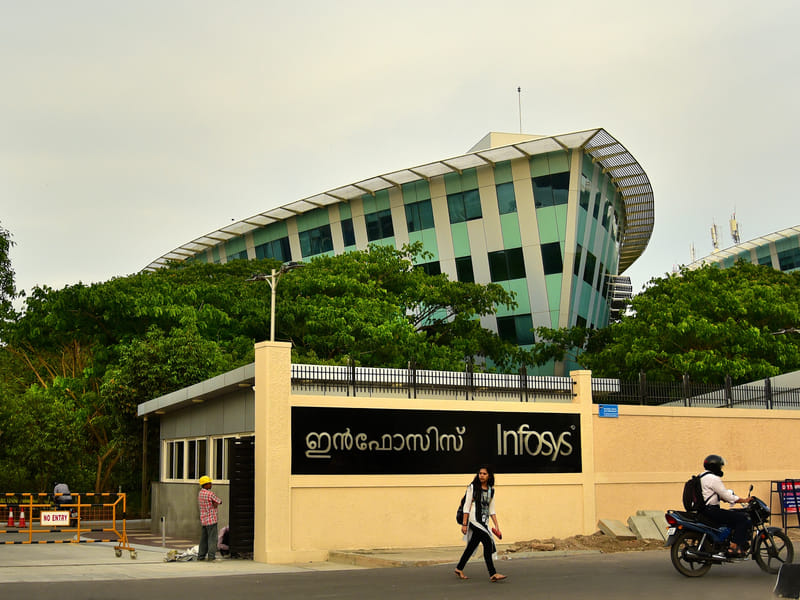
Infosys scales back food court services across major campuses as commercial LPG shortages disrupt live cooking and limit menus.
Infosys has scaled back food court operations across its major campuses after a shortage of commercial LPG supplies forced vendors to limit cooking activity, disrupting dining services for thousands of employees.
In an internal email sent on 11 March, the company informed staff that it was dealing with an “impending situation” linked to LPG availability, prompting operational adjustments starting 12 March, reported Moneycontrol.
The changes affect Infosys campuses in Bengaluru, Pune and Chennai, where live cooking counters — typically serving items such as dosas and omelettes — have been temporarily withdrawn. Food courts are now operating with reduced menus as vendors adapt to restricted gas supplies.
Campus dining disrupted
According to the company communication, food vendors operating inside the campuses have been receiving lower LPG allocations from suppliers, forcing them to scale down operations.
“Food court vendors are currently receiving reduced LPG supplies from their respective providers. All food courts will temporarily operate with a limited menu,” a message circulated to employees in Pune said.
The communication added that some cooked food would be sourced from external central kitchens while vendors increase the use of electric appliances and biofuel alternatives to manage the shortage.
Employees were also advised to avoid planning large gatherings or events on campus that would require catering services during the disruption.
Infosys’ sprawling Bengaluru development centre — one of its largest facilities — typically sees daily footfall of around 20,000 employees, making food court services a key part of campus operations.
Regional gas shortage hits businesses
The disruption reflects a broader LPG supply crunch affecting commercial establishments across several Indian cities.
Industry bodies and restaurant operators have warned that many hospitality businesses are facing severe supply delays. The Times of India reported that commercial LPG shortages have forced restaurants in several cities to limit menus or shift to electric and induction-based cooking.
Some establishments have turned to coal or alternative fuels to continue operations.
The National Restaurant Association of India has warned that a growing number of restaurants are operating with only a few days of LPG stock, raising concerns about potential closures if supplies do not stabilise.
Major metropolitan centres including Delhi, Mumbai, Bengaluru and Kolkata have reported delays in commercial LPG deliveries, with some users facing wait times of up to ten days.
Geopolitical tensions add pressure
The shortage has been linked in part to supply disruptions affecting imports through the Strait of Hormuz, a critical energy shipping route.
According to multiple media reports, escalating tensions in West Asia — particularly the Iran–Israel conflict — have tightened energy supply chains, contributing to the LPG crunch in India.
The government has responded by increasing domestic LPG production and prioritising supply for essential sectors such as hospitals, while also introducing a longer booking cycle for domestic cylinders.
Despite these measures, commercial users have reported persistent shortages and rising costs. Industry sources cited by several outlets said some commercial cylinders are being sold in secondary markets for significantly higher prices amid supply constraints.
Sustainability measures already in place
Infosys has previously invested in sustainability initiatives aimed at reducing waste and improving energy efficiency across its campuses.
According to the company’s annual ESG disclosures, the firm has built infrastructure capable of processing 100% of organic waste generated on campus, including food and garden waste.
Biogas generated through these facilities is used in food court kitchens, while compost produced from waste treatment supports campus landscaping. Sewage sludge from treatment plants is also processed through solar drying systems and reused in landscaping.
However, such internal energy sources are not sufficient to fully replace commercial LPG requirements during a broader supply shortage.
Temporary disruption, longer-term questions
For now, the changes at Infosys appear to be a temporary adjustment as vendors navigate supply constraints.
Yet the episode underscores how energy supply shocks can ripple into everyday workplace operations, even within large corporate campuses.
If the LPG crunch persists, companies and food service providers may need to accelerate shifts towards alternative cooking technologies — from electric appliances to renewable energy sources — to maintain uninterrupted services.
For thousands of employees returning to office campuses, the more immediate change is simpler: the familiar dosa counters will remain off the menu, at least for now.
Topics
Author
Loading...