







Business
ONGC's future growth will come from gas, not oil, says chairman






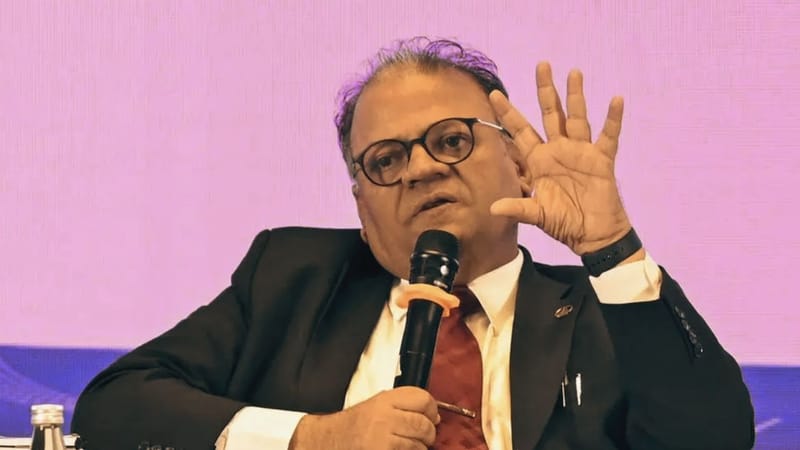
ONGC is increasingly positioning itself as a gas-led energy company, with natural gas output now exceeding crude oil production and expected to drive the bulk of future growth.
State-run energy major ONGC is undergoing a strategic shift as natural gas overtakes oil in its production portfolio, with Chairman Arun Kumar Singh saying the company's future growth will be driven primarily by gas rather than crude.
Speaking to analysts, Singh said Oil and Natural Gas Corporation should increasingly be viewed as a "gas-and-oil" company rather than an "oil-and-gas" producer, reflecting a significant change in the company's production mix and long-term growth strategy.
The shift comes as domestic gas demand rises, government pricing reforms improve economics for producers and new projects boost output, while crude oil production remains largely unchanged in the absence of major discoveries.
Gas takes the lead in ONGC's portfolio
According to Singh, natural gas has already surpassed crude oil within ONGC's portfolio.
"Gas is now slightly more than oil in our portfolio," he told analysts, according to a report by The Hindu Businessline.
He added that ONGC now produces and sells more gas than oil, marking an important milestone for India's largest exploration and production company.
The chairman said gas is becoming increasingly valuable in the Indian energy landscape and is expected to play a bigger role in the company's future.
Key indicators highlighted by ONGC include:
- Gas output now exceeds oil production
- Annual gas production growth is expected at around 7-8%
- Exploration and production accounts for roughly two-thirds of the group's business
- New well gas already contributes around 25% of total gas production
- New well gas could rise to 30-36% of output in the near term
Demand growth and pricing reforms boost outlook
Singh said rising domestic demand is one of the biggest factors supporting ONGC's growing focus on gas.
He pointed to increasing consumption across sectors, including transportation, as a structural growth driver for the fuel.
The company is also benefiting from government-led pricing reforms.
According to Singh, "new well gas" pricing is linked to 12% of crude oil prices, creating a more attractive commercial environment for producers.
He said supportive policies, including reduced royalties, market-linked pricing mechanisms and measures to encourage deepwater exploration, have improved economics across the upstream energy sector.
These changes have enabled producers such as ONGC to retain a larger share of revenues generated from gas production.
New projects expected to support expansion
ONGC expects production growth to be supported by a series of projects scheduled to come online over the next financial year.
The company identified several growth drivers, including:
- DUDP developments
- DSF field projects
- Offshore developments, including the 98/2 wells
- Expansion of new well gas production
Singh said these projects are expected to contribute to sustained annual gas output growth over the coming years.
At the same time, crude oil production is likely to remain broadly flat unless significant new discoveries are made.
Investment programme targets long-term output
To support future production, ONGC continues to invest heavily in exploration and field development.
The company drills around 500 wells annually, including both exploratory and producing wells.
According to Singh, ONGC reported a reserve replacement ratio of more than 1.1 in FY25-26, indicating that the company replenished more reserves than it produced during the year.
The company is also executing approximately ₹33,000 crore worth of offshore projects aimed at maintaining and increasing output.
Particular attention is being given to Western Offshore assets, which account for a substantial share of current production.
Singh said these assets are currently undergoing a major technical services partnership programme with BP, covering the entire asset base, with early operational improvements already becoming visible.
Overseas and new energy businesses add growth avenues
Beyond domestic operations, ONGC continues to pursue opportunities across international and emerging energy businesses.
Singh said production from Russia's Sakhalin project remains stable, while the Mozambique LNG project is progressing towards potential completion by 2028.
He also noted that production in Venezuela could increase if regulatory conditions improve.
Meanwhile, ONGC expects a turnaround at petrochemicals subsidiary OPaL and continued expansion at ONGC Green, its renewable energy arm.
According to Singh, ONGC Green is targeting nearly 3 gigawatts of renewable energy capacity next year.
Energy transition reshapes ONGC's growth strategy
ONGC's evolving production profile reflects broader changes taking place across India's energy sector, where natural gas is playing a larger role in meeting industrial, transport and power demand.
While crude oil remains a core part of the company's business, management increasingly sees gas as the primary engine of future growth. With new projects entering production, supportive policy reforms and strong demand fundamentals, ONGC's transformation into a more gas-focused energy company appears set to accelerate in the years ahead.
Topics
Author
Loading...