







Business
Samsung union seeks bigger share of AI-fuelled profits, threatens walkout





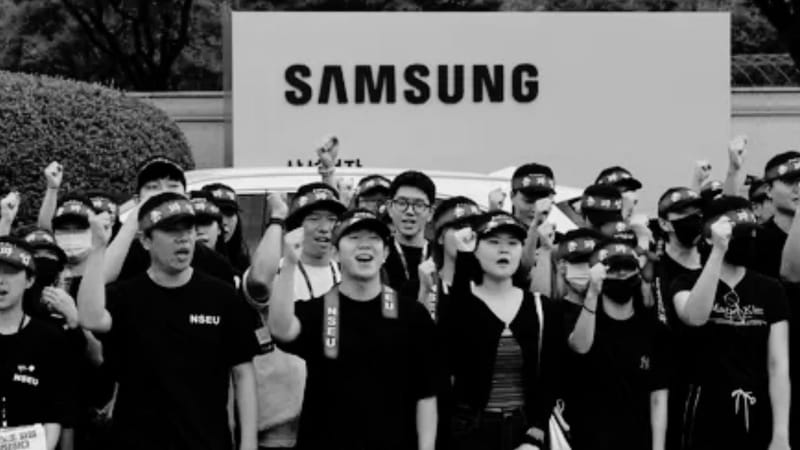
Samsung workers are escalating pressure on management over bonus structures as AI-driven chip demand boosts profits and widens comparisons with rival SK Hynix.
Samsung Electronics’ labour union in South Korea has threatened to walk out of ongoing pay negotiations unless government-mediated talks produce a proposal to narrow differences over bonuses and compensation tied to the company’s soaring AI-era profits.
According to Reuters, the union warned on Tuesday that it would leave negotiations if no mediation proposal emerged within two hours after marathon discussions failed to produce progress.
The standoff reflects growing tensions inside one of the world’s largest technology companies as employees push for a larger share of profits generated during the global artificial intelligence boom.
Bonus structure sits at the centre of dispute
The disagreement between Samsung management and the union centres heavily on performance-linked bonus allocations.
Reuters reported that Samsung is maintaining its proposal to assign 10% of operating profit to a performance bonus pool, according to union representative Choi Seung-ho.
The union, however, is demanding more aggressive changes, including:
- Increasing the bonus allocation to 15% of operating profit
- Removing the current cap on bonus pay set at 50% of annual base salary
- Making the revised structure permanent beyond this year
Choi told reporters that the union had already been waiting three hours for a mediation proposal during the government-facilitated discussions, Reuters reported.
Samsung did not immediately comment on the matter, according to the report.
AI boom has intensified worker frustration
The labour dispute is unfolding against the backdrop of surging demand for AI-related semiconductor products.
Samsung workers have reportedly grown increasingly frustrated over what they describe as a widening compensation gap with rival SK Hynix, which has strengthened its position in the high bandwidth memory market supplying AI chip systems used by Nvidia.
The competitive gap became more visible following the explosion of generative AI demand after the launch of ChatGPT in late 2022, Reuters reported.
SK Hynix moved aggressively to capitalise on rising AI infrastructure demand and gained an advantage in supplying advanced memory chips for AI applications.
That commercial success translated into stronger employee compensation.
According to Reuters, SK Hynix abolished its bonus cap last year, resulting in payouts more than three times larger than those received by Samsung employees.
The disparity has reportedly fuelled a sharp increase in union membership within Samsung.
Profit growth is raising expectations inside Samsung
Employee frustration has also been amplified by Samsung’s own financial performance during the AI-driven semiconductor expansion.
Reuters noted that Samsung last week became only the second Asian company after TSMC to surpass a market capitalisation of more than $1 trillion.
The company has benefited from rising investor confidence around AI-related semiconductor demand, even as it faces intensifying competition across advanced memory and AI chip markets.
For workers, however, the company’s financial growth is increasing expectations that employees should receive a larger share of performance-linked rewards.
The dispute highlights a broader issue emerging across the global technology industry as AI-driven growth creates renewed pressure around compensation structures, productivity gains, and profit-sharing.
Labour tensions are becoming a strategic challenge
The current negotiations also reflect the growing importance of labour stability inside the semiconductor industry, where competition for engineering talent and advanced manufacturing capability remains intense.
South Korea’s technology sector has become increasingly sensitive to:
- AI chip demand
- Semiconductor supply chain competition
- Talent retention
- Wage expectations
- Performance-linked compensation
Samsung’s labour negotiations now carry significance beyond wages alone because they intersect directly with the company’s ability to maintain workforce stability during one of the fastest-growing technology cycles in recent years.
The dispute also arrives as semiconductor companies globally attempt to balance:
- Rising AI investment
- Shareholder expectations
- Capital expenditure demands
- Employee compensation pressure
For Samsung, the challenge is particularly visible because the company is simultaneously trying to strengthen its competitive position in AI memory chips while managing internal dissatisfaction over compensation disparities with rivals.
AI profits are changing expectations across tech workforces
The Samsung dispute illustrates how the AI boom is beginning to reshape workforce expectations inside major technology companies.
Employees are increasingly comparing compensation not only against internal performance but also against competitors benefiting more directly from AI-led growth.
That dynamic is placing additional pressure on companies to justify:
- Bonus structures
- Pay caps
- Profit-sharing systems
- Workforce reward models
As AI-related revenues continue to reshape the semiconductor industry, labour negotiations may become a more prominent feature of the sector’s competitive landscape.
For Samsung, the immediate focus remains whether mediation efforts can prevent negotiations from escalating further.
But the broader issue is unlikely to disappear quickly: the AI boom is generating enormous corporate value, and workers increasingly want a clearer share of it.
Topics
Author
Loading...