







Business
TCS and Infosys face heavy hit from Trump’s $100,000 H-1B visa fee





New levy on overseas hires threatens to reshape hiring models across India’s IT outsourcing giants.
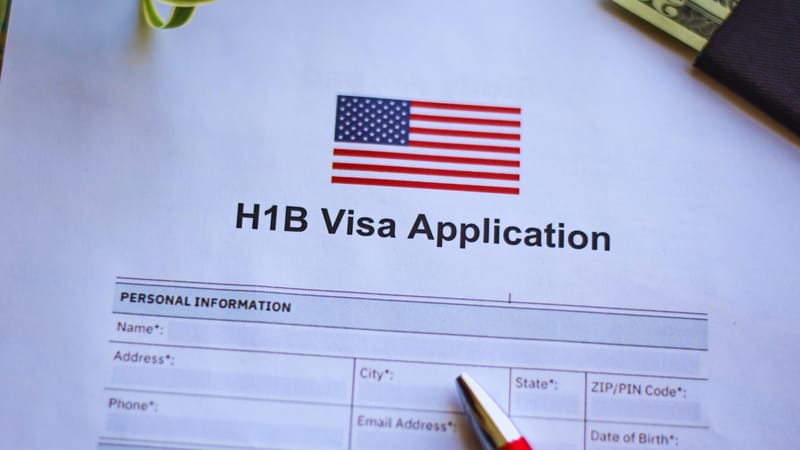
Tata Consultancy Services and Infosys are among the companies expected to be hit hardest by US President Donald Trump’s proposed $100,000 fee on new H-1B visa workers hired from outside the United States, a move that could significantly raise costs for global IT outsourcing firms.
A Bloomberg News analysis found that the fee would have a disproportionate impact on multinational staffing and IT services companies that rely heavily on bringing skilled workers into the US through consular processing. Alongside TCS and Infosys, Cognizant Technology Solutions would also face a sharp increase in visa-related costs.
Between May 2020 and May 2024, nearly 90% of new H-1B hires at TCS, Infosys and Cognizant were approved at US consulates rather than through status changes within the country, according to the Bloomberg analysis. Had the $100,000 fee been in place, it would have translated into hundreds of millions of dollars in additional costs for each company.
Infosys would have been the most exposed. More than 93% of its new H-1B hires during that period — over 10,400 workers — would have attracted the fee, adding up to more than $1 billion in visa charges, Bloomberg reported. TCS would have faced the levy for around 6,500 workers, or 82% of its new approvals, while Cognizant would have incurred the charge for more than 5,600 employees, representing 89% of its new H-1B hires.
The proposed fee represents the most restrictive measure imposed so far by the Trump administration on the employment of skilled foreign workers. While legal challenges are already underway, immigration lawyers and industry analysts expect the policy to dampen demand for H-1B visas and accelerate the shift of work to offshore locations.
“We’re already seeing that happen,” immigration attorney Jonathan Wasden told Bloomberg, adding that employers are reassessing whether it makes financial sense to sponsor overseas talent under the new cost structure.
Large technology and IT consulting firms have long dominated the H-1B programme, which offers 85,000 visas annually and serves as a primary pathway for skilled foreign workers into the US labour market. Critics from both political parties argue that the programme undercuts American workers, though H-1B employees are legally required to be paid prevailing wages.
The new fee builds on earlier efforts to curb usage of the programme. Trump-era changes in 2020 allowed companies to enter large numbers of candidates into a low-cost lottery, driving registrations to more than 758,000 entries in fiscal 2024, Bloomberg reported. US officials later accused parts of the consulting industry of exploiting the system.
A White House spokesperson said the fee would discourage companies from “spamming the system” and provide greater certainty to US employers seeking high-skilled talent.
Industry experts expect the measure to push more jobs offshore, particularly to India, which remains the largest source of H-1B workers. Steve Hall, chief AI officer at Information Services Group, told Bloomberg that US companies are likely to expand delivery centres overseas rather than absorb sharply higher visa costs.
Infosys said previously that only a minority of its US workforce requires visa sponsorship and that client services would continue without disruption. Most other large H-1B employers declined to comment on how the fee would alter hiring plans.
Analysts say the true impact will become clearer during the next visa lottery cycle, when companies decide whether the cost of overseas hires still justifies participation. Until then, the $100,000 fee is expected to reshape hiring strategies across the global IT services industry.
Topics
Author

Loading...