







Business
Volkswagen shuts down factory for the first time in 88 years






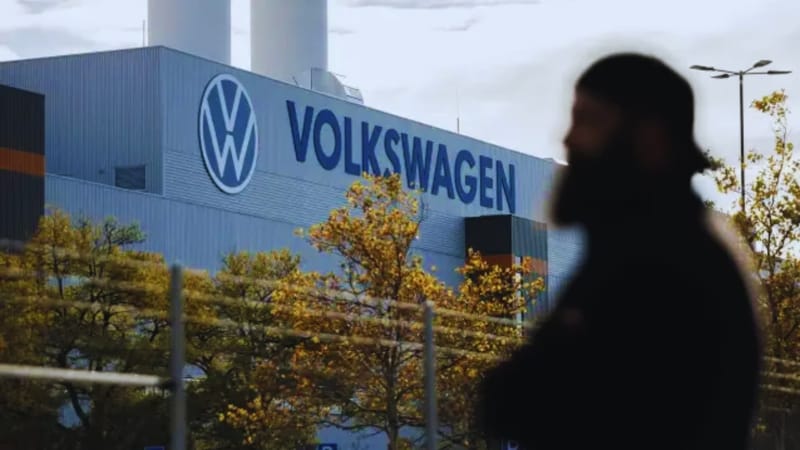
The carmaker halts production at its Dresden plant amid weak demand, rising costs and a broader restructuring drive.
Volkswagen is set to shut down car production at its Dresden factory, marking the first time in its 88-year history that the German carmaker has closed a manufacturing site in its home market.
The decision reflects mounting pressure on Europe’s largest carmaker as weak demand, rising costs and intensifying global competition force a rethink of its industrial footprint. Daily Sabah first reported that production at the Dresden site would cease in the coming days.
The factory, which began operations in 2002, has been running at minimal capacity for several years. It has produced fewer than 200,000 vehicles since opening—less than half the annual output of Volkswagen’s main plant in Wolfsburg—according to figures cited by German media. Reports as early as November had suggested the site’s long-term prospects were limited.
Volkswagen’s move comes amid strain on its cash flow, driven by slowing sales in China and Europe and the impact of US tariffs on exports to the United States. The group has also been grappling with higher operating costs in Europe and a slower-than-expected transition to electric vehicles, while facing aggressive competition from Chinese manufacturers, particularly in the EV segment.
The Dresden closure forms part of a wider restructuring programme in Germany agreed with trade unions, which includes plans to cut around 35,000 jobs by 2030. The measures underline the scale of adjustment under way at the carmaker as it seeks to protect margins and free up capital for future investments.
Volkswagen’s chief financial officer Arno Antlitz has previously warned that net cash flow in 2025 may be only marginally positive, with financial pressure expected to persist into 2026. Analysts say the group faces the costly challenge of investing simultaneously in electric vehicle platforms while continuing to develop new generations of internal combustion engines.
Once conceived as a showcase for Volkswagen’s engineering prowess, the Dresden plant initially produced the premium Phaeton sedan before later becoming a symbol of the group’s electric ambitions with models such as the ID.3. Under current plans, the site will be leased to the Technical University of Dresden and redeveloped as a research campus focused on artificial intelligence, robotics and microchips.
The shutdown comes as Europe reassesses its automotive transition. The European Commission is preparing to review the de facto ban on the sale of new internal combustion engine cars from 2035, a move that could mark the bloc’s most significant shift away from its green policy direction in recent years.
Industry conditions remain challenging. In its latest outlook, steel industry body Eurofer slightly improved its forecast for EU automotive production in 2025, now expecting a 3.8% year-on-year decline rather than 4.3%. Despite the revision, the sector continues to face structural headwinds and geopolitical risks.
For Volkswagen, the closure of a German factory underscores the depth of the industry’s upheaval and signals that even long-established manufacturers are being forced to take unprecedented steps as they navigate an uncertain transition.
Topics
Author

Loading...