







Compensation Benefits
Noida labour unrest: How wage gaps and misinformation fuelled mass protests



 ||
||

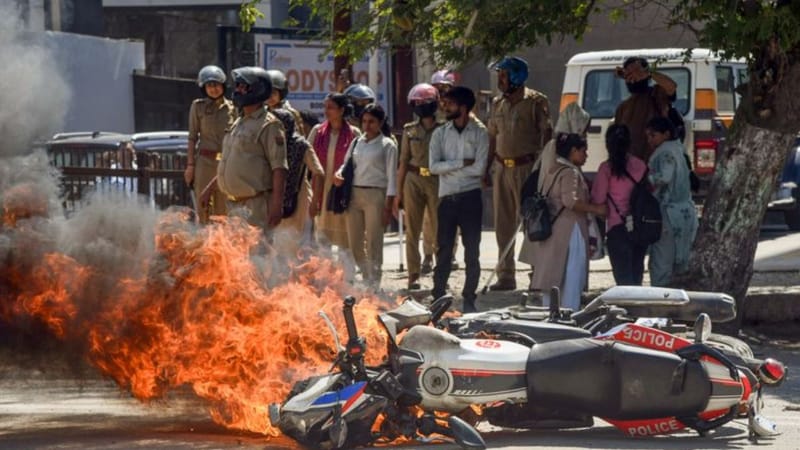
Over 40,000 workers join protests across 80 locations as arrests near 400 and Uttar Pradesh scrambles to contain unrest with wage revisions and talks.
A two-day wave of labour unrest in Noida has exposed deep fault lines in wage structures across the National Capital Region, with over 40,000 workers taking to the streets, nearly 400 arrests, and widespread disruption across industrial zones, even as the Uttar Pradesh government moved to contain the crisis through wage revisions and negotiations.
What began as a wage dispute has quickly evolved into a multi-layered industrial flashpoint, shaped by cost-of-living pressures, regional wage disparities, and the rapid spread of misinformation through digital networks.
What triggered the protests
At the heart of the unrest lies a widening wage gap between Noida and neighbouring industrial hubs in Haryana.
According to reporting by The Times of India, factory workers in Noida have been earning ₹11,000 to ₹13,000 per month for long shifts, while comparable workers in nearby areas such as Gurgaon and Manesar have seen minimum wages rise to around ₹19,000 per month.
This disparity has been building resentment among workers in Noida’s industrial belts, particularly as inflation and living costs in the NCR region have risen sharply.
Officials told India Today that earlier wage frameworks in Uttar Pradesh applied uniform minimum rates across districts, failing to account for the higher cost of living in industrial clusters such as Noida and Ghaziabad. This structural gap became a key trigger for worker mobilisation.
Day 1: protests erupt and spread rapidly
 (Image Credit: News18)
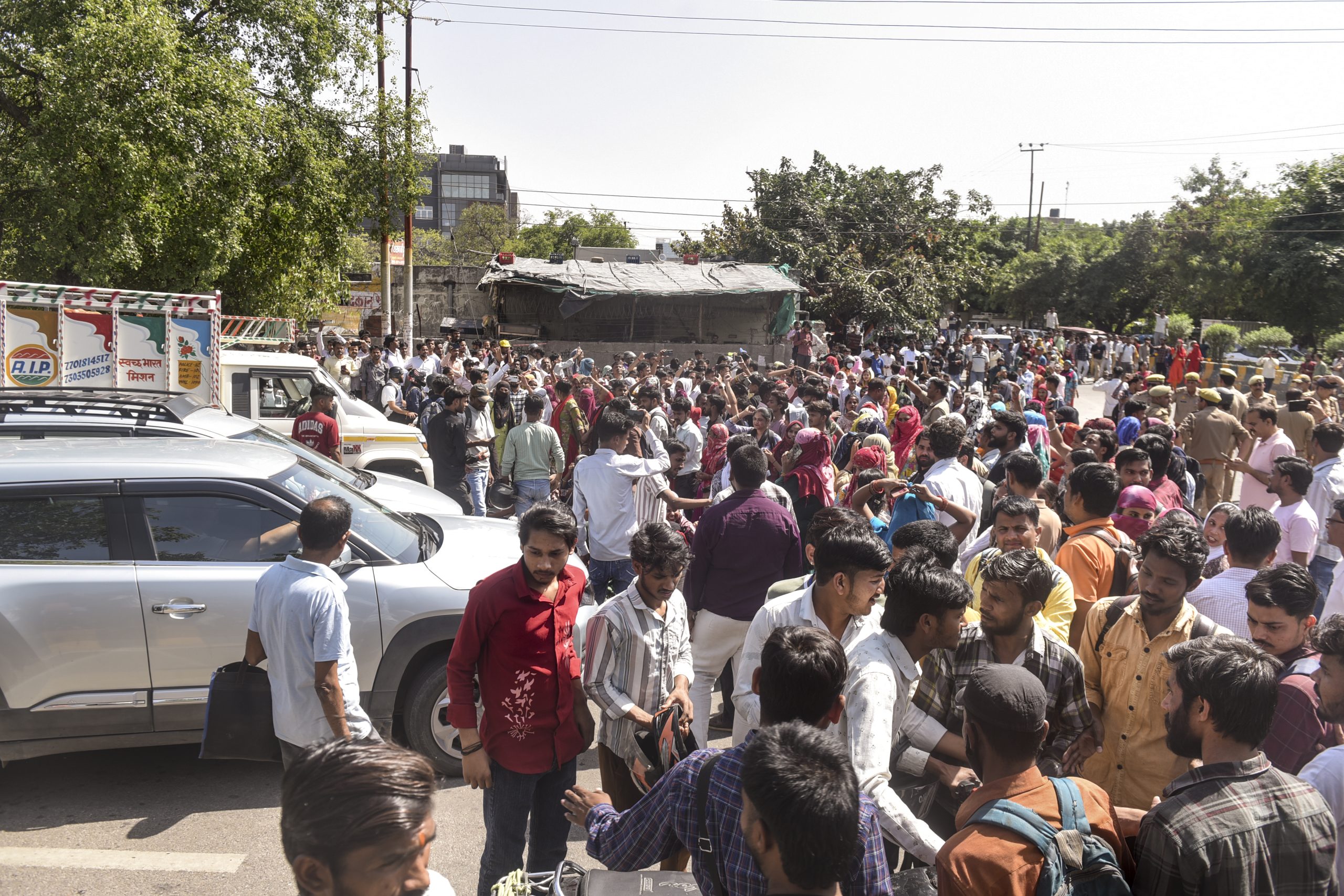
On April 13, worker gatherings began across multiple industrial areas in Noida and Greater Noida. What initially appeared as scattered demonstrations quickly scaled up.
Over 40,000 workers mobilised across nearly 80 locations, blocking roads and halting movement across key industrial corridors.
Major routes connecting industrial sectors were choked, leading to severe traffic disruptions and impacting daily commuting across Noida and adjoining areas.
As crowds swelled, tensions escalated. Protesters demanded higher minimum wages and better working conditions, including more predictable work hours and fair compensation structures.
Violence and escalation

(Image Credit: TOI)
By late April 13 and into April 14, the protests turned violent in several pockets.
Reports cited by The Times of India and India Today point to stone pelting, vandalism of vehicles, and incidents of arson, particularly in industrial zones where large groups had gathered.
Police vehicles were targeted in some areas, and attempts were made to block key roads and industrial entry points.
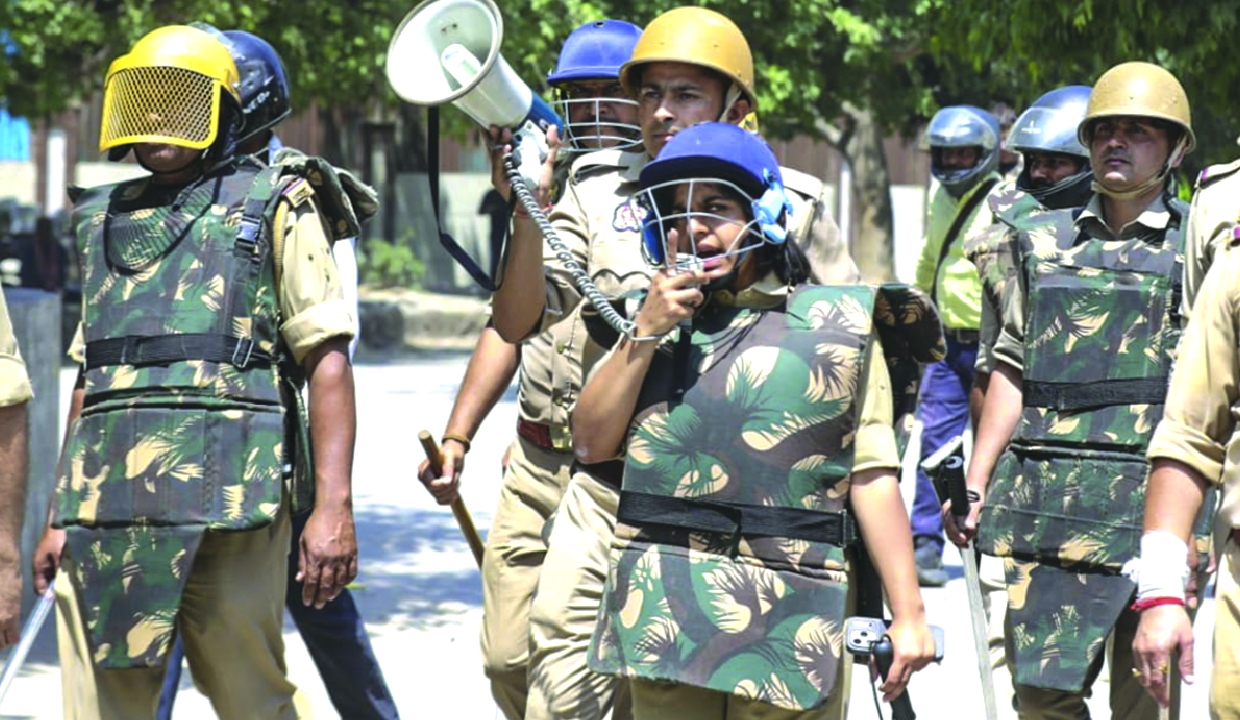
Authorities responded by deploying additional police forces and dispersing crowds using standard law-and-order measures. Officials maintained that force was used in a controlled manner to restore order.
The misinformation trigger
 (Image Credit: NDTV)
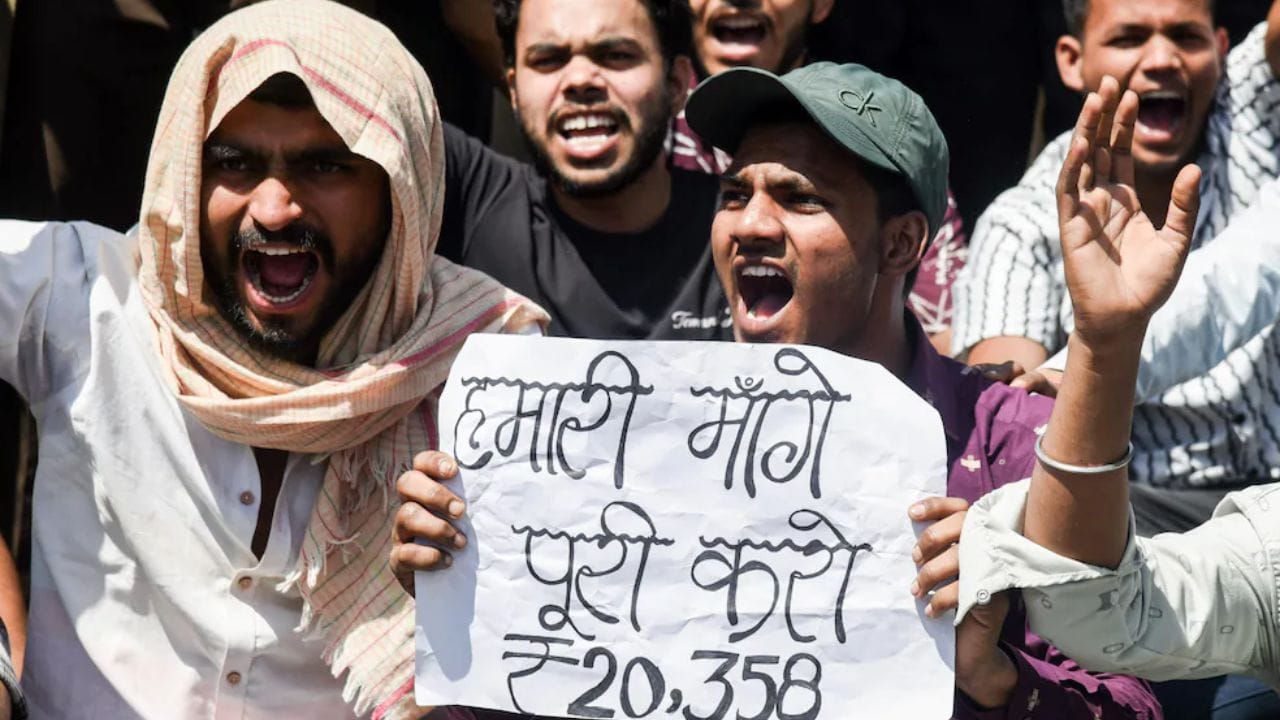
A critical accelerant in the escalation was the spread of a fake message claiming that a ₹20,000 minimum wage had been approved for all workers.
According to India Today, officials said this message circulated widely across the NCR, significantly raising expectations among workers already frustrated with wage levels.
Police investigations suggest that the message spread rapidly through WhatsApp groups created using QR codes, allowing large numbers of workers to be added quickly.
A senior police official told India Today that the pattern indicates a potentially “organised and orchestrated” mobilisation network, though investigations are ongoing.
Authorities have since warned that strict legal action will be taken against those spreading misinformation, emphasising that no such ₹20,000 mandate exists.
Day 2: Protests continue despite government action
 (Image Credit: News18)
On April 14, fresh protests broke out across Sectors 80, 70, 63 and 121, according to India Today.
Workers returned to the streets despite the government announcing an interim wage increase, signalling that the revised rates have not fully addressed worker expectations.
In some locations, clashes with police were reported again, including stone pelting and attempts to regroup in large numbers. However, officials said the situation in certain pockets, including areas with domestic worker participation, remained peaceful and under control after intervention.
Scale of police action
The state’s law-and-order response has been significant. As of April 14 afternoon:
- 396 people have been arrested, according to Gautam Buddh Nagar Police cited by India Today
- Seven FIRs have been registered in connection with violence and public disorder
- Over 100 individuals were detained for questioning, according to The Times of India
Those arrested include 392 men and four women, with further identification and arrests ongoing.
Police have maintained a heavy presence across industrial sectors, with senior officers overseeing operations to prevent further escalation.
Government response: wage revision and negotiations
(Image Credit: HT)
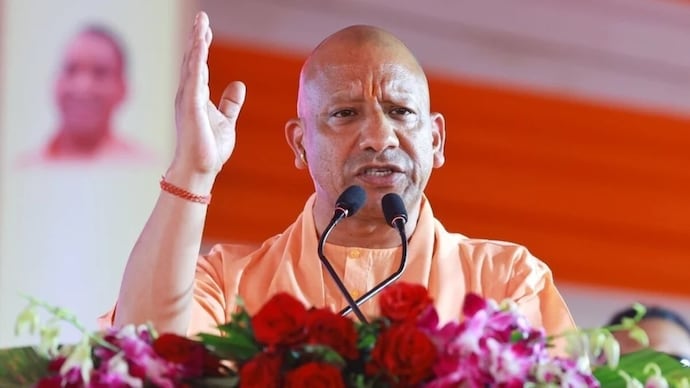
Faced with escalating unrest, the Uttar Pradesh government moved quickly to announce an interim increase in minimum wages.
According to India Today, the revised framework introduces:
- Higher minimum wages for unskilled, semi-skilled and skilled workers
- A tiered structure that differentiates between high-cost regions such as Noida and Ghaziabad and other districts
Officials acknowledged that the earlier system did not adequately reflect regional cost differences, contributing to worker dissatisfaction.
At the same time, authorities clarified that while minimum wages have been increased, companies can choose to pay more based on their internal policies.
The government has also initiated dialogue with worker representatives and industry bodies, aiming to find a balanced resolution that protects both labour interests and industrial stability.
High-level monitoring and security measures
The situation is now being monitored at the highest levels.
A high-level meeting at the Director General of Police headquarters has brought together senior officials, including those responsible for law and order and internal security, to coordinate the response.
Security deployment has been intensified across sensitive areas, with authorities focusing on:
- Preventing regrouping of protesters
- Maintaining traffic flow on key routes
- Monitoring digital communication channels linked to mobilisation
Officials have also indicated that they are examining the possibility of a larger conspiracy behind the violent escalation, though no definitive conclusions have been announced.
Political reactions add pressure
The unrest has triggered political responses, adding another layer to the situation.
According to India Today, Congress leader Rahul Gandhi described the protests as the “final cry” of workers, linking the unrest to inflation, global economic pressures and wage stagnation.
His remarks reflect a broader narrative that the issue extends beyond Noida, touching on labour conditions and wage growth across India’s industrial workforce.
A regional pattern of unrest
The Noida protests are not an isolated incident.
According to The Times of India, the unrest is part of a broader pattern of labour mobilisation across the NCR, including earlier protests in Manesar and Gurgaon.
This regional context is significant. Workers in different industrial hubs are increasingly comparing wages and conditions, creating cross-border pressure on state-level labour policies.
What happens next

(Image Credit: News18)
As of April 14 afternoon, the situation remains controlled but fragile.
The government’s dual approach—wage revision combined with enforcement action—has prevented further large-scale escalation for now. However, continued protests indicate that worker expectations have moved beyond incremental increases.
Three factors will shape the next phase:
- Effectiveness of negotiations between workers, industry and the government
- Enforcement against misinformation networks and coordinated mobilisation
-
Implementation of revised wage structures and whether they narrow the perceived gap with neighbouring states
The events of the past two days underline a critical shift in industrial relations: wage disputes are no longer confined to factory floors but are increasingly shaped by regional comparisons, digital mobilisation, and rapid information flows.
For Noida, one of North India’s most important industrial hubs, restoring stability will depend not just on policing, but on credible, transparent and region-sensitive labour policy responses.
Topics
Author
Loading...