







Diversity Equity Inclusion
What organisations must do to make inclusion feel real across remote and onsite teams






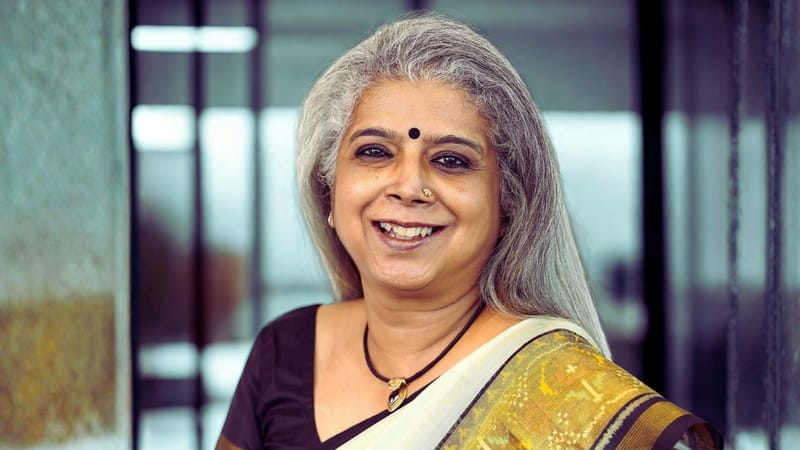
3M India’s HR head Aparna Sardar on why inclusion depends less on programmes and more on everyday leadership behaviours across hybrid work.
Inclusion is one of the most used words in the modern workplace. It appears in policies, townhalls, leadership decks, and annual reports.
But ask employees what it actually feels like — especially in hybrid teams — and the answer is often more complicated.
For Aparna Sardar, Country Head – Human Resources at 3M India, that gap between intention and experience is exactly where organisations need to focus. Because inclusion, she suggests, is not something you announce. It is something people live — or don’t — in everyday work.
Policies set the rules. Everyday behaviour sets the tone
Sardar draws a clear line between inclusion that is designed on paper and inclusion that is felt in practice.
“Policy-led inclusion provides the foundational structures that ensure fairness and accountability at scale, including clear anti-discrimination policies, accessible systems, and structured hiring and performance processes,” she says.
“This top-down framework helps create consistency and reinforces our commitment to equitable practices.”
That is the formal architecture — necessary, non-negotiable, and important.
But inclusion does not stop there.
“Inclusion experienced in everyday work… is shaped through daily interactions — how people listen, collaborate, and treat one another,” she says.
“It is reflected in whether individuals feel safe to share ideas, raise different perspectives, and be recognised for their contributions.”
In other words: policies may point the way, but daily behaviour decides whether people feel they belong.
Belonging is built in meetings, not mission statements
If inclusion is experienced daily, then leaders and managers become the most powerful translators of that experience.
“Employees’ sense of belonging is shaped most strongly by consistent and inclusive leadership behaviours,” Sardar says.
She points to the small, often underestimated moments: who gets invited into decision-making, whose voice is encouraged, and whether quieter team members are given space.
This begins, she explains, with “inviting diverse perspectives, encouraging participation from quieter voices, and ensuring balanced airtime in team discussions.”
Belonging is also reinforced through something deceptively simple: credit.
“Belonging is also reinforced through recognition and fair credit, where contributions are acknowledged clearly and linked to individuals and teams.”
Empathy matters too — not as a corporate buzzword, but as a leadership practice that builds trust.
“Empathy and support from leaders help build trust and enable psychological safety and engagement.”
At its core, she says, inclusion comes down to consistency.
“At its core, inclusion is shaped by how leaders consistently show up and model these behaviours through everyday actions.”
In 2026, inclusion will depend less on programmes and more on systems
The next shift, Sardar believes, is organisational. Inclusion cannot rely only on individual managers doing the right thing. It must become repeatable across teams, locations, and work models.
“Organisations achieve consistent inclusion by treating it as a connected system that moves from policy to practice, experience, and outcomes,” she says, “rather than as a series of isolated initiatives.”
That system begins with clear standards — inclusive meeting norms, accessible tools, fair processes — embedded into onboarding and performance expectations.
But the real work happens in practice: enabling managers to lead inclusively across hybrid and onsite environments.
“This includes building capability for equitable participation, culturally intelligent collaboration, and bias-aware decision-making,” she says.
The outcomes, she adds, must be measurable: psychological safety, fair recognition, access to flexibility — tracked through surveys, progression data, and feedback loops.
Well-supported employee resource networks also matter because they extend belonging beyond formal structures.
“Well-supported employee resource networks help extend belonging across teams, locations, and identities.”
At 3M India, she notes, the focus is on strengthening what happens every day rather than relying on symbolic visibility.
“At 3M India we try to avoid relying only on high-visibility campaigns and instead strengthen everyday behaviours, systems, and accessibility.”
Looking ahead, Sardar argues that employers should pay closer attention to embedded practices rather than standalone initiatives.
“As organisations look ahead to 2026, the focus should shift from standalone programmes to embedded practices that shape everyday experience,” she says.
This includes decision systems that bring diverse perspectives in early, and “bias-resistant performance and promotion processes” grounded in evidence-based criteria.
Psychological safety, she adds, should become a leadership expectation, not an optional extra.
Flexibility is not a perk. It is inclusion infrastructure
Hybrid work has made flexibility unavoidable — but Sardar frames it as something deeper than convenience.
“Flexibility and wellbeing play a critical role in making inclusion work in practice by removing barriers that different employees face across life stages, roles, and locations,” she says.
Flexible work options help retain diverse talent, particularly caregivers, and support lower stress and higher retention.
At the same time, she acknowledges the renewed organisational emphasis on collaboration.
“At 3M globally, we are moving to a return-to-office approach that prioritises collaboration as a key driver of innovation.”
The balance, she suggests, lies in culture: leaders fostering “a supportive, empathetic, and human-centric culture that allows flexibility where it is needed.”
Ultimately, treating flexibility as a design principle — supported by clear guidelines, equitable access to development, and inclusive technology — ensures that every employee has an equal voice, regardless of location.
In Aparna Sardar’s framing, inclusion is not something that lives in a handbook. It lives in meetings, in recognition, in decision-making, and in whether people feel safe enough to contribute.
In the hybrid workplace, the organisations that succeed will be those that make inclusion not just visible in policy — but real in practice, every day.
Topics
Author
Loading...