







Economy Policy
50% tariffs on exports trigger mass layoffs in Tiruppur textile hub






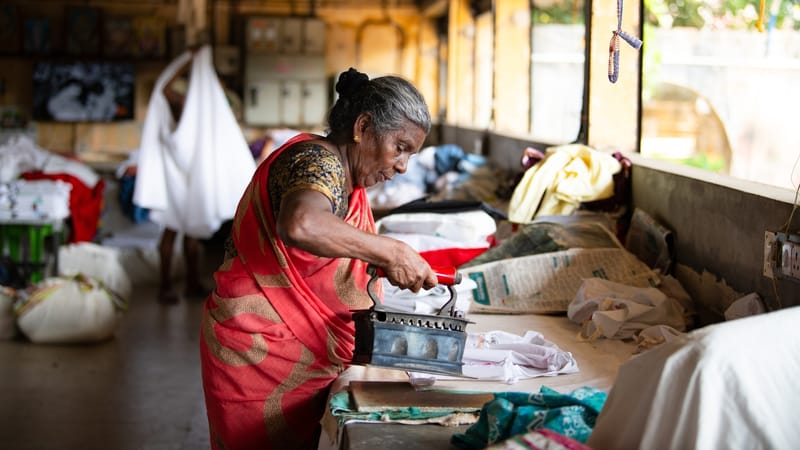
Factories in Tamil Nadu’s textile hub cut operations as orders collapse, leaving migrant workers to return home jobless.
At Chennai Central railway station this week, hundreds of migrant workers boarded north-bound trains with bags and rolled-up bedding after losing their jobs in Tiruppur’s hosiery hub. A report by ThePrint described how a 50 per cent tariff on Indian textile exports has dried up orders, forcing factories to shut and leaving thousands unemployed.
Workers told ThePrint they could no longer survive in the city. “I used to get six days of work every week. Now I barely get two,” said Kuldeep, a worker from Bihar. “Rent and food cost more than what we earn. It’s better to go home until things improve.”
Tiruppur accounts for nearly one-third of India’s textile exports and 90 per cent of cotton knitwear shipments, according to the Tiruppur Exporters’ Association (TEA). Exports from the city touched Rs 39,618 crore in 2024–25, with up to 35 per cent bound for the US.
But volumes have dropped sharply. ThePrint reported that around 20 per cent of Tiruppur’s 2,500 knitwear units have shut, and half have reduced operations. “Our customers in the US have almost stopped placing orders,” said factory owner S. Krishnamoorthy. “We are taking small domestic orders just to keep machines running, but it is not sustainable.”
For many workers, the crisis has shattered personal plans. “I wanted my daughter to study in an English-medium school in Tiruppur. Now we are going back to the village and she must shift to a government school,” said Dhileepkumar, a worker from Bihar.
Some are shifting to other trades. ThePrint cited the case of Atheep, 27, from Uttar Pradesh, who took up painting work in Chennai after losing his textile job. “I earned up to Rs 900 a day in Tiruppur. Painting pays far less. I may have to return home,” he said.
Labour unions compared the situation to the Covid-19 exodus. “If workers leave permanently, rebuilding the labour supply will take years,” said G. Sampath of the Centre of Indian Trade Unions.
Industry leaders warn that rivals Bangladesh and Vietnam, which face lower tariffs, are capturing lost contracts. TEA president K.M. Subramaniam told ThePrint the industry could lose Rs 14,000 crore annually if relief is not provided.
Supporting businesses such as dyeing units, button suppliers and transport services are also affected. “I used to supply to three factories. Now only one calls me occasionally,” said trader M. Ramachandran.
Exporters have urged the government to negotiate tariff rollbacks with the US and provide wage support for workers. Some factory owners say enquiries from US buyers have resumed since trade talks began, but order volumes remain uncertain.
“Enquiries alone cannot save us. Unless tariffs are addressed, we cannot survive,” said TEA member Raja Shanmugasundaram.
For now, ThePrint reported, trains leaving Chennai remain packed with migrant workers carrying not just their luggage, but the weight of disappointment.
Topics
Author
Loading...