







Economy Policy
China’s K-Visa: A new door for Indians or another H-1B headache?





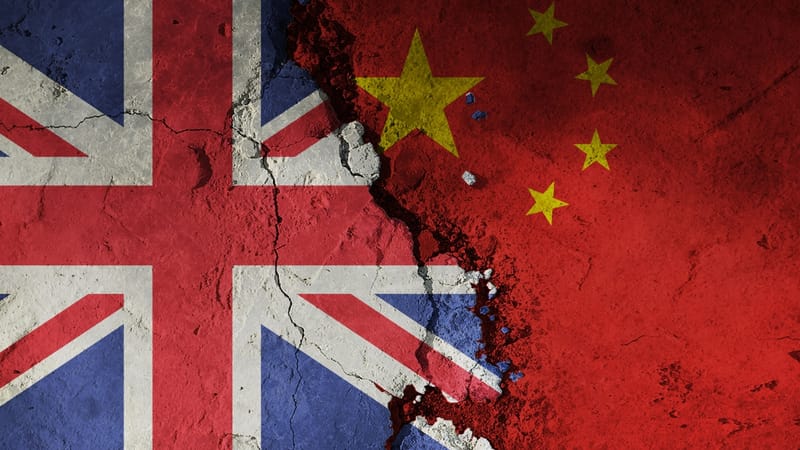
Beijing’s K-visa aims to lure young STEM talent from abroad. For Indians, the promise looks bold, but the pitfalls may sound familiar.
China is about to roll out a new visa programme that could reshape global mobility for technology professionals. From 1 October, the country will introduce the K-visa, a category aimed at attracting young foreign scientists, engineers and technologists, according to state media. It is the clearest signal yet that Beijing wants to compete head-on for global talent as it races to cement an innovation edge.
Unlike conventional work permits, the K-visa does not require a sponsoring employer or host institution, the State Council confirmed. That strips away one of the biggest hurdles that defines the US H-1B system, where the employer holds the key to entry. Instead, applicants will need to meet benchmarks set by Chinese authorities in education or professional record, largely within the science, technology, engineering and mathematics fields.
Officials say the new category allows multiple entries, longer stays and broader activities, from research and academic work to entrepreneurship. State outlets stressed the visa was designed to give “young science and technology professionals” greater freedom to work, exchange knowledge and build ventures inside China.
What’s in It for Indians?
For Indian professionals in STEM — a cohort long squeezed by US visa quotas and delays — the K-visa looks at first glance like a release valve. Analysts told the Eurasian Times that India sits squarely in Beijing’s sights as part of the Global South talent pool.
But the fine print matters. Current guidance suggests applicants may face age caps of 40 to 45 years, mirroring similar Chinese talent schemes. Documentation could also demand evidence of publications, patents or innovation track records. That could tilt the playing field towards elite graduates or those with global credentials, raising questions about inclusivity.
Echoes of the H-1B
The comparison with America’s H-1B visa is inevitable. For years, Indian engineers have faced a lottery system, long backlogs and dependence on a single employer sponsor. The K-visa sidesteps some of that by cutting out sponsorship and opening the door to research or entrepreneurial activity.
Yet critics caution that new bottlenecks may emerge. Without clear application rules, transparency over selection, and assurances around intellectual property, the process could prove just as daunting. Professor Marina Zhang of the University of Technology Sydney told the Business Standard that removing employer checks might broaden access but also raises the risk of inconsistent standards.
Integration is another hurdle. A visa may bring talent in, but whether professionals stay depends on infrastructure, language support, cultural openness and the perception of China as a long-term career bet. Here the US and Europe still hold the advantage.
Strategic Timing
The launch comes as Western nations tighten skilled immigration. Washington has slowed visa processing and raised scrutiny of applicants, while the UK and Europe have debated caps. By contrast, China is signalling openness. As the South China Morning Post noted, the K-visa underscores Beijing’s intent to turn immigration policy into a lever of industrial strategy.
The move also coincides with China’s domestic push for self-reliance in semiconductors, biotech, clean energy and AI. By lowering barriers, the government hopes to plug gaps in expertise and accelerate knowledge transfer.
Watchpoints Ahead
What will matter most is how the scheme is implemented. Key questions include:
Criteria clarity: Will Beijing publish transparent, merit-based requirements?
Processing speed: Can applications be handled faster than the months-long waits common elsewhere?
Retention incentives: Will foreign researchers be offered grants, housing support or career tracks that make staying in China worthwhile?
Geopolitics: As US-China tensions harden, will Indian professionals view the K-visa as a springboard or a risk?
The Stakes
For India’s STEM workforce, the K-visa offers both promise and peril. It could provide an alternative pathway at a moment when traditional destinations are constricting. But it may also expose applicants to new uncertainties, from eligibility criteria to integration challenges.
For China, the visa is less about headcounts and more about signalling ambition. If it can attract and retain a critical mass of young technologists, the country stands to accelerate its climb up the innovation ladder. If not, the K-visa risks becoming another headline policy with limited traction.
The story, as ever with visas, lies not in the announcement but in the execution. And on that front, Indian professionals — scarred by the H-1B experience — will be watching closely.
Topics
Author
Loading...