







Economy Policy
Davos 2026: Pollution a greater risk to India than tariffs, says Gopinath






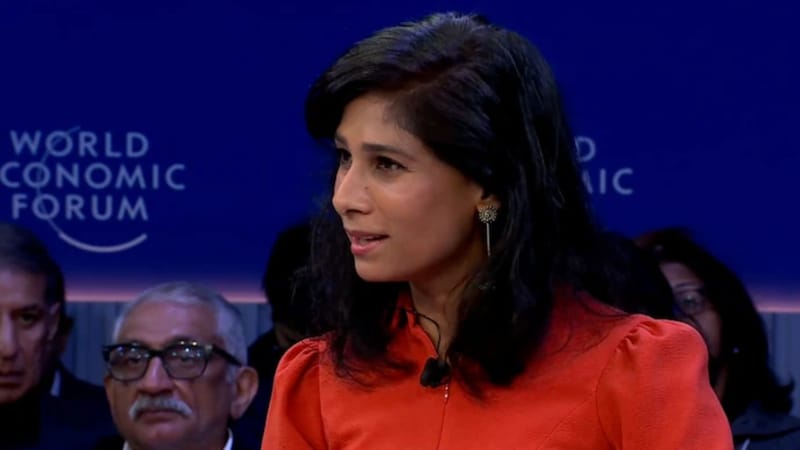
Harvard professor warns pollution is eroding productivity, raising healthcare costs and weighing on investor confidence.
Pollution is emerging as a more serious threat to India’s economic growth than global tariffs, Gita Gopinath, professor at Harvard University, said on Tuesday, warning that environmental damage is quietly imposing heavy costs on productivity, public health and investor confidence.
Speaking at a session at the World Economic Forum, Gopinath said economic debates in India tend to focus disproportionately on trade barriers, tariffs and regulation, while the economic impact of pollution remains underappreciated.
“Pollution is a challenge in India, and its impact on the economy is far more consequential than any impact of tariffs imposed so far,” Gopinath said, adding that it acts as a persistent drag on growth by affecting labour productivity, increasing healthcare expenditure and weakening overall economic activity.
She cited a World Bank study released in 2022, which estimated that pollution causes nearly 1.7 million deaths in India every year, accounting for about 18% of total deaths in the country. Gopinath said the scale of mortality also translates into significant economic losses, affecting families, workforce participation and long-term development outcomes.
Beyond domestic costs, she said pollution has implications for India’s global competitiveness. “From an international investor’s point of view, if you are thinking of setting up operations in India and living there, the environment matters,” she said, noting that poor air quality and living conditions can discourage investment, particularly when health risks are factored in.
Gopinath added that the burden is not limited to foreign investors, pointing out that millions of Indians working and living in highly polluted cities face similar health and productivity risks.
Calling for stronger policy action, she said pollution control must be treated as a national priority. “This has to be addressed on a war footing. It should be a mission for India,” she said, placing environmental reform alongside deregulation as one of the most urgent areas for policy intervention.
As India seeks to position itself as a global manufacturing and investment hub, Gopinath’s remarks underscore the economic stakes of cleaner cities and healthier living conditions, suggesting that tackling pollution is central not only to environmental goals but also to sustaining growth and attracting long-term investment.
Topics
Author
Loading...