







Employee Skilling
India’s education system is failing its youth, warns NITI Aayog CEO





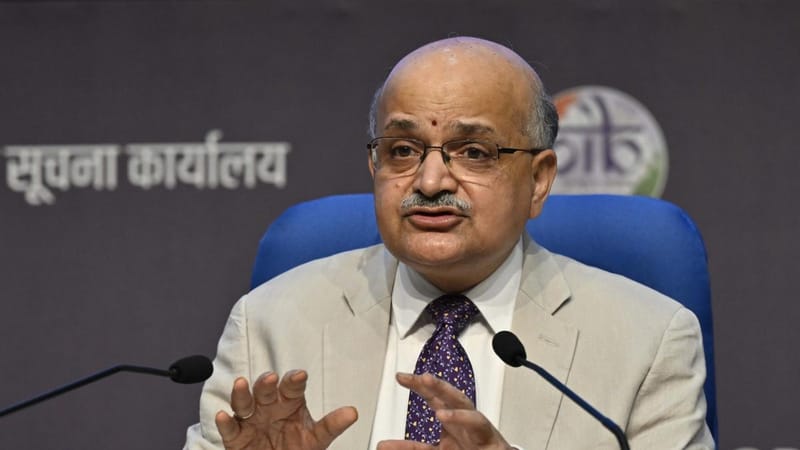
B.V.R. Subrahmanyam says lack of skill-based education is fuelling unemployment and low productivity despite India’s demographic advantage.
India’s education system still treats skilling as an extracurricular activity, leaving much of the workforce unemployable and underpaid, NITI Aayog Chief Executive Officer B.V.R. Subrahmanyam said on Wednesday.
Delivering the keynote address at the Bengaluru Skill Summit organised by the Government of Karnataka, Subrahmanyam said the absence of general employability training in school and university curricula lies “at the root of the problem India is currently facing”.
“Our curriculum lacks general employability skill training, and as a result, a majority of our population remains hugely unskilled — doing very low-paying jobs or staying unemployed,” he said, as reported by The Hindu BusinessLine.
The NITI Aayog chief argued that skilling should not be treated as a separate or peripheral activity. “We are putting people in silos and treating skilling as something separate. It must become an integral part of the education system, accessible to people of all ages — 20, 30, 40, 50 or even 60,” he said.
He added that India’s 500 million farmers also need structured training to modernise agriculture and sustain productivity gains.
Subrahmanyam said India stood at a critical inflection point, with favourable demographics and global conditions supporting growth. However, without a skilled and employable population, that advantage could turn into a liability.
“If we don’t invest in our people, the demographic advantage can become a curse,” he warned. “Only a skilled, employable, well-earning workforce will power India to become a $30 trillion economy by 2047.”
The NITI Aayog chief called for the creation of integrated academic, skill and vocational institutions on a large scale. He said many individuals had pursued the wrong education paths and now found themselves mid-career and directionless.
He proposed a national system to map skill sets, connect workers and job roles, and ensure interoperability between education and employment platforms. Such a framework, he said, would help define new job roles, establish career pathways and expand employment opportunities.
Subrahmanyam also addressed the role of artificial intelligence (AI) in shaping India’s labour market. He said AI would “remove roles, not jobs”, estimating it could displace about four million positions while creating six million new ones — a net gain for the economy if workers are retrained effectively.
“The opportunities that AI brings will depend entirely on how fast we reskill and redeploy our people,” he said.
Subrahmanyam’s remarks reflect growing recognition among policymakers that India’s education and skilling systems must converge to meet the demands of a changing economy.
As India seeks to expand its manufacturing base and digital infrastructure, the challenge will be ensuring that its vast workforce is not only young but also job-ready.
Topics
Author

Loading...