







Leadership
AI productivity gains won’t lead to headcount cuts, says TCS CEO






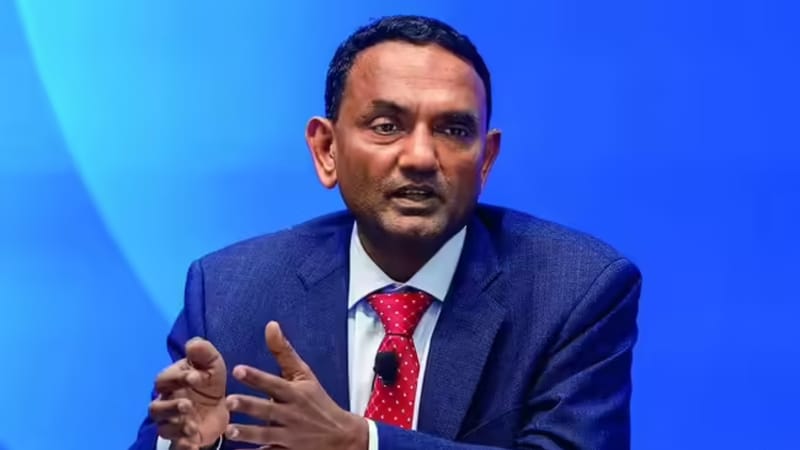
TCS chief K Krithivasan says AI will expand IT services demand, with enterprises using efficiency gains to accelerate adoption rather than reduce staff.
Artificial intelligence-driven productivity gains are unlikely to translate into job cuts in the IT services sector, Tata Consultancy Services CEO K Krithivasan said, stating that disruption will expand demand rather than shrink it.
Speaking to CNBC-TV18 on the sidelines of the India AI Impact Summit, Krithivasan dismissed concerns that AI will erode employment across traditional technology services. “There is no need to panic… Every time there is a disruption, the work expands,” he said.
Krithivasan acknowledged that AI could deliver productivity improvements of 20–30% in conventional IT services work. However, he said enterprises are more likely to deploy these efficiency gains to clear backlogs and accelerate technology adoption rather than reduce headcount.
The comments come as global companies increasingly integrate generative AI tools into software development, operations and customer-facing functions, raising questions about the long-term relationship between revenue growth and workforce expansion in the outsourcing industry.
Krithivasan said the sector must adapt by shifting away from labour-linked billing models towards outcome-based pricing, reflecting the changing nature of service delivery in an AI-enabled environment.
“It’s not a challenge… It’s the way the industry is moving towards, and we ought to adapt,” he said, adding that overall demand for technology services will continue to grow.
“We believe the pie will increase… There will be much more work to be done,” he said, pointing to the emergence of new AI-driven applications and roles.
Krithivasan said TCS is already executing advanced AI use cases for global clients, including drug discovery programmes and claims process automation. He added that enterprises will need to modernise data systems, workflows and technology stacks before they can leverage AI at scale, creating fresh layers of demand from model orchestration to intelligent agents.
TCS is positioning itself to operate across the AI stack, spanning infrastructure, model development and application deployment. Krithivasan said broader participation across these layers would allow the company to add value and expand revenue opportunities.
The company has announced partnerships, including with chipmaker AMD, and is investing in data centre infrastructure. Krithivasan described the strategy as a structural shift, saying TCS is also pursuing acquisitions “at speed and scale”.
He said India’s AI data centre requirements are expected to rise sharply, estimating the country will need at least 10 gigawatts of capacity by 2030, compared with around five gigawatts currently committed. Lower domestic power costs, he added, could position India as a hub not only for AI inferencing but also for global model training.
Krithivasan estimated that each gigawatt of AI data centre capacity could attract investment of up to $40 billion, underlining the scale of the opportunity.
Shares of Tata Consultancy Services were trading 1.12% lower at ₹2,687 in afternoon trade, CNBC-TV18 reported. The stock has declined more than 30% over the past year.
As AI reshapes the economics of outsourcing, Krithivasan’s message was clear: productivity gains may change how work is priced and delivered, but they are not expected to reduce the volume of work — or the workforce — required to meet growing enterprise demand.
Topics
Author
Loading...