







Leadership
End of an era: Warren Buffett steps down as Berkshire Hathaway chairman






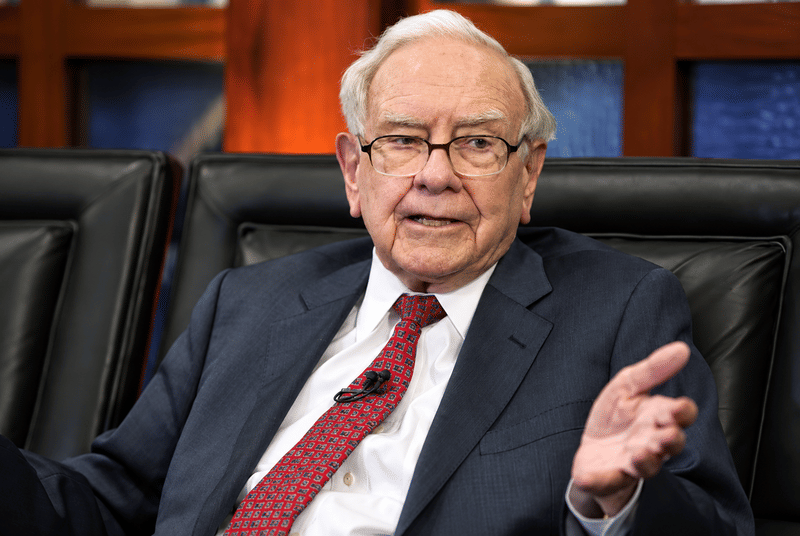
After six decades at the helm, Warren Buffett transitions to chairman emeritus as Berkshire Hathaway completes a carefully planned leadership succession.
Warren Buffett has stepped down as chairman of Berkshire Hathaway, marking the end of one of the most influential leadership tenures in corporate history. The move transfers the chairmanship to his son, Howard Buffett, while the veteran investor takes on the role of chairman emeritus and remains on the board.
The announcement, detailed in a letter to shareholders, comes nine months after Buffett handed over chief executive responsibilities to Greg Abel, completing a succession plan years in the making.
A transition decades in preparation
At 96, Buffett said the timing was right to complete the transition. According to Berkshire Hathaway's shareholder communication, he will continue to provide his "judgement and perspective" as chairman emeritus.
The leadership reshuffle separates Berkshire's executive and governance responsibilities. While Abel oversees business operations, strategy and capital allocation, Howard Buffett will assume responsibility for board leadership and preserving the company's long-standing culture and values.
The succession structure includes:
- Greg Abel serving as Chief Executive Officer
- Howard Buffett becoming Chairman of Berkshire Hathaway
- Warren Buffett remaining on the board as Chairman Emeritus
- Continuity of Berkshire Hathaway's existing operating model
The carefully phased succession reflects Berkshire Hathaway's emphasis on stability and long-term stewardship rather than abrupt leadership change.
Building a corporate powerhouse
Buffett's departure from the chairman role closes a chapter that began in 1965 when he took control of Berkshire Hathaway, then a struggling textile manufacturer based in New England.
Over the following decades, he transformed the company into a global conglomerate valued at approximately $1.1 trillion (£822 billion).
Today, Berkshire Hathaway owns or controls businesses across insurance, transport, energy, manufacturing and consumer sectors. Its portfolio includes well-known brands such as GEICO, Dairy Queen and BNSF Railway, while also holding significant investments in companies including Apple and Coca-Cola.
Key milestones from Buffett's tenure include:
- Acquiring control of Berkshire Hathaway in 1965
- Building one of the world's most successful long-term investment records
- Expanding Berkshire into a diversified multinational conglomerate
- Establishing shareholder letters as influential guides on investing and business leadership
- Creating a corporate culture centred on decentralised management and long-term value creation
Buffett became globally recognised for championing value investing, a strategy focused on acquiring fundamentally strong businesses and holding investments over extended periods.
Howard Buffett takes on a stewardship role
Howard Buffett, who has served as a Berkshire Hathaway director since 1993, now assumes the non-executive chairmanship.
A farmer, philanthropist and former sheriff, Howard Buffett brings more than three decades of board-level experience within the organisation. His primary responsibility will be safeguarding the culture that has shaped Berkshire Hathaway's identity under his father's leadership.
The leadership arrangement allows operational management to remain with Abel while ensuring continuity in governance and oversight.
One of Berkshire Hathaway's defining strengths has been its ability to preserve a consistent culture across a diverse collection of businesses while maintaining significant managerial autonomy.
Legacy of the Oracle of Omaha
Often referred to as the "Oracle of Omaha", Buffett became one of the world's most respected investors through a disciplined investment philosophy and a reputation for long-term thinking.
His annual shareholder meetings evolved into major events attracting investors from around the world, while his letters to shareholders became widely studied across financial and business communities.
In his farewell message as chairman, Buffett described serving in the role as the "privilege of a lifetime". He also acknowledged the inevitability of leadership succession, writing that "Father Time always wins."
With the chairmanship now passed to Howard Buffett and executive leadership under Greg Abel, Berkshire Hathaway enters a new phase while retaining many of the structures and principles established during Buffett's six-decade tenure.
Topics
Author

Loading...