







Leadership
“I somehow got to be the person on the other end”: Tim Cook reflects on 15 years at Apple






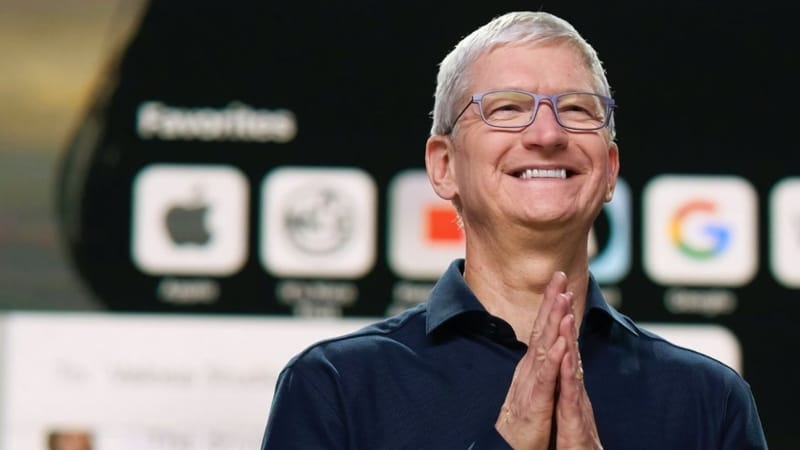
Outgoing Apple CEO shares a deeply personal note to users and staff, reflecting on leadership, gratitude and the company’s future.
On most mornings for the past 15 years, Tim Cook has started his day in the same way: opening emails from customers of Apple.
That habit sits at the centre of a pair of unusually personal letters released this week, as Cook prepares to step down as chief executive and transition to executive chairman later this year. The correspondence, addressed separately to users and employees, offers a rare, reflective account of a tenure defined as much by stewardship as by scale.
“I somehow got to be the person on the other end of those emails,” Cook wrote, capturing both the intimacy and distance of leading one of the world’s most valuable companies.
A leadership shaped by listening
Cook’s note to customers is grounded in anecdote rather than metrics. He recounts messages about lives saved by the Apple Watch, creative milestones enabled by the Mac, and everyday frustrations when products fall short.
The through line is not product success but human connection. Reading those emails, he said, reinforced a sense of obligation to “work harder and push further”, while also instilling a gratitude he “cannot put into words”.
It is a framing that aligns with Cook’s broader leadership style, which has often leaned on operational discipline and incremental innovation rather than the showmanship associated with his predecessor, Steve Jobs.
From succession to succession
Cook’s internal letter shifts tone, moving from reflection to continuity. He revisits the moment Jobs asked him to take on the chief executive role, describing it as both “emotional” and “challenging”, and reiterates the set of values he believes have anchored Apple through decades of change.
Simplicity over complexity. Focus on what matters. An intolerance for mediocrity. A commitment to leaving the world better than it was found.
Those principles, Cook suggests, will outlast any individual leader. They also frame his endorsement of John Ternus, the long-serving engineer who will take over as CEO.
Cook describes Ternus as a “brilliant engineer and thinker” with deep roots in Apple’s product organisation, adding that his successor combines technical vision with cultural alignment. Ternus has spent roughly a quarter-century at the company, shaping many of its flagship devices.
The weight of a long tenure
Cook does not dwell on financials or milestones, but his 15-year tenure coincides with a period of extraordinary expansion for Apple, spanning new product categories, a growing services business, and a significant increase in global influence.
Yet the letters avoid corporate triumphalism. Instead, Cook repeatedly redirects credit towards employees, calling them “the most remarkable people in the world”, and towards users, whom he positions as the centre of Apple’s work.
That emphasis reflects a deliberate narrative: one of continuity rather than disruption, and of collective achievement rather than individual legacy.
Not an exit, but a repositioning
The transition itself is staged rather than abrupt. Cook will remain CEO through the summer, working closely with Ternus before formally assuming the role of executive chairman in September.
He is explicit that the move is not a departure. “This is not goodbye,” he writes, signalling an ongoing role in advising and supporting the company.
For Apple, the shift appears calibrated to minimise disruption, with a successor drawn from within and a leader who remains in place at board level. For Cook, it marks a repositioning after a decade and a half at the operational centre of one of the world’s most closely watched companies.
If the letters offer a window into his leadership, they also underline its defining characteristic: a focus on the quiet, daily exchanges that connect a global corporation to the individuals it serves.
And, as Cook frames it, the unlikely privilege of being on the receiving end of those conversations.
Topics
Author
Loading...