







Leadership
Infosys board to discuss CEO succession as Salil Parekh may not get a third term: Report






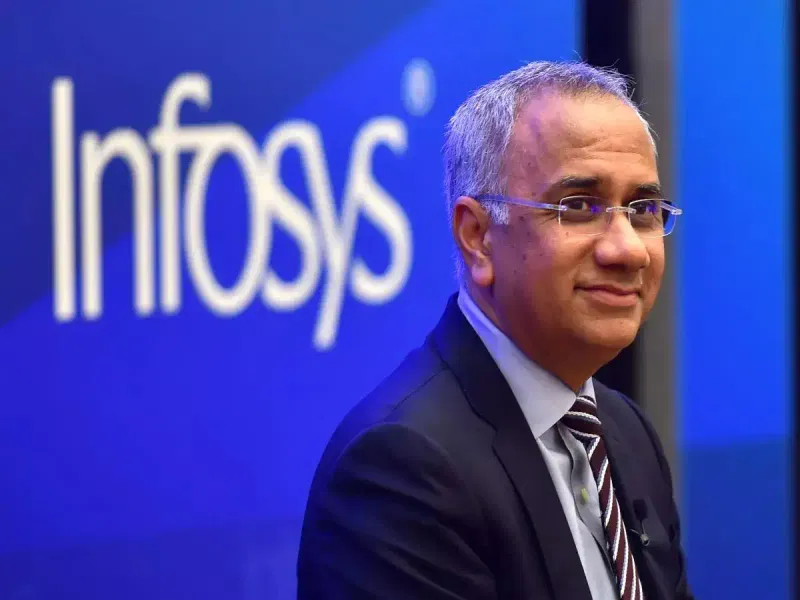
Board to review CEO tenure and succession plan as Salil Parekh may get a shorter extension, according to media report.
Infosys is set to take up succession planning for the chief executive at its upcoming board meeting, with Salil Parekh unlikely to receive a third full term.
The board is scheduled to meet on Thursday to approve the company’s fourth-quarter results for FY26, and is expected to review leadership continuity alongside financial performance.
Board to weigh tenure extension and succession plan
Parekh’s current five-year term runs until March 2027. According to ETtech, the board is likely to consider a two-year extension, which would allow the company to execute a structured succession plan.
“I don't think there can be more than a two-year extension. The extension will be used to run and manage a succession plan,” a source told ETtech. The report added that the company is keen to ensure continuity after a period of stable leadership under Parekh.
Parekh has led Infosys since December 2017, following an executive search that lasted nearly two months.
Focus on stability amid industry shifts
The move comes as Infosys navigates a changing demand environment shaped by artificial intelligence-led disruption and cautious client spending. A smooth leadership transition is seen as critical at a time when valuations across the sector have come under pressure.
The company is also understood to be mindful of past leadership disruptions. In 2014, the return of founder N. R. Narayana Murthy had triggered a series of senior exits amid uncertainty over management direction.
Sources told ETtech that Infosys aims to avoid similar upheaval by adopting a measured approach to succession. Parekh’s tenure has been described as stable, strengthening the case for a phased transition rather than an abrupt change.
The upcoming board discussions are expected to set the direction for Infosys’s leadership roadmap as it balances near-term operational stability with longer-term strategic shifts.
Topics
Author
Loading...