







Leadership
Nvidia CEO reviews pay of all 42,000 staff monthly – Here’s why






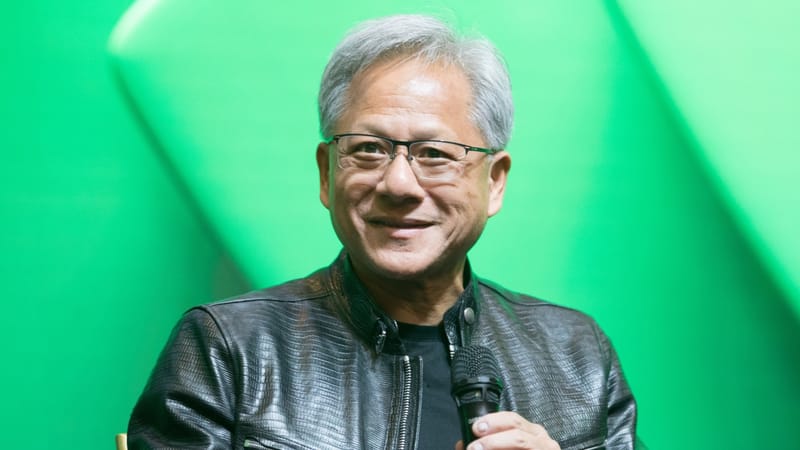
Jensen Huang says reviewing every employee’s pay each month helps Nvidia retain talent and sustain its AI leadership.
Nvidia’s chief executive, Jensen Huang, has revealed that he personally reviews the salaries of all 42,000 employees every month – a practice he says is central to keeping the company competitive and retaining its top talent.
Speaking on the All-In Podcast, as first reported by CNBC, Mr Huang said that his compensation review process involves both technology and a hands-on approach.
“I review everybody’s compensation, up to this day, at the end of every cycle,” Huang said. “They send me everybody’s recommended comp. I go through the whole company. I sort through all 42,000 employees, and 100% of the time I increase the company’s spend on opex.”
He explained that machine learning tools help analyse monthly pay data before he decides on any adjustments. The philosophy, he said, is simple: “If you take care of people, everything else takes care of itself.”
Retention Through Reward
Huang noted that this meticulous approach has been instrumental in retaining Nvidia’s senior leadership.
“I have created more billionaires on my management team than any other CEO in the world. They’re doing just fine. Don’t feel sad for anybody at my layer,” he said, according to The Verge.
The CEO, who last year entered Forbes’ list of the world’s top 10 richest people and topped Fortune’s 2025 list of the 100 Most Powerful People in Business, stressed that rewarding employees extends far beyond the executive ranks.
Huang also addressed speculation about a “hidden reserve” of stock options for top performers, suggesting that competitive compensation across the board is a better long-term strategy for innovation and loyalty.
A Lean, Well-Funded Team Philosophy
In the same interview, Huang pointed to the value of small but highly resourced AI teams, citing OpenAI and Chinese AI lab DeepSeek as prime examples.
“If you’re willing to pay, say, $20 billion, $30 billion to buy a startup with 150 AI researchers, why wouldn’t you pay one?” he said. “These teams can create wonders with the right resources.”
This perspective aligns with Nvidia’s long-standing belief in concentrating talent and giving it the means to deliver breakthroughs – an approach that has underpinned its rapid rise in the AI era.
A $4 Trillion Milestone
Huang’s comments come as Nvidia becomes the first publicly traded company to surpass a $4 trillion market capitalisation, overtaking Microsoft and Apple, as reported by Bloomberg.
The milestone follows a staggering climb from $1 trillion in June 2023, fuelled by record demand for Nvidia’s AI chips, which power large language models such as OpenAI’s ChatGPT, Google’s Gemini, and Meta’s LLaMA.
The company’s stock is up 22% in 2025, after soaring 239% in 2024. Nvidia posted $44.1 billion in revenue for its first quarter of fiscal 2026 and expects approximately $45 billion in the second quarter. Analysts have dubbed it the “poster child of the AI revolution.”
Looking ahead, Nvidia plans to launch its next-generation “Rubin” AI chips in 2026. Meanwhile, US and EU regulators are increasing scrutiny of the company’s dominance in the AI hardware sector, concerned about potential market concentration.
Topics
Author

Loading...