







Leadership
Pai says Murthy’s 72-hour workweek pitch was for entrepreneurs, not employees






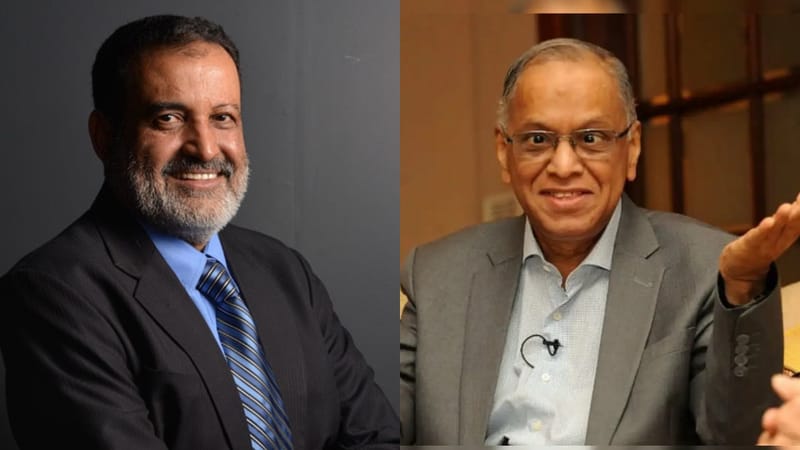
Mohandas Pai says Narayana Murthy’s 72-hour workweek remark was aimed at founders and innovators—not ordinary employees—calling the backlash a misunderstanding.
Aarin Capital Chairman Mohandas Pai has sought to clarify Infosys founder N.R. Narayana Murthy’s recent appeal for young Indians to adopt a 72-hour workweek, saying the remark was directed at entrepreneurs and high-performing innovators rather than the wider workforce, the Economic Times reported.
Pai said the criticism that followed Murthy’s comments stemmed from “a misunderstanding”, noting that the veteran industrialist was referring specifically to teams attempting to build globally competitive technology companies. He drew parallels to China’s “996” work culture, where employees are expected to work from 9 a.m. to 9 p.m., six days a week.
In an interview with ET Now, Pai stressed that Murthy’s remarks were not meant for bank staff, office workers or the general employee base. “This is for a select group of innovators who want to build unicorns. Ordinary employees are not being asked to work 70 hours,” he said.
Pai, who previously served as Infosys’s chief financial officer, argued that the world’s most successful tech ecosystems are built by “highly motivated teams” who voluntarily operate at an intense pace. He pointed to founders in China and Silicon Valley, saying they work “extremely hard” as they push to scale breakthrough companies.
The Entrepreneurship Lens
Speaking to the Economic Times, Pai added that for founders, the notion of work-life balance “doesn’t exist” in the conventional sense. “You are driven by the need to build something great. If you choose entrepreneurship, you slug it out,” he said, framing Murthy’s comments as a reflection of entrepreneurial ambition rather than a prescription for the broader workforce.
Pai, however, drew a clear ethical line, stating that imposing 996-style schedules on employees would be both “unethical and illegal”, even as he defended the need for intensity within startup leadership teams.
What Murthy Said
Murthy reignited the debate in a recent interview in which he again invoked the idea of a 72-hour workweek, citing insights from Catamaran’s recent visits to Chinese cities. He pointed to China’s 996 culture as a factor in its rapid technological scale-up, arguing that India’s young workforce would need similar levels of effort to compete globally.
The exchange underscores an enduring tension within India’s technology ecosystem: balancing the drive for global competitiveness with growing concerns over burnout, employee wellbeing and the limits of long-hours cultures. While Pai’s clarification attempts to narrow the scope of Murthy’s comments, the debate is likely to persist as the industry grapples with shifting expectations of work and productivity.
Topics
Author

Loading...