







Leadership
Sundar Pichai becomes billionaire after 10 years as Alphabet CEO






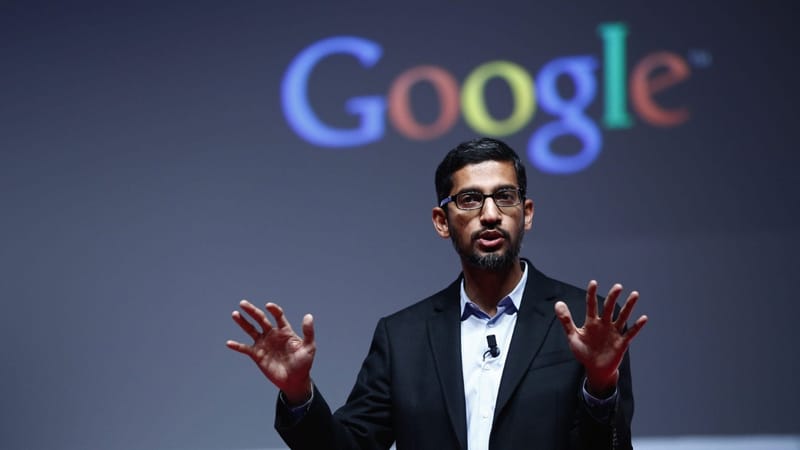
Alphabet CEO Sundar Pichai joins the billionaire club—without founding equity—after leading $1 trillion in value creation over a decade.
Sundar Pichai, the CEO of Alphabet Inc., has officially become a billionaire, marking a rare ascent for a non-founder in the tech world. According to the Bloomberg Billionaires Index, Pichai’s net worth now stands at $1.1 billion, built entirely through his role as a professional executive rather than from founding equity.
The milestone, reported by Bloomberg this week, underscores the scale of Alphabet’s transformation under Pichai’s leadership. Over the past decade, the company has added over $1 trillion in market value and delivered a 120% return to shareholders since 2023. Alphabet stock is now at an all-time high.
While most tech billionaires—like Mark Zuckerberg of Meta or Jensen Huang of Nvidia—accumulated wealth through significant ownership stakes in companies they co-founded, Pichai’s route was markedly different. As Bloomberg notes, Pichai holds just 0.02% of Alphabet equity, valued at roughly $440 million. The bulk of his wealth has come from salary, cash bonuses, and share grants earned over his 20-year tenure at the company.
Born in Madurai, Tamil Nadu, India, and raised in a modest two-room apartment, Pichai’s rise has long been held up as a quintessential immigrant success story. He joined Google in 2004 and led some of its most pivotal products, including Google Chrome, the world’s most-used web browser, and Android, which now powers the majority of smartphones globally.
In 2015, Pichai was appointed CEO of Google and, later that year, CEO of Alphabet, the newly created parent company following Google’s corporate restructuring. With that move, he became the longest-serving chief executive in the company’s history—a position he has now held for a decade.
Under Pichai’s stewardship, Alphabet has grown from a company with $75 billion in total revenue (in 2015) to one with business units like Google Cloud and YouTube generating a combined annual run rate of $110 billion. The company has expanded into artificial intelligence, cloud infrastructure, hardware, and quantum computing—fields that have come to define the tech frontier in recent years.
Perhaps even more remarkable is how Pichai achieved billionaire status without founding the company—a rarity in Silicon Valley’s pantheon of wealth. While executives often hold millions in stock options that vest over time, Pichai’s fortune is unusually weighted toward cash earnings and deferred bonuses. That structure sets him apart from peers whose net worths are mostly locked in company shares.
News of Pichai’s financial milestone spread quickly on social media, with tech leaders and industry commentators noting the uniqueness of his path. Elon Musk, CEO of Tesla and SpaceX, posted on X (formerly Twitter), calling Pichai’s 10-year tenure “impressive”—a rare public nod between two of the most visible figures in global tech.
Pichai himself has not commented publicly on his billionaire status. Historically media-shy, he has typically deflected personal praise in favour of focusing on the company’s products, team, and long-term vision.
Still, the moment is notable for what it reflects about modern corporate leadership. Pichai has led Alphabet through turbulent terrain—including antitrust scrutiny, workforce activism, pandemic-related uncertainty, and a highly competitive AI arms race—and has emerged with the company stronger than ever. Alphabet’s market cap is now well above $2 trillion, placing it among the most valuable companies in the world.
Earlier this year, Alphabet closed a $2.1 billion deal to acquire cybersecurity firm Mandiant, ramped up its Gemini AI platform to compete with Microsoft-backed OpenAI, and saw steady growth in its cloud business.
Despite these gains, Pichai’s leadership has not been without criticism. Employee walkouts over labour issues, concerns over AI ethics, and investor questions around spending discipline have periodically surfaced. However, Pichai’s calm, consensus-driven leadership style has generally been credited with keeping Alphabet stable amid immense external pressure.
In the high-turnover world of tech CEOs, Pichai’s staying power is almost as notable as his earnings. His decade-long tenure has made him one of the most enduring and influential leaders in Silicon Valley today.
As Alphabet looks toward the next decade—one shaped by generative AI, global regulation, and deepening competition—Pichai’s legacy as a professional CEO who reached billionaire status without a founder's stake sets a new precedent for what long-term executive leadership can look like in the tech age.
Topics
Author

Loading...