







Leadership
Tata extends Chandrasekaran’s term, breaks age rule for growth projects






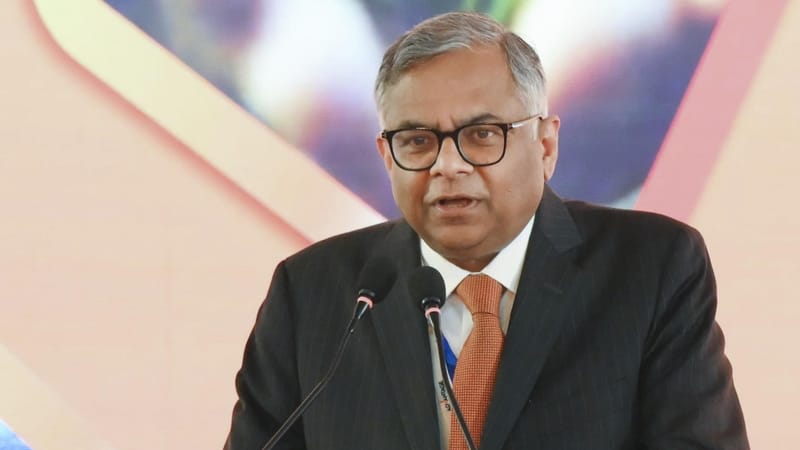
Tata Trusts approve a third term for N Chandrasekaran, breaking retirement rules to secure continuity in critical projects.
N Chandrasekaran will continue as chairman of Tata Sons beyond the group’s formal retirement age, as Tata Trusts move to ensure stability during a period of heavy investment in semiconductors, electric vehicles and aviation, The Economic Times reported.
The Trusts, which control 66% of Tata Sons, approved a resolution in September allowing Chandrasekaran to remain in an executive role past 65, a rule that previously capped leadership terms. The decision, proposed by Noel Tata and Venu Srinivasan, marks the first waiver of the age limit for a top executive role within the $180 billion conglomerate.
“For the sake of continuity in functioning, it was felt that executive leadership was necessary to see through critical projects,” a person familiar with the discussions told the Economic Times. Tata Sons is expected to formalise the extension when Chandrasekaran’s current term ends in February 2026.
The exception comes as the group is executing its most ambitious industrial push in decades: building a semiconductor fabrication plant, scaling electric vehicle battery manufacturing, and restoring Air India after its high-profile acquisition from the government. The extension also follows internal debates over whether Tata Sons should remain private. A July resolution affirming its private status is still under review, and Chandrasekaran’s presence is viewed as a stabilising factor, Business Today reported.
During Chandrasekaran’s tenure, Tata Group revenue has nearly doubled to Rs 15.34 lakh crore in FY25, with profit tripling to Rs 1.13 lakh crore. Yet performance has been uneven. Tata Consultancy Services, the group’s flagship IT services firm, has lost around 30% of its market value over the past year, erasing nearly Rs 6.9 lakh crore in shareholder wealth.
The unusual move underlines the board’s confidence in Chandrasekaran’s stewardship, particularly as Tata redefines its portfolio for the next decade. It also signals a shift in governance convention: while executives could previously hold non-executive roles until 70, none had been granted a waiver to continue actively leading beyond 65.
With succession debates likely to resurface in the years ahead, Tata’s gamble on continuity underscores the stakes of its current transformation drive — from reshaping India’s aviation industry to breaking ground in the global semiconductor race.
Topics
Author
Loading...