







Leadership
Tim Cook closes a 15-year chapter with Apple’s biggest AI showcase






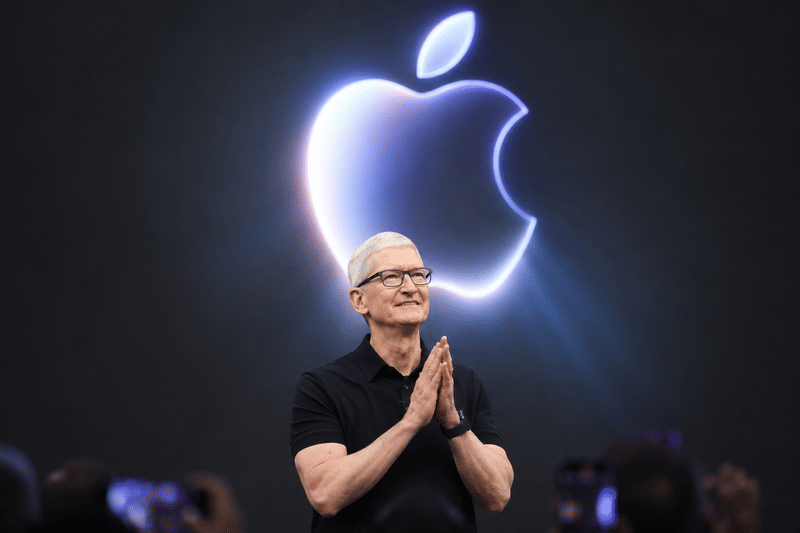
In his final Worldwide Developers Conference as Apple chief executive, Tim Cook oversaw the company's most ambitious artificial intelligence rollout yet, positioning a revamped Siri and privacy-focused AI tools at the centre of Apple's next phase.
Tim Cook used his final appearance at Apple's Worldwide Developers Conference (WWDC) as chief executive to unveil a major expansion of the company's artificial intelligence capabilities, marking the end of a 15-year leadership era and the beginning of a new chapter centred on AI.
According to the Associated Press, Apple introduced a significantly upgraded Siri, expanded its Apple Intelligence platform and showcased a series of AI-powered features designed to make everyday tasks easier across its ecosystem of devices.
The event carried additional significance because it was Cook's last WWDC before handing over leadership to John Ternus in September. The Apple chief executive received an extended standing ovation from developers attending the conference and reflected on his time leading the company.
Cook told attendees he was "deeply grateful" for the journey and said the energy surrounding Apple's platforms had "never been stronger".
A farewell event shaped by artificial intelligence
This year's conference was dominated by Apple's effort to strengthen its position in the rapidly evolving AI market.
The company has faced growing pressure from competitors after artificial intelligence became the technology industry's defining battleground. While rivals have promoted AI chatbots and broader AI ambitions, Apple used WWDC to emphasise practical applications and privacy protections.
The conference attracted developers from approximately 65 countries to Apple's headquarters in Silicon Valley, according to the Associated Press.
Apple software chief Craig Federighi outlined the company's approach, saying Apple aims to create AI experiences centred on users' needs rather than pursuing AI for its own sake.
The strategy reflects Apple's attempt to differentiate itself through deeper integration across devices while maintaining strict privacy controls.
Siri takes centre stage in Apple's AI push
The most closely watched announcement was the introduction of a redesigned and more capable Siri.
Originally launched in 2011, Siri was once considered a pioneer in voice assistants but later lost ground to competing products.
Apple said the upgraded assistant can perform more sophisticated tasks across its ecosystem and help users complete actions spanning multiple apps and services.
New Siri capabilities highlighted during WWDC include:
• Creating event menus using information gathered from the web and personal messages
• Organising invitations and coordinating group activities
• Using camera-based visual intelligence to identify objects and provide contextual information
• Analysing items displayed on a user's screen
• Helping users determine product compatibility, including travel and luggage-related queries
Apple described Siri as a "much more capable assistant" designed to help users find information and complete tasks more efficiently.
Apple Intelligence expands across the ecosystem
Apple also unveiled updates to Apple Intelligence, the AI platform first introduced in 2024.
According to the Associated Press, the system now uses Google's Gemini AI model to help power features while continuing to process requests on users' devices and through private cloud infrastructure.
Apple stressed that user interactions remain inaccessible to third parties, reinforcing a privacy-first approach that has become central to its AI strategy.
Additional AI-related announcements included:
• Enhanced AI photo-editing capabilities
• A new spatial reframing feature that allows users to adjust image composition after photographs are taken
• Expanded visual intelligence tools integrated into Apple devices
• A standalone Siri AI application scheduled to launch later in 2026
Apple said the standalone Siri app will initially be unavailable in Europe and China because of regulatory considerations.
End of an era for Apple leadership
The conference also served as a milestone in Apple's corporate history.
Cook announced his retirement in April, bringing to a close a tenure that began in 2011 following the death of Apple co-founder Steve Jobs.
According to the Associated Press, Apple's market value increased by more than US$4 trillion during Cook's 15-year leadership, driven largely by the success of the iPhone and the expansion of Apple's services and hardware ecosystem.
His successor, John Ternus, has spent roughly 25 years at Apple and most recently led engineering efforts behind the iPhone, iPad and Mac product lines.
Notably, Ternus did not take the main stage during the WWDC keynote, leaving the spotlight on Cook's farewell appearance.
A pivotal handover amid industry transformation
The leadership transition comes as artificial intelligence reshapes the technology sector at a pace not seen since the arrival of the smartphone era.
Apple's AI efforts have faced scrutiny after delays in delivering some previously announced capabilities. The latest announcements signal a renewed push to close the gap with competitors while remaining aligned with the company's longstanding focus on privacy and integrated user experiences.
For investors, developers and consumers, WWDC 2026 offered both a glimpse of Apple's AI roadmap and a symbolic passing of the torch.
Closing the event, Cook described leading Apple as "the honour of a lifetime" and expressed confidence in the company's future.
His final message underscored the significance of the moment: after 15 years at the helm, Apple is entering a new leadership era while making its strongest AI statement to date.
Author

Loading...