







Leadership
Tomorrow's HR leaders will need to speak the language of the CFO and COO: LatentView CHRO
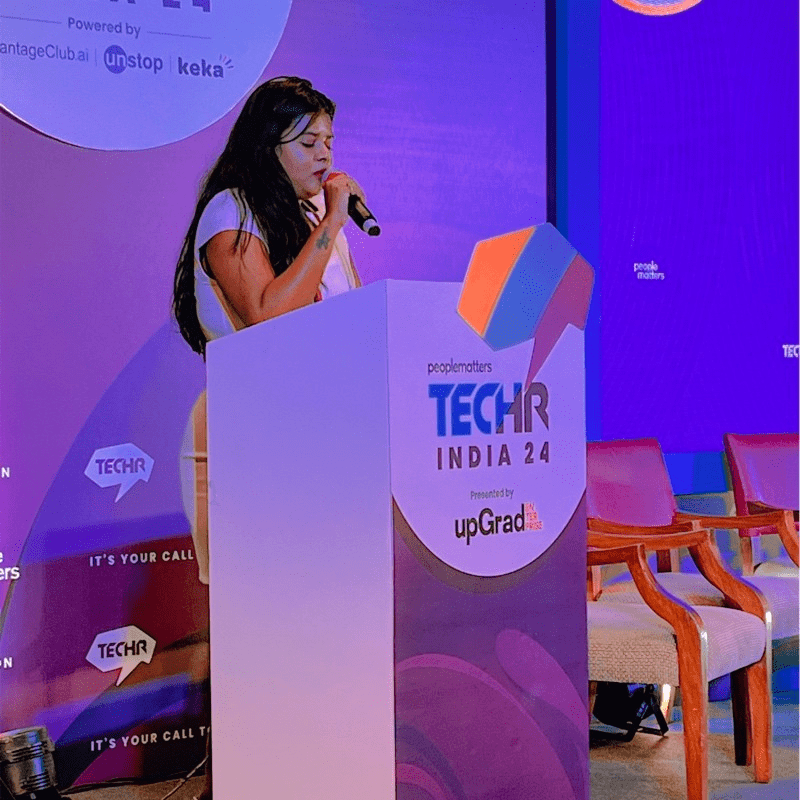





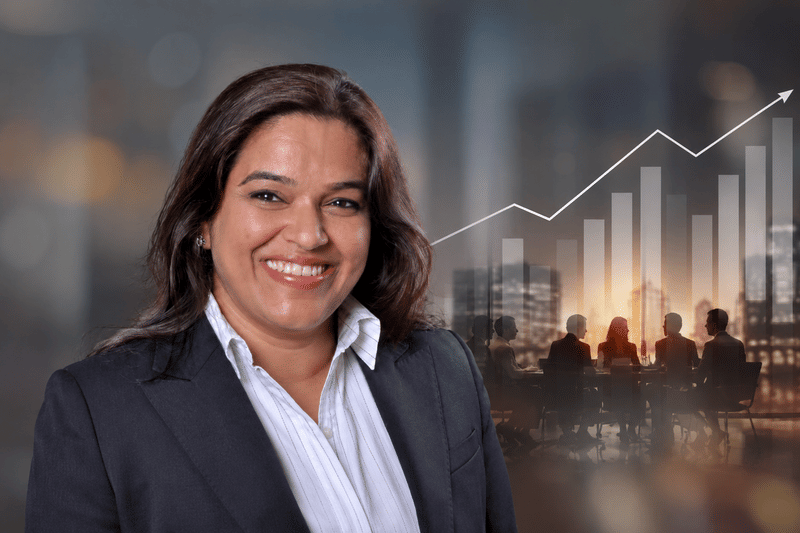
As AI reshapes the workplace, HR leaders will increasingly be judged by business outcomes rather than people metrics, says Remadevi Thottathil, CHRO, LatentView Analytics.
For years, HR has spoken the language of engagement scores, attrition rates and learning hours. Remadevi Thottathil, Chief Human Resources Officer at LatentView Analytics, believes the next generation of HR leaders will need a very different vocabulary.
Speaking to People Matters, she says tomorrow's HR Business Partner will not simply manage people or interpret policies. Instead, the role will revolve around business growth, workforce economics and capital allocation, bringing HR closer than ever to the boardroom.
It reflects a broader shift in how organisations expect HR to create value as AI, analytics and workforce intelligence become central to business strategy.
HR's biggest promotion may not come with a new title
Thottathil believes HR is moving beyond its traditional identity.
"HR is fundamentally transitioning from an administrative support cost-center into a value architecture engine."
She compares the modern HR leader to "the investment portfolio manager of the enterprise's most volatile asset class", responsible for managing workforce risk, optimising talent investments, forecasting skill decay and maximising "human return on equity".
Her point is simple. HR is no longer expected to support business strategy from the sidelines. It is increasingly expected to shape it.
The next HR Business Partner will look very different
One of Thottathil's strongest predictions centres on the evolution of the HR Business Partner.
She says: "The future HR Business Partner will not be to settle policy disputes, they will sit with business unit leaders to build workforce capacity models that unlock market expansion."
In her view, future HR leaders will need to become fluent in concepts traditionally associated with finance and operations. These include:
- Talent ROI
- Capacity Allocation Optimisation
- Skill Liquidity indexes
- Operational Margin protection
She adds they will need to bring "an analytical rigour that matches the language of the CFO and the COO."
Data alone is not the answer
Technology has given organisations unprecedented visibility into their workforce. Thottathil believes many companies still struggle to convert information into business decisions.
She describes today's organisations as "Data-Rich but Information-Poor".
According to her, the challenge is no longer collecting workforce data. It is connecting people data with commercial outcomes.
"People data must be treated with the same mathematical rigour, financial lineage, and strategic alignment as supply chain logistics or customer acquisition funnels."
She also questions the value of metrics that appear impressive but offer little strategic insight.
For example, "10,000 learning hours completed" says little about whether employees became more capable or whether those programmes accelerated project delivery.
AI will assist. Humans will remain accountable
As AI becomes more deeply embedded in HR, Thottathil does not see technology replacing judgement.
Instead, she proposes a governance model built around "Algorithmic Assist, Human Accountability."
AI, she says, excels at identifying patterns, predicting attrition and processing vast amounts of workforce data. Humans remain responsible for understanding context, ethics and motivation.
She also calls for multidisciplinary governance involving legal, HR, operations and data ethics teams to regularly review AI models for bias.
Tomorrow's workforce signals will look different
Traditional HR dashboards may also need an overhaul.
Instead of focusing primarily on productivity or attrition, Thottathil believes organisations should pay closer attention to emerging indicators such as:
- Communication patterns across teams
- Skill relevance as technical capabilities evolve every 18 to 24 months
- Internal mobility for high performers
- How employees' time is structured during the workday
She suggests these signals often reveal organisational risks much earlier than conventional HR scorecards.
A boardroom role, not a back-office function
For decades, HR has worked to earn a seat at the executive table. Thottathil believes the conversation is now changing.
The challenge is no longer gaining influence. It is demonstrating measurable business value using the same commercial language spoken by finance and operations leaders.
As organisations become more reliant on AI and workforce analytics, HR's success may depend less on reporting people metrics and more on showing how talent decisions improve growth, productivity and long-term business performance.
Topics
Author
Loading...