







Leadership
Toyota replaces CEO Koji Sato with finance head Kenta Kon






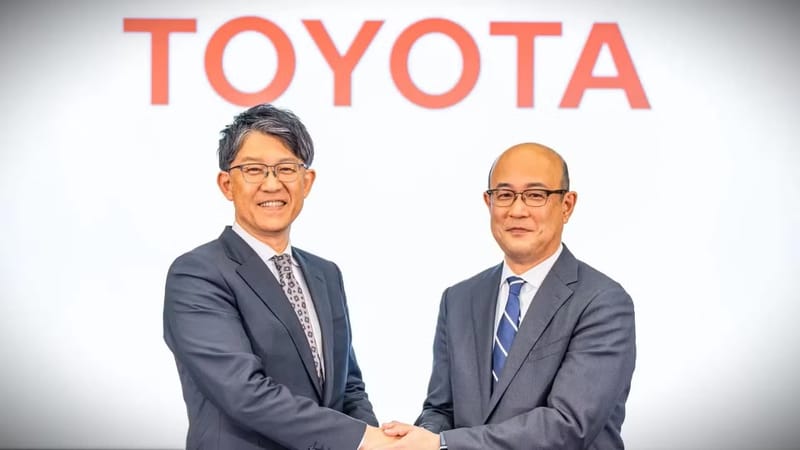
Toyota will appoint finance chief Kenta Kon as CEO from April, signalling faster decision-making even as US tariffs weigh on profits.
Toyota Motor has announced a leadership change at the top, naming finance chief Kenta Kon as its next chief executive despite the company’s relative resilience through a turbulent period for the global auto industry.
The Japanese carmaker said Kon will replace Koji Sato from April 1, after Sato’s three-year tenure. Toyota said the move is intended to “accelerate management decision-making” as conditions shift both inside the company and across external markets.
The transition comes as Toyota continues to outperform many rivals, even as automakers worldwide grapple with slowing demand, intensifying competition in electric vehicles, and rising geopolitical trade pressures.
The announcement coincided with Toyota upgrading its profit and sales outlook for the fiscal year ending in March. According to AFP, the company now expects net profit of 3.57 trillion yen ($22.8 billion), still down 25% year-on-year but higher than its earlier forecast of 2.93 trillion yen.
Toyota said it has limited the extent of the decline through cost reductions and marketing efforts, despite the “negative impact of US tariffs that newly arose this fiscal year”.
Sales are now projected to rise 4.1% to 50 trillion yen, while operating profit is forecast at 3.8 trillion yen, up from the previous estimate of 3.4 trillion yen.
The company noted, however, that profits fell in the September–December quarter even as revenues increased, largely due to tariff-related expense pressures.
Toyota enters the CEO transition after a record global sales year in 2025, allowing it to retain its position as the world’s largest automaker and extend its lead over Volkswagen. The company has also faced growing pressure in China, where domestic manufacturers such as BYD have intensified competition, particularly in electric vehicles.
In the United States — Toyota’s most important overseas market, accounting for nearly a quarter of its sales — demand remained strong despite tariffs on Japanese auto exports imposed between April and mid-September. US sales climbed 8% in 2025, AFP reported, although Toyota still produces only about half the vehicles it sells in the country.
The automaker increased output at its US factories by 10% last year, supported by continued consumer demand for hybrid models, which remain one of Toyota’s strongest competitive advantages in the transition away from combustion engines.
Kon’s appointment signals Toyota’s focus on financial discipline and faster execution as the company navigates trade volatility, electrification pressures, and shifting global supply chains. The leadership change suggests Toyota is positioning itself for a more unpredictable phase of industry transformation beyond 2026.
Topics
Author
Loading...