







Leadership
Unilever CEO to replace 50 of top 200 managers in global shake-up






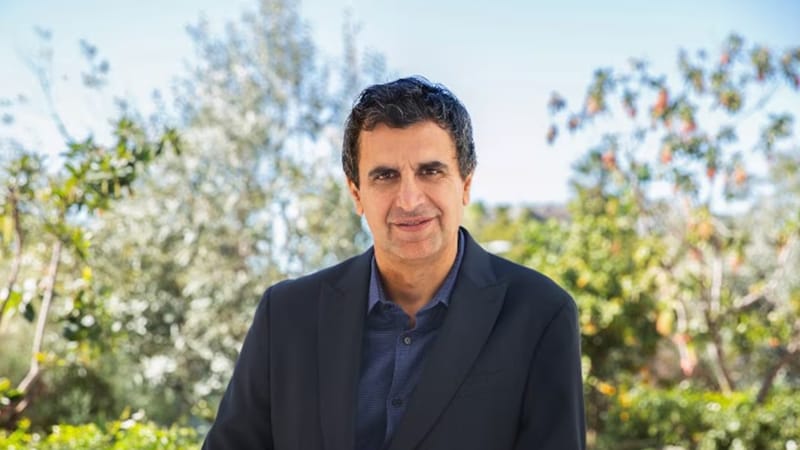
Fernando Fernandez vows to eliminate “pockets of mediocrity”, revamp leadership and refocus Unilever on growth, spin-offs and disciplined execution.
Unilever’s new chief executive, Fernando Fernandez, has launched a dramatic overhaul of the consumer goods group, pledging to replace about 50 of the company’s top 200 managers as part of his drive to eliminate what he bluntly described as “pockets of mediocrity”.
Speaking at the Barclays Global Consumer Staples Conference in Boston, Fernandez said the leadership review was being carried out “one by one”, with each role judged on whether it met the standard Unilever required. “Are they good enough? Are they at the level that Unilever deserves, yes or no?” he told investors, according to the Financial Times.
A culture of inconsistency
Fernandez, who became chief executive in February 2025, said the company had become “an inconsistent performer” over the past decade. He cited the impact of the $143 billion hostile takeover bid from Kraft Heinz in 2017, which, he argued, had “really derailed” Unilever by shifting attention away from its traditional focus on volume growth. “We lost our focus on volume growth,” he said, adding that correcting this would be one of his top priorities.
The comments underscore the new CEO’s bid to instil discipline at the FTSE 100 group, whose sprawling portfolio spans household staples and personal care products including Dove soap, Sunsilk shampoo and Colman’s mustard.
Fernandez, previously Unilever’s chief financial officer, was promoted after the board ousted Hein Schumacher, frustrated at the slow progress of Schumacher’s own turnaround programme. The management change also came under pressure from activist investor Nelson Peltz, whose investment firm Trian Partners holds just under 1 per cent of Unilever’s shares and who sits on the board as a non-executive director.
Structural changes already under way
As part of his plan to sharpen focus, Fernandez is overseeing the spin-off of Unilever’s ice cream business—which includes brands such as Ben & Jerry’s and Magnum—into a separately listed company in Amsterdam later this year. The division is valued at about €15 billion. He confirmed the move in Boston, saying Unilever needed to concentrate on beauty and personal care, which he considers higher-growth segments, the Financial Times reported.
The new CEO has also acted on costs. Over the past 18 months, Unilever has cut its white-collar workforce by 18 per cent, a measure designed to strip away bureaucracy and restore agility.
In Boston, Fernandez ruled out splashing out on overseas acquisitions, stating he would not spend “a single penny” on mergers and acquisitions outside the United States and India, which he identified as Unilever’s two most important growth engines. The Financial Times said his remarks reflected a strategy of financial discipline alongside targeted expansion.
Reuters added that Unilever reaffirmed its financial targets of 3–5 per cent annual sales growth and an underlying operating margin above 18.9 per cent, even as it embarks on the executive reshuffle. The news agency reported that the leadership review, combined with the ice cream spin-off and job cuts, forms the core of Fernandez’s plan to convince investors that Unilever can return to consistent performance after years of drift.
The scale of the challenge is considerable. Unilever has long been criticised for bloated management and sluggish execution, even as rivals such as Procter & Gamble focused tightly on their best-performing brands. With the global consumer goods market squeezed by inflation, rising costs and shifting consumer habits, Fernandez’s strategy is designed to prove that Unilever can once again deliver steady growth while also reshaping its portfolio.
As Reuters noted, the stakes are particularly high: Fernandez must demonstrate not only that he can cut through internal inefficiencies but also that he can steer the company through a successful spin-off, maintain shareholder confidence, and ward off further pressure from activist investors.
Topics
Author

Loading...