







Leadership
Why María Corina Machado won the 2025 Nobel Peace Prize






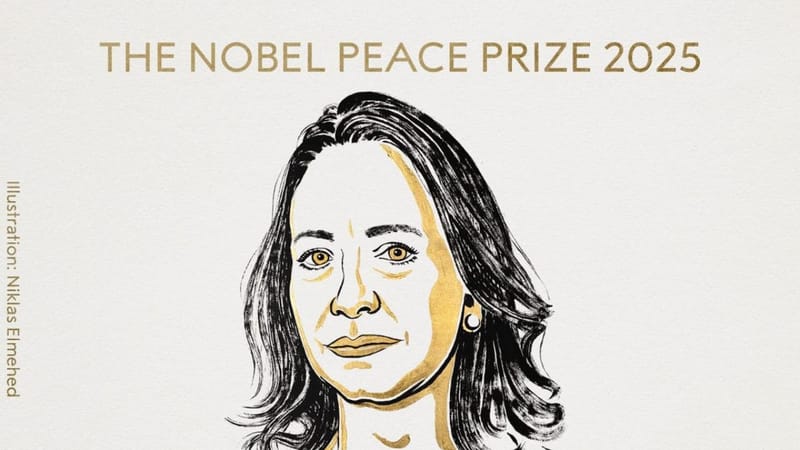
The opposition leader was honoured for promoting democracy and peaceful transition in Venezuela despite threats and exile.
Venezuelan opposition leader María Corina Machado has been awarded the 2025 Nobel Peace Prize for her work advancing democratic rights and her efforts to achieve a peaceful transition from dictatorship to democracy.
The Norwegian Nobel Committee announced the award in Oslo on Friday, with its chair Jørgen Watne Frydnes emphasising that Machado had shown “tireless commitment” to democratic change in the face of persecution. “In the past year, Ms Machado has been forced to live in hiding. Despite serious threats against her life she has remained in the country, a choice that has inspired millions of people,” Frydnes said, according to Reuters.
Machado, a former legislator and long-time opponent of Venezuela’s government, was recognised for uniting the country’s fractured opposition and for resisting what the committee described as the militarisation of Venezuelan society. The panel said she had remained steadfast in supporting “a just and peaceful transition to democracy.”
Prize context
The Nobel Peace Prize carries a cash award of 11 million Swedish kronor. It will be formally presented in Oslo on 10 December, the anniversary of Alfred Nobel’s death.
Last year’s prize went to Nihon Hidankyo, a Japanese organisation of atomic bomb survivors from Hiroshima and Nagasaki. This year’s peace award follows earlier announcements for medicine, physics, chemistry and literature. The prize in economic sciences will be disclosed on 13 October.
The Nobel Institute said it had received 338 nominations for the 2025 Peace Prize, comprising 244 individuals and 94 organisations. That compares with 286 candidates in 2024.
Selection process
Nominations must be submitted by 31 January each year. The committee reviews the list with the help of permanent advisers and international experts. Its five members seek consensus but may decide by majority vote if required.
“The ideals underpinned by the Nobel Peace Prize are something all political leaders should strive for,” Frydnes told Reuters, noting that while the committee faces pressure from candidates and supporters, it follows the same procedures each year.
Legacy and significance
The Nobel Peace Prize was established by Swedish industrialist Alfred Nobel in his 1895 will, which directed that his fortune be used to recognise contributions to peace, literature, physics, chemistry and medicine. The award has often carried political weight: US presidents Barack Obama, Jimmy Carter, Woodrow Wilson and Theodore Roosevelt were all recipients.
Analysts said this year’s choice reinforced Nobel’s emphasis on individuals who champion peace, disarmament and international cooperation. Nina Graeger of the Peace Research Institute Oslo told Reuters that these values remain central to the committee’s decisions, even when nominations attract geopolitical controversy.
For Venezuela, Machado’s recognition highlights international support for democratic reform. Whether the award strengthens her influence at home remains uncertain, but the committee underscored her role as a symbol of resistance and peaceful change in a nation grappling with authoritarian rule.
Topics
Author

Loading...