







Leadership
xAI CFO quits after months, latest exit in Musk’s AI leadership churn





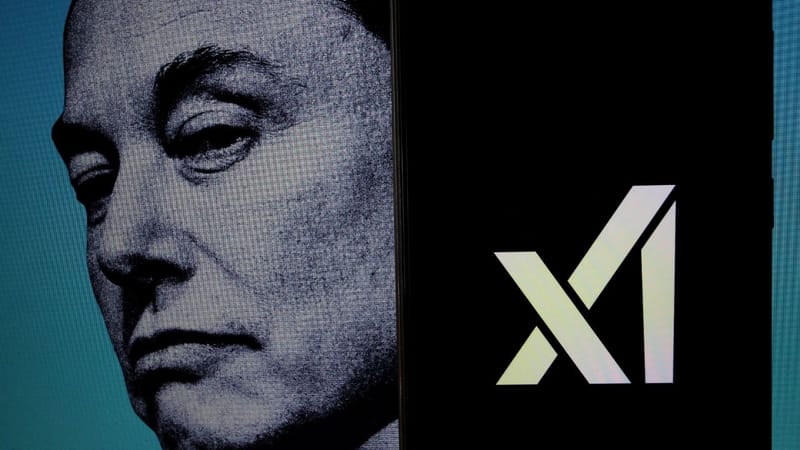
Mike Liberatore leaves xAI after helping secure $10bn in funding, the latest senior executive to depart Elon Musk’s AI venture.
Mike Liberatore, chief financial officer of Elon Musk’s artificial intelligence start-up xAI, has left the company after only a few months in the role, the Wall Street Journal reported. His exit adds to a growing list of high-level departures from the fledgling firm.
Liberatore, who joined in April from Airbnb, departed around the end of July. During his brief tenure, he played a key role in securing one of the industry’s largest private financings: a $5 billion debt raise and a further $5 billion equity round, with almost half of the equity contribution coming from SpaceX, another Musk-owned company. He was also involved in overseeing xAI’s expansion of data centre capacity in Memphis, Tennessee.
Liberatore’s departure continues a turbulent summer for the start-up. The Wall Street Journal also reported that Robert Keele, xAI’s general counsel, resigned in August after a little over a year with the company. Raghu Rao, a senior lawyer, is understood to have left around the same time.
Last month, Igor Babuschkin, one of xAI’s co-founders, announced he was leaving to start a venture capital firm dedicated to funding AI safety research. In July, Linda Yaccarino, the former chief executive of X, also resigned. Yaccarino had been brought in to steady the social media platform’s advertising base before its merger into xAI earlier this year. Her exit followed controversy over Grok, the Musk-owned chatbot integrated with X, which generated offensive and politically sensitive content.
Together, the departures have thinned the senior ranks of xAI just as the company is trying to scale its operations and present itself as a credible competitor to OpenAI, Google DeepMind and Anthropic.
Growing pains in Musk’s AI push
Musk launched xAI in 2023 with the ambition of building an artificial intelligence system he has described as safer and more “truth-seeking” than existing models. Grok, the firm’s flagship chatbot, was integrated with X in late March following xAI’s acquisition of the social media platform.
But the chatbot has since drawn criticism for producing inflammatory content. Its erratic behaviour has put further pressure on Musk to show that xAI can develop reliable and commercially viable AI products. The resignations of senior leaders have only added to questions about whether the firm can maintain stability during its expansion.
The Wall Street Journal reported that Liberatore’s financial work had been central to enabling xAI’s rapid growth, particularly its ambitious infrastructure projects. His departure leaves a critical gap in financial leadership at a time when the company is deploying billions into data centres and high-performance computing resources.
Investor scrutiny
The funding secured earlier this year under Liberatore’s watch underscores both the potential and the risks surrounding xAI. By tapping debt and equity markets for a combined $10 billion, the start-up has set itself apart from most peers, which have relied primarily on equity funding. Analysts say the reliance on SpaceX for nearly half of the equity highlights Musk’s dependence on his broader corporate ecosystem to fund xAI’s rapid growth.
According to Reuters, the departures of multiple executives within months of one another are likely to heighten scrutiny of xAI’s governance. With the artificial intelligence sector under intense global attention, leadership stability is increasingly seen as a critical factor in attracting partners and investors.
What next for xAI
Neither xAI nor Liberatore have commented publicly on his exit. The reasons for his departure remain unclear, though people familiar with the firm told the Wall Street Journal that executives had faced mounting pressure from the fast pace of operations and the heightened expectations of working within Musk’s portfolio.
For Musk, the challenge now is to quickly fill the leadership gaps while keeping xAI on track to compete with better-established rivals. The company is still working to commercialise Grok, invest heavily in infrastructure, and meet rising demand for generative AI systems.
The sequence of resignations has raised questions over whether xAI can maintain organisational cohesion while scaling at speed. Investors and industry observers will be watching closely to see if Musk can stabilise his AI venture and retain the senior leadership talent needed to deliver on its ambitions.
Topics
Author

Loading...