







Organisational Culture
He made a comment about women. The internet didn't forget and his employer couldn't ignore it





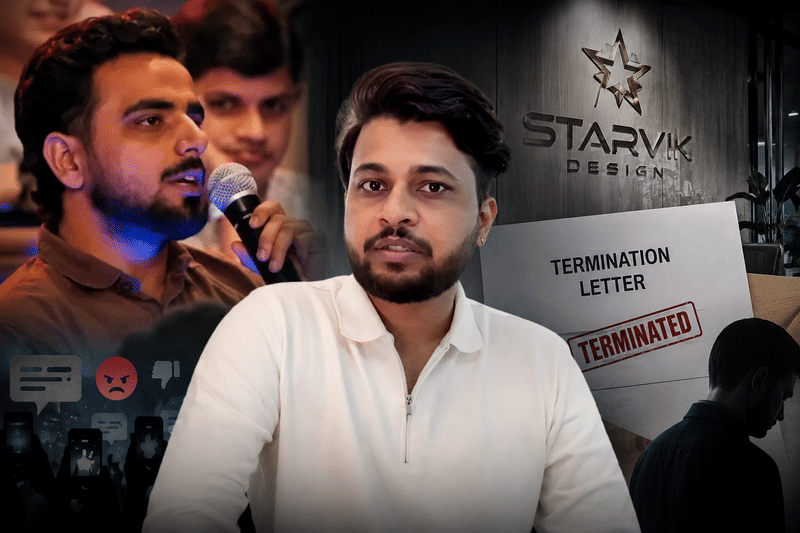
A viral clip from a comedy show sparked outrage, an apology and ultimately a job loss, raising questions about how employers respond when personal conduct collides with workplace values.
A comment made during a comedy show has cost a young employee his job, reigniting debate over where employers draw the line between personal conduct and professional consequences.
The controversy centres on Himanshu Jangra, whose remarks during comedian Pranit More's show went viral across social media platforms. In the widely circulated clip, Jangra suggested that spending ₹370 on a chicken biryani for a woman entitled him to something in return, a statement many viewers interpreted as reducing women to a transactional exchange.
The backlash was swift. Social media users criticised the remarks as misogynistic, while discussions quickly expanded beyond the viral clip itself to questions of accountability, workplace culture and personal responsibility.
Within days, the controversy had reached Jangra's employer.
A viral moment turns into a workplace issue
Following the online backlash, Jangra apologised and reportedly deactivated his social media account.
However, the incident continued to gather attention, prompting his Gurugram-based employer, Starvik Design, to review the matter internally.
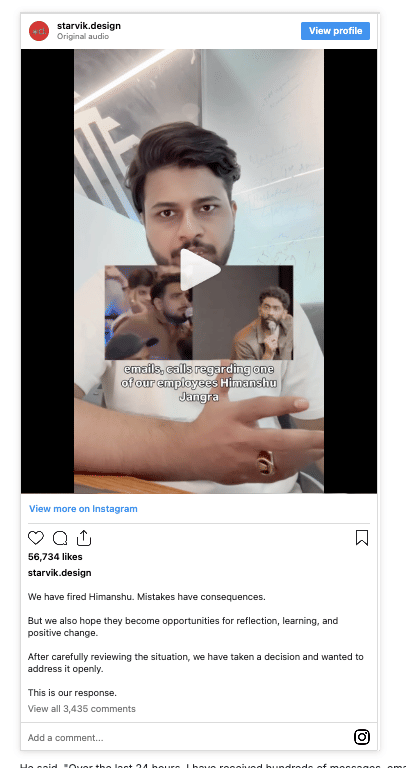
In a public statement shared on Instagram, Vivek Vishwakarma, Founder of Starvik Design, said the company had received hundreds of messages, emails and calls regarding the employee after the video began circulating online.
Vishwakarma described the comments shown in the clip as offensive and said they did not reflect the company's values.
Key developments in the case include:
- A video clip from a comedy show went viral on social media.
- The remarks drew criticism from both men and women online.
- Jangra apologised following the backlash.
- Starvik Design conducted an internal review.
- The company subsequently decided to terminate his employment.
No workplace complaints, but concerns remained
One of the most notable aspects of the case was the company's acknowledgement that it found no complaints regarding Jangra's conduct inside the workplace.
According to Vishwakarma, the company spoke with team members, including female employees, and reviewed his professional behaviour.
The review found:
- No internal complaints against the employee.
- Team members described him as professional and respectful at work.
- Colleagues characterised him as hardworking and well-behaved.
Despite those findings, the company concluded that the incident had begun affecting the workplace environment.
Explaining the decision, Vishwakarma said what had happened outside the workplace had now impacted the workplace itself, creating responsibilities towards employees, clients and the culture the organisation sought to maintain.
A broader discussion on accountability
The company's response has generated its own debate online.
While many users supported the decision to terminate employment, others focused on Vishwakarma's comments that individuals should be allowed opportunities to reflect, learn and change after making mistakes.
In his statement, the founder stressed that facing consequences and allowing room for personal growth should not be mutually exclusive. He noted that social media backlash can have long-term effects, particularly on young individuals, while also making clear that the original remarks were unacceptable.
That position drew mixed reactions.
Some social media users argued that misogynistic attitudes should carry consequences regardless of an individual's workplace record. Others questioned whether public conduct that does not involve workplace misconduct should influence employment decisions.
When personal conduct meets organisational values
The case highlights an increasingly common challenge for employers in the age of viral content.
Companies are finding themselves drawn into controversies that originate outside the workplace but quickly become associated with their brands, cultures and values. As public scrutiny intensifies, organisations are often required to decide whether personal behaviour can remain separate from professional identity.
In this instance, Starvik Design concluded that it could not.
The decision underscores how social media has blurred traditional boundaries between personal expression and workplace accountability. It also reflects growing expectations that employers take a position when public conduct is seen as conflicting with organisational values.
As conversations around workplace culture continue to evolve, the case is likely to remain a reference point in debates about reputation, accountability and the responsibilities that employees carry beyond office walls.
Topics
Author
Loading...