







Organisational Culture
Uber CEO says working hard and staying connected outside office hours is part of the job



 ||
||

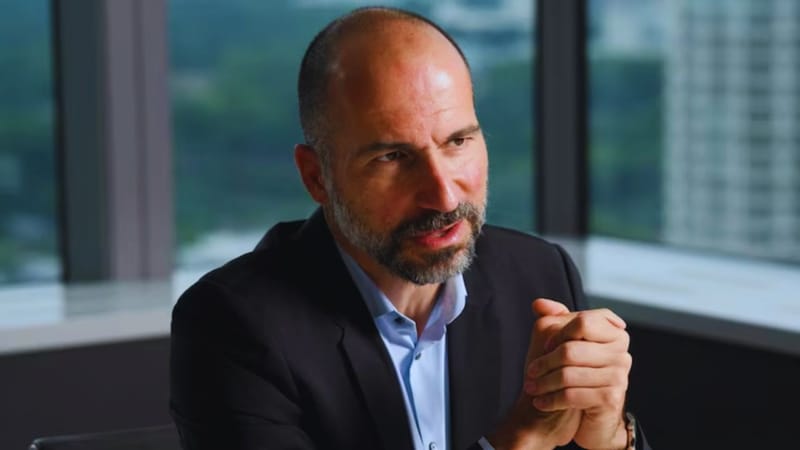
Uber chief Dara Khosrowshahi says employees should expect a demanding culture that includes working hard and responding outside normal office hours.
Uber chief executive Dara Khosrowshahi has said employees at the ride-hailing company should expect a demanding work culture, including staying responsive to work communication outside traditional office hours.
Speaking on the podcast The Diary of a CEO, Khosrowshahi said maintaining momentum at a fast-growing technology company often requires communication with teams even during weekends. According to Moneycontrol, which reported on the remarks, the CEO said sending emails outside the regular workweek is sometimes necessary to keep work moving.
“Part of working hard is sending emails to the team on a Saturday,” Khosrowshahi said during the discussion with podcast host Steven Bartlett. “And if I don’t get a response on Saturday, sending them an email on Sunday with a question mark. What’s going on?”
The comments highlight the expectations placed on employees at Uber, where leadership has emphasised accountability and high performance since Khosrowshahi took over the company in 2017. Before joining Uber, he led online travel platform Expedia Group.
Reflecting on his earlier experience, Khosrowshahi said the work culture at Expedia was intense but shaped by the nature of the business. “At Expedia, in hindsight, we worked intensely and went hard, but not as hard as I’d like,” he said, noting that the company’s focus on travel meant discussions around work-life balance were more prominent.
At Uber, however, he said employees should expect a faster pace and clearer performance expectations.
“You come to Uber, you’re going to work your a*s off. We’re going to be really demanding,” Khosrowshahi said. “If you’re not performing, we’re going to let you know. And if you don’t fix it, we’re going to push you out.”
Despite the pressure, the CEO argued that the company offers employees opportunities to learn and influence outcomes at scale. Uber’s global footprint and evolving product portfolio mean individuals can have significant impact within the organisation, he said.
“While it will be incredibly hard, you will have real agency at the company,” he added, describing Uber as a place where employees can grow quickly and contribute meaningfully to the business.
Khosrowshahi also acknowledged that such expectations come with trade-offs but insisted they do not necessarily eliminate flexibility. He said employees can still maintain personal routines while remaining engaged with work.
“You can work hard, and at the same time you can have flexibility,” he said, explaining that he prioritises family dinners when he is at home but resumes checking emails later in the evening.
The remarks come as global technology companies continue to debate workplace expectations following the pandemic-era shift to remote and hybrid work. Several major firms have recently tightened return-to-office policies and emphasised performance accountability as economic conditions and competitive pressures intensify.
For Uber, Khosrowshahi’s comments underline a broader leadership philosophy: a culture built around speed, responsiveness and high performance, even if that means employees remain connected to work beyond the standard nine-to-five schedule.
Topics
Author
Loading...