







Strategic HR
As Microsoft and BMW offer voluntary exits, study finds paying employees to quit could improve retention
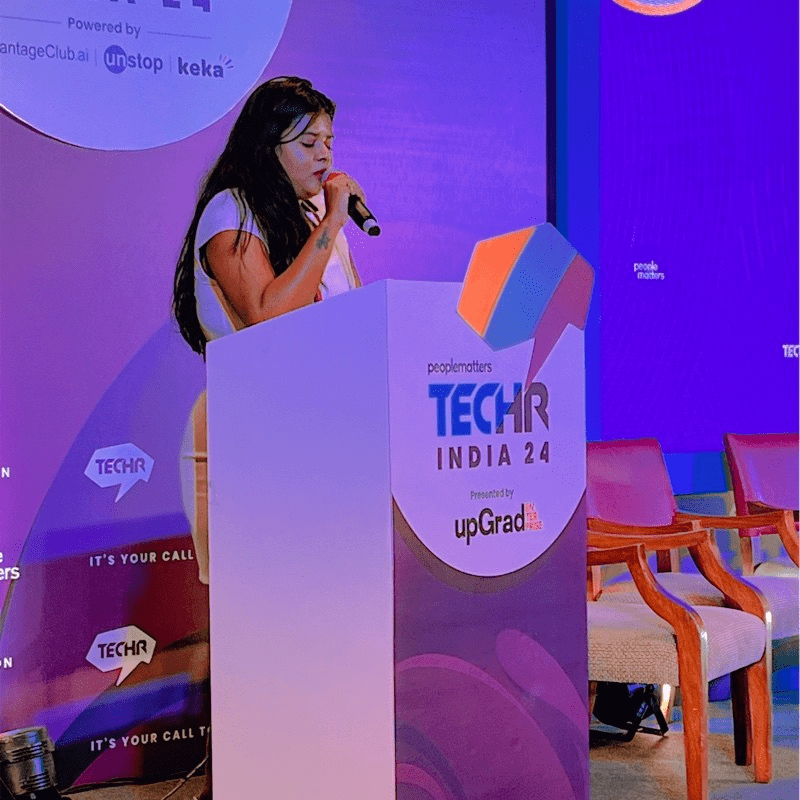



Research examines whether paying employees to leave can help companies retain committed workers as Microsoft and BMW roll out voluntary exit offers.
As Microsoft and BMW introduce voluntary exit offers, new research suggests paying employees to leave could help companies retain committed workers and motivate those who stay.
Published in the Journal of Management Accounting Research, the study examines how employees’ attachment to their organisation influences decisions to accept financial incentives to quit. Its findings suggest the approach may help employers distinguish between workers who are inclined to leave and those who remain committed.
Research points to a link between employee commitment and exit incentives
The study was conducted by Leslie Berger and Lan Guo of Wilfrid Laurier University, Kelsey Matthews of the University of Waterloo, and Bradley Ruffle of McMaster University in Canada.
The researchers examined how participants’ identification with an organisation affected their response to pay-to-quit incentives. Employees with weaker organisational attachment tended to leave, while those with strong attachment generally stayed regardless of the payment.
The incentive appeared to matter most for employees whose connection to the organisation fell between those two groups.
The researchers also reported that employees who rejected the offer subsequently exerted greater work effort than before. Their findings suggest that such programmes may influence not only who leaves, but also the behaviour of employees who remain.
A separate 2026 study published in the Journal of Behavioral and Experimental Economics examined responses in an online experiment involving 1,000 participants. Those who rejected a small payment to quit completed 33% more tasks than a control group.
However, the researchers could not fully separate participants’ existing motivation from the effects of rejecting the payment. The findings therefore indicate a potential relationship rather than proof that refusing an exit incentive directly increases productivity.
Microsoft’s offer covers eligible employees in four countries
Microsoft announced its voluntary exit offer on 26 October, covering eligible employees in participating teams across India, the US, the UK and Canada.
In a company blog post, Executive Vice President and Chief People Officer Amy Coleman said the initiative would provide employees considering opportunities outside Microsoft with financial support and career planning resources.
The company said the offer would apply to employees at level 70 and below in participating teams. Eligibility would depend on business priorities, customer commitments and workforce requirements, rather than applying uniformly across the organisation.
According to a PTI report published by ThePrint on 27 October, around 60,000 employees globally were eligible, including employees in India. Microsoft has about 23,000 employees in India, although the number eligible for the offer was not immediately clear.
The report said eligible employees in India had until 1 December to decide. The package was understood to include one month’s base salary for every completed year of service, health insurance and career transition services.
Microsoft described the offer as a time-limited initiative that would allow participating businesses to adapt their workforces to changing needs. Coleman also said the company would continue supporting employee development and internal career opportunities where appropriate.
BMW’s programme draws attention as employees access offers
BMW’s voluntary severance programme in Germany encountered an IT disruption after employees attempted to access their individual offers through an internal HR portal.
People Matters reported on 12 October, citing German publications Handelsblatt and Automobilwoche, that approximately 40,000 eligible employees tried to view their personalised offers. A BMW spokesperson told Automobilwoche that usage was high after employees received notifications.
The number refers to employees checking their offers, not those who agreed to leave. BMW did not disclose how many employees had accepted the terms.
The programme forms part of the automaker’s broader cost-reduction plans. According to the People Matters report, BMW aims to eliminate around 8,000 positions in Germany by the end of 2027, excluding employees directly involved in production. It also plans to reduce departments and associated management positions by 20% by mid-2027.
The research on pay-to-quit incentives offers a separate perspective on employee responses to such programmes. It does not establish whether BMW’s offers will encourage departures among less committed employees or affect the motivation of those who stay.
What employers should consider before adopting the approach
Amazon previously used a similar strategy under the name “Please Don’t Take This Offer”. In an April 2014 shareholder letter, founder Jeff Bezos said fulfilment centre associates were offered $2,000 to leave, with the amount rising by $1,000 annually to a maximum of $5,000.
Bezos said the aim was to encourage employees to consider whether they wanted to remain with the company. He credited the idea to Zappos.
The financial case for voluntary exits also depends on the cost of replacing employees. A survey by Express Employment Professionals and Harris Poll, released in January 2026, put the average cost of employee turnover at $30,680.
However, an exit package also creates an immediate expense, and the research does not identify a universally effective payment amount. Employers would need to weigh the cost of incentives against workforce requirements and the potential loss of employees they want to retain.
For Microsoft and BMW, the immediate question is how eligible employees respond and how the departures, if any, affect their operations. The research offers a possible explanation for why voluntary exit schemes may produce different outcomes across a workforce, but real-world results will depend on programme design and employee decisions.
Author
Loading...