







Strategic HR
OpenAI fires contractors for using AI to train AI models






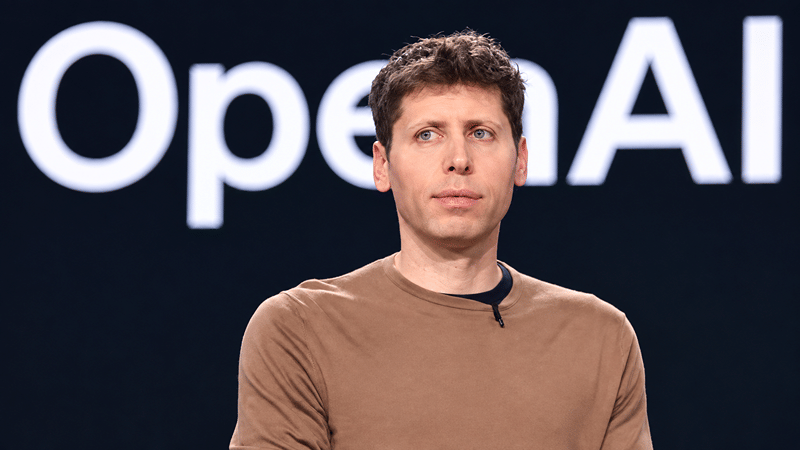
Reports suggest OpenAI removed contract workers from model training projects after detecting the use of AI tools, highlighting growing concerns around data quality, authenticity and AI governance.
OpenAI has reportedly removed multiple contract workers from its AI training projects after discovering they were using AI tools to complete tasks intended for human reviewers, according to reporting by 404 Media.
The development underscores a growing challenge facing the artificial intelligence industry. While AI companies increasingly rely on large networks of human contractors to improve model performance, those same workers are now gaining easy access to AI tools capable of performing parts of the work themselves.
The reported dismissals come as AI developers invest heavily in improving model accuracy, reducing hallucinations and ensuring chatbots provide balanced responses rather than simply reinforcing user beliefs.
Human oversight remains central to AI training
According to 404 Media, the contractors were involved in projects designed to improve OpenAI's models. Their responsibilities reportedly included reviewing real ChatGPT prompts and conversations, assessing chatbot responses and helping identify instances where the model became overly agreeable or "sycophantic".
The report stated that some contractors could earn up to $50 per hour, with projects involving thousands of workers globally.
However, OpenAI's reported concern centred on workers using AI systems to perform tasks that required independent human judgement and evaluation.
Key reported responsibilities included:
- Reviewing ChatGPT conversations and prompts
- Evaluating response quality and accuracy
- Identifying overly agreeable or misleading responses
- Providing human feedback to improve model behaviour
- Assessing outputs for authenticity and reliability
According to the report, the use of AI tools by contractors was considered a serious violation of project rules.
Why AI-generated training data is a concern
The reported policy reflects broader industry concerns about what researchers often describe as "model collapse".
As cited by 404 Media, model collapse can occur when AI systems are increasingly trained on AI-generated content rather than original human-created data. Over time, this can reduce output quality, diversity and accuracy.
For companies developing foundation models, maintaining access to genuine human judgement remains critical because human feedback helps distinguish nuanced, context-aware responses from automated patterns.
The report noted that OpenAI maintained strict restrictions against the use of AI tools during these projects, including AI detection software.
An internal document cited by 404 Media reportedly instructed workers not to use GPTZero or similar AI detection platforms because of reliability concerns.
Contractors describe enforcement measures
According to 404 Media, enforcement of these rules was not unusual.
One contractor reportedly told the publication that workers were regularly removed from projects when AI usage was detected.
Another former contractor shared what was described as a termination notice referencing concerns around the "authenticity" of submitted work.
The report also stated that reviewers responsible for evaluating contractor submissions were subject to similar restrictions.
Reported guidance prohibited the use of:
- Large language models
- AI writing assistants
- AI detection tools
- AI-powered translation tools
- Automated review systems
Reviewers were reportedly instructed to look for signals such as repetitive phrasing, unusual punctuation patterns and other indicators of AI-assisted submissions.
Hiring partners reinforce no-AI policies
The issue extends beyond OpenAI itself.
According to the report, Mercor, a company that supplies contract talent to AI firms, said its agreements prohibit workers from using AI systems to complete assigned tasks.
A company spokesperson reportedly said Mercor uses monitoring systems and enforcement mechanisms to identify violations and remove workers who fail to comply with project requirements.
The position reflects a wider industry trend in which AI companies continue to depend on human-generated evaluations even as automation capabilities rapidly improve.
Questions around privacy and training processes
The report also revisited questions around how AI companies manage training data.
According to previous reporting referenced by 404 Media, OpenAI routes user prompts through a privacy filtering system before they are reviewed by contractors.
However, company documentation reportedly acknowledges that some sensitive information may still appear during the review process, including information contained within user memory summaries.
The report noted that participation in training for Free, Plus and Pro users is enabled by default, although users can modify these settings through ChatGPT's data controls.
Author

Loading...