







Sustainability & ESG
We’re building jobs that don’t exist yet: Ecofy’s HR head on India’s green shift






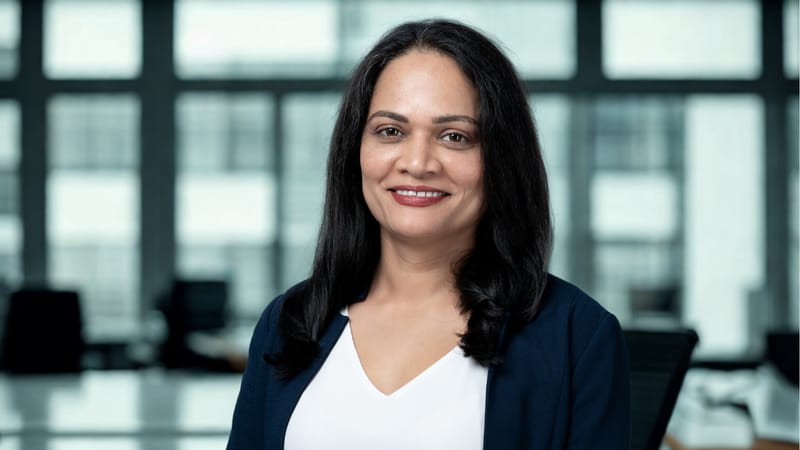
Ecofy’s Amishi Patel on redefining “green jobs”, closing India’s skills gap, and why HR is now a frontline player in the climate economy.
The language of work in India is changing. “Green jobs” — once a niche concept tucked away in policy reports — are now shaping boardroom agendas and HR strategies. But what does ‘green’ really mean for hiring, capability and careers in a country balancing growth with sustainability?
Few are better placed to answer than Amishi Patel, Head of Human Resources at Ecofy, a green finance firm funding India’s renewable energy and electric mobility ambitions. Over two decades in mainstream banking, Patel has seen how quickly “responsible business” has evolved from a slogan to a skill set. Today, she’s building teams designed for a carbon-conscious economy — roles that didn’t even exist five years ago.
“Green jobs bring together business and environmental goals,” she says. “They’re not a separate track — they’re the new mainstream.”
Patel defines green jobs as roles that merge profit with purpose. In finance, that could mean analysts assessing climate risk, officers designing sustainable loan products, or professionals tracking carbon credit markets.
In the EV sector, it spans engineers in battery design, experts managing charging networks, and digital specialists optimising fleet data. In renewable energy, it includes solar installers and energy auditors whose work directly reduces emissions.
What makes India’s version unique, she notes, is its dual challenge — environmental sustainability in a price-sensitive market. “We have to make solutions work for Mumbai and for small-town India,” she says. “That’s the real test of innovation.”
Beyond the buzzword
Patel is wary of “greenwashing” in job design. For her, HR’s job is to give these roles teeth — with defined skills, accountability and career paths.
“It can’t just be a fashionable label,” she says. “You need structure, you need measurement, and you need it tied to performance.”
Ecofy links sustainability metrics to performance reviews — tracking, for instance, the amount of renewable energy financed or carbon emissions avoided. The company also builds growth tracks that deepen expertise through certifications and mentorship rather than lateral transfers to legacy functions.
This, Patel argues, ensures “green” becomes part of business DNA, not just a corporate brochure term.
Ask her what skills are in demand, and the list reads like a blend of science, finance and psychology. Technical expertise — carbon accounting, ESG frameworks, green financial modelling — sits alongside behavioural capabilities like agility, collaboration and purpose-driven decision-making.
“People who can connect the dots between technology, finance and sustainability are rare,” she says. “Our education system hasn’t caught up, so those who develop these hybrid skills stand out.”
That mix, she adds, is transforming recruitment. “We’re not just looking for experience anymore. We’re looking for curiosity, learning agility, and comfort with ambiguity. The best candidates are those who can unlearn and relearn quickly.”
Building talent when the pipeline doesn’t exist
India’s universities and technical institutes are only beginning to teach climate finance or EV infrastructure design. Until then, companies must create their own ecosystems.
At Ecofy, Patel’s team works directly with ITIs and polytechnics in semi-urban areas, running guest lectures, internships and on-site training. The goal is to build capability from the ground up.
“Rather than waiting for curriculums to change, we create early exposure,” she says. “It keeps us close to local talent and gives communities a stake in the green economy.”
Existing employees receive company-sponsored courses and certifications — turning early adopters into internal mentors. “It’s a way to scale knowledge without depending solely on external supply,” Patel explains.
Patel’s HR strategy is rooted in scenario planning. Every quarter, Ecofy’s HR and business heads map emerging technologies and regulatory trends to predict tomorrow’s roles.
“We’re already preparing for positions like carbon-linked financing specialists and blockchain-based impact verification experts,” she says. “They sound futuristic, but they’ll be mainstream within a decade.”
To stay flexible, the company avoids rigid job descriptions. Instead, it designs broad capability frameworks that evolve as industries mature. “We’d rather hire for potential and build expertise around it than hire narrowly and become obsolete,” she says.
Learning and development programmes focus on transferable knowledge: carbon finance, EV infrastructure, and sustainable project design. “Our goal is to future-proof talent — not just fill today’s vacancies.”
Keeping purpose sustainable
For many professionals, working in a green enterprise feels deeply meaningful. But Patel cautions that “purpose fatigue” is real.
“Purpose inspires, but it can also drain people if that’s the only motivator,” she says.
Her solution is balance — pairing impact with growth, recognition and well-being. “People stay engaged when they see that meaningful work also builds their careers,” she says. “We maintain transparency about business results so employees know their impact drives both purpose and progress.”
Leaders, she adds, need what she calls emotional runway — the resilience to stay steady through uncertainty. “In climate finance, setbacks are inevitable. Building leaders who can absorb pressure and keep teams inspired is part of the job.”
Patel believes scaling green jobs cannot be left to industry alone. “It has to be a three-way partnership — government, academia and business,” she says.
Government must send strong policy signals: incentives for clean energy, targeted investment in green infrastructure, and funding for skill-building programmes. Academia, she argues, must integrate climate and sustainability across disciplines — from finance to engineering — rather than treating them as electives.
Industry coalitions, meanwhile, can bridge the theory–practice gap by standardising job definitions and offering mentorship networks. “Together, these three can make green jobs mainstream, not aspirational,” she says.
A personal turning point
Patel’s own career shift mirrors India’s transformation. After 20 years in traditional banking, she left a stable corporate path for the uncertainty of green finance.
“I wanted my professional life to contribute to something larger than quarterly targets,” she says. “In green finance, the link between business success and social impact is tangible.”
She recalls the satisfaction of seeing her team finance solar installations that cut emissions, or EV projects that clean city air. “When you see that connection — between work, livelihood and environmental benefit — it changes how you measure success,” she says.
For Patel, HR’s mission in this space goes beyond hiring. It’s about shaping a culture where purpose and performance coexist. “The challenge is to make them reinforce each other — not compete,” she says.
India’s green jobs landscape is expanding fast. The country’s renewable energy targets, electric-mobility ambitions and global climate commitments are already creating tens of thousands of new roles. But Patel warns the bigger challenge is readiness, not demand.
“The green economy will not wait for the talent pipeline to catch up,” she says. “We have to be proactive — train, reskill and redefine before the jobs arrive.”
Her forecast is optimistic but realistic: the next wave of HR innovation will be about anticipation, not reaction. “If India can align education, policy and corporate learning, we can turn our demographic strength into the world’s most skilled sustainability workforce.”
From HR to nation-building
Patel’s perspective reframes human resources as an economic engine rather than a support function. Every hiring plan, every training programme, every internal mentor, she argues, contributes to something larger — India’s green transition.
“Ultimately, HR is not just filling roles,” she says. “We’re building the workforce for a sustainable economy.”
And that, she believes, is where the next chapter of Indian business will be written — not in boardrooms or policy papers, but in the quiet, daily work of shaping people ready to build a greener nation.
Topics
Author
Loading...