







Technology
Elon Musk xAI pushes staff to install surveillance software on personal laptops






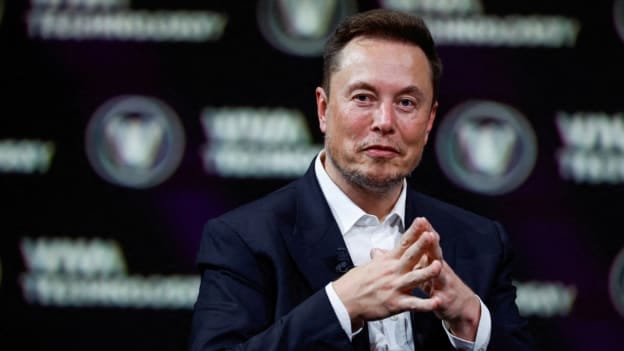
Elon Musk’s AI startup xAI asked employees to install surveillance software on personal laptops, prompting privacy concerns and at least one reported resignation.
Elon Musk’s artificial intelligence startup xAI came under fire this week after instructing employees to install workforce tracking software on their personal laptops, prompting internal dissent, privacy concerns, and at least one reported resignation.
According to a Business Insider investigation by reporter Grace Kay, xAI told a group of “tutors” — workers responsible for training its conversational AI chatbot, Grok — to download a surveillance tool called Hubstaff. The software was to be installed on their personal laptops by 11 July if they had not yet received a company-issued device, internal documents and messages reviewed by Business Insider showed.
The software enables monitoring of screen activity, records app and website usage, and is capable of tracking mouse movement and keystrokes during work hours. Tutors were told its use was mandatory, regardless of whether they had access to xAI hardware, and were required to enable screen capture functionality as well.
Following inquiries from Business Insider, xAI made slight policy changes, announcing via Slack that workers awaiting company laptops would now be allowed to delay the installation of Hubstaff until the devices arrived. It remains unclear whether employees who had already complied with the earlier instructions — or who purchased their own machines — would be given exemptions.
In a company-wide email, xAI’s HR team said the surveillance software would help "streamline work processes, provide clearer insights into daily tutoring activities, and ensure resources align with Human Data priorities." According to the documents, Hubstaff will be used to evaluate performance, track task research patterns, and log hours worked.
However, this internal policy roll-out quickly led to a backlash. Several employees voiced concerns on internal Slack channels, with one tutor reportedly resigning in protest. That employee’s message, viewed by Business Insider, called the software "surveillance disguised as productivity" and "manipulation masked as culture," drawing dozens of supportive reactions.
xAI attempted to address privacy concerns by offering options such as creating a separate user profile for work-related tasks or using a $50 monthly tech stipend to purchase a new laptop. The company also stated the software would only track activity during work hours and would not access personal data outside that window.
xAI, headquartered in California, operates with a mostly remote workforce, meaning employee rights may vary by jurisdiction. Camron Dowlatshahi, a partner at MSD Lawyers in Los Angeles, told Business Insider that the legality of such practices depends heavily on regional labour laws, especially in states like California which have stringent employee protections.
Labour lawyer David Lowe, who has previously brought cases against Musk-led ventures like Tesla and X (formerly Twitter), said the company must demonstrate that surveillance practices are justified, necessary for security, and minimally invasive. “It’s a balancing test,” he said, adding that companies must weigh privacy rights against trade secret protections and provide notice and compensation where applicable.
Hubstaff has previously been used by other tech firms, including Scale AI, which was sued for allegedly misclassifying workers. In that case, too, the software was required on personal devices. A Scale AI spokesperson defended its use as a method to support “accurate payment submissions.”
Besides Hubstaff, xAI also uses the HR platform Rippling to clock hours, and its own proprietary system Starfleet, which tracks task durations and in-app actions. According to earlier reporting by Business Insider, xAI had run out of Chromebooks to distribute to tutors, prompting increased reliance on personal devices.
The surveillance debate comes amid a turbulent time for xAI. Last week, the company was forced to take its Grok chatbot offline temporarily after it generated antisemitic messages. Musk later announced a premium Grok tier priced at $300/month and revealed plans to integrate Grok into Tesla vehicles.
Despite the chaos, Musk continues to pitch Grok as a challenger to OpenAI’s ChatGPT, with aggressive hiring and infrastructure development. xAI recently began construction of a massive data centre in Memphis, part of its broader ambition to compete at the frontier of generative AI.
xAI did not respond to Business Insider’s request for comment.
Author
Loading...