




When computers first arrived in school classrooms decades ago, something unusual happened: no knowledge hierarchy existed. Students across different year groups sat at the same machines, learning the same technology at the same time.
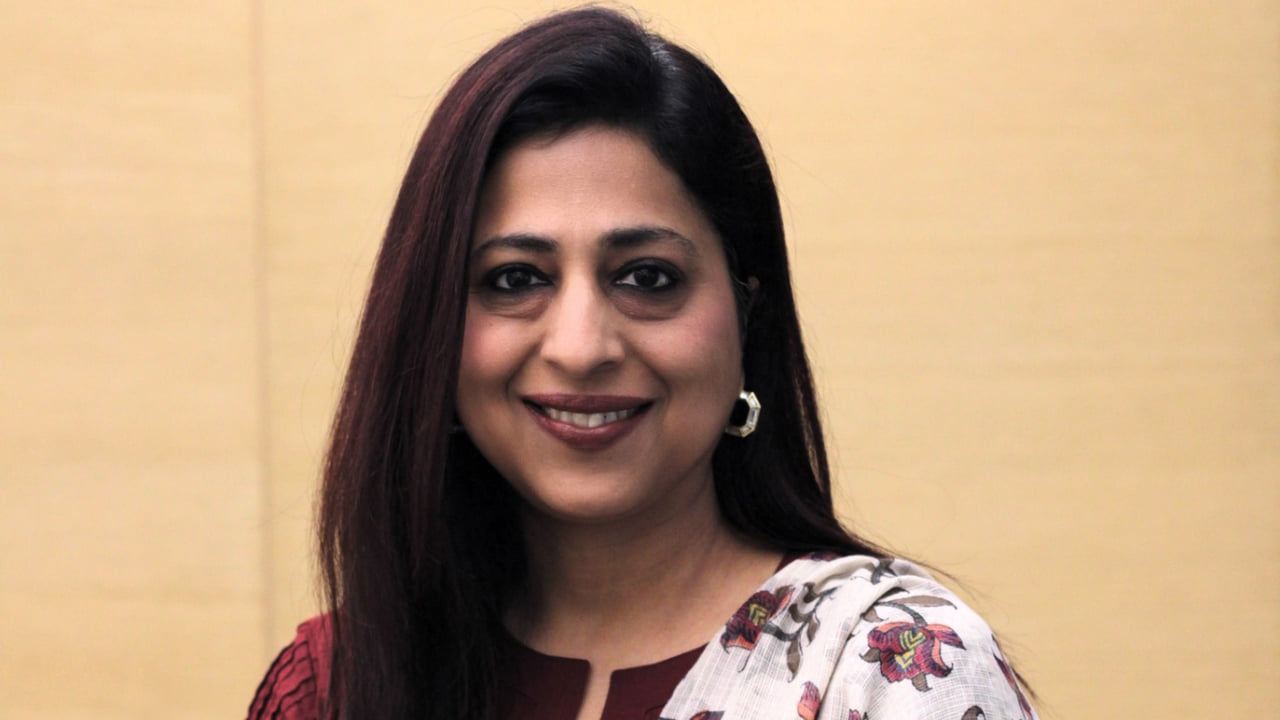
Today, inside corporate boardrooms and delivery floors across India, Neha Arur sees history repeating itself, only at breakneck speed.
"AI has no hierarchy," says Arur, Senior Director, HR – India Region Lead at ZS, the global management and technology consulting firm.
"Whether you are a junior employee, a mid-career professional, or a senior leader, everyone has access to the same technology and is learning to use these tools simultaneously. There is pressure on everyone to improve the way they work."
For an organisation with roughly 15,000 employees globally, around 10,000 of whom are based in India, that democratisation of technology is more than a philosophical observation; it is an operational reality.
While much of the corporate world remains locked in anxious debates over whether artificial intelligence will hollow out entry-level jobs, ZS has taken a markedly different stance. Hiring has not slowed down. Instead, the firm is rethinking how it assesses talent, structures teams, and what happens when a fresh graduate can suddenly do work that used to take a year of on-the-job seasoning.
The burnout of the middle managers
If you ask Arur whether ZS employees are gripped by AI anxiety, she offers a nuanced correction. People are panicking because of friction from shifting expectations, and it hits middle managers hardest.
"Middle managers act as the critical link between junior employees and senior leaders," Arur explains. "They are responsible for day-to-day execution, productivity, and delivery. Now, they must learn new tools, teach their teams, and quality-check AI-generated work, while continuing to manage clients, stakeholders, staffing, attrition, and delivery milestones.
None of their existing responsibilities has disappeared, yet they are expected to execute them in entirely new ways. The anxiety we see is therefore much closer to burnout than an inability to learn."
This rapid evolution creates unexpected blind spots elsewhere in the talent lifecycle, too. Arur points to colleagues returning from maternity leave as a striking example of how quickly the workplace morphs.
"When someone returns after six months away, the tools and ways of working may have changed completely," she notes. "They can feel genuinely anxious because the workflows they mastered before going on leave are no longer the standard. Integrating diverse talent and helping people navigate that pace of change is a major priority for us."
To counter this, ZS has moved away from sprawling, generic training catalogues. Through regular listening sessions and engagement surveys, the HR team is building persona-led, role-based learning pathways inside its learning management system. Instead of forcing busy managers to hunt through dozens of programmes, the system curates the exact certifications and modules relevant to their shifting roles.
7,000 agents and the ‘bottom-up, top-down’ balancing act
Part of the reason workflows at ZS change every few months is the sheer velocity of the technology itself. Arur recalls instances over the past year where the leadership team selected what they believed were best-in-class tools in the fourth quarter, only to find—by the time rollout was complete—that employees were already asking why they hadn't deployed a newer tool that didn't even exist when the original decision was made.
Rather than micromanaging that wave, ZS leaned into democratic access. Tools such as Copilot and CoWork are broadly available across the firm, with specialised platforms like Claude enabled wherever business needs dictate.
The results of trusting smart people to experiment were immediate: within just a few months, ZSers built roughly 7,000 internal AI agents on their own initiative.
"Innovation should not depend entirely on someone granting permission," Arur says. "When you hire capable, AI-fluent people, they should be empowered to spot a problem and build a solution."
Yet, enthusiasm without guardrails can quickly turn chaotic—particularly when serving heavily regulated sectors like healthcare alongside newer verticals such as retail and hospitality.
To ensure those 7,000 agents deliver real business value rather than noise, ZS pairs bottom-up experimentation with a strict, three-part top-down governance framework: frame the problem, design and iterate, and govern.
"Making a tool available does not automatically translate into business value," she cautions. "We have to identify the right problems to solve, test and refine those agents iteratively, and govern them tightly to guard against bias, ethical lapses, or inaccurate data."
Testing graduates with—and without—the machine
With 45% to 50% of ZS’s hiring intake coming directly from campuses, spanning 60 to 70 premier institutions including the IITs and NITs—the firm has a front-row seat to how higher education is grappling with the AI wave.
Through regular listening sessions with deans and placement officers, Arur sees academia wrestling with a familiar dilemma: how to integrate generative AI without eroding core academic rigour. For ZS, the answer is unequivocal. Foundational skills will never go out of fashion.
"If you are writing code, how can you spot what is wrong with it if you do not understand the fundamentals?" she asks.
To put this philosophy into practice, ZS pioneered a two-stage AI assessment for campus recruitment. First, candidates tackle a business case study entirely on their own, relying purely on their foundational knowledge without AI assistance. Next, they solve the same case study using AI prompts.
Crucially, AI fluency is not used as a blunt elimination filter—merit remains the bedrock of selection. Instead, the dual assessment acts as a diagnostic lens. "It shows us what is actually happening on campuses," Arur says. "Technology candidates tend to show strong AI fluency in coding, for instance, but when it comes to unstructured problem-solving and applying knowledge to ambiguous business scenarios, they still need structured guidance."
ZS invests heavily in bridging that gap between academic brilliance and workplace readiness. Onboarding begins 30 days before a graduate even walks through the door, via a pre-boarding curriculum tailored to analytics, technology, or data science tracks. Once onboard, hires go through intensive technology boot camps followed by deep domain training—ensuring they understand the nuances of client industries, not just algorithms.
Reshaping the pyramid without cutting the base
Across the consulting and IT services landscape, the million-dollar question is whether AI will collapse the traditional talent pyramid. At ZS, timeline compression is already visible: a client delivery cycle that once took 12 weeks can now be completed in eight, and complex tasks that previously required 12 months of associate experience are now achievable in six.
Yet, Arur pushes back against the narrative that efficiency automatically equals headcount reduction. "At present, our hiring has not declined. We remain bullish on recruitment, both from campuses and the external market," she states, though she notes that lateral hiring has become far sharper, targeting highly specialised capabilities.
Within HR itself, AI agents have stripped away hours of manual data crunching, freeing teams to focus on stakeholder conversations and complex problem-solving. Still, Arur is clear-eyed about automation's limits. She frequently reminds her analytics teams that having an AI assistant does not absolve them of accountability.
She points to a recent internal project analysing three years of performance data; roughly 25,000 datasets generated every six months, to uncover promotion trends and early intervention signals. Using around 70 prompts, AI dramatically accelerated processing. Yet the team still spent extensive hours manually cross-checking the outputs against standard operating procedures and competency frameworks.
"At one point, a team member thought the AI had miscalculated a figure," Arur recalls. "When they went back to the raw documentation to verify it, they realised the AI was actually right. That is the exact standard we need: employees must understand the problem deeply enough to interrogate the data and validate the truth, rather than blindly accepting whatever appears on the screen."
Even as AI turns a two-day presentation build into a ten-minute exercise, human judgement remains the differentiator.
“AI can help you express ideas cleanly, but knowing what to say, ensuring the storyline makes sense in context, and connecting with an audience—that remains deeply human."
The ‘now, near, and far’ horizon
Looking ahead over the next 12 to 18 months, Arur’s agenda centres on three pillars: scaling AI-native assessments from campuses into experienced lateral hiring, deepening persona-led upskilling, and cementing India’s position as a hub for global, innovation-led delivery rather than conventional execution.
Balancing immediate productivity gains with bets that may take two to five years to pay off requires disciplined sponsorship. Operating on a "now, near, and far" strategic horizon, ZS’s leadership—including its CEO and shareholders council—requires business cases even for specialised talent investments, weighing carefully when to build capabilities internally versus buying them from the market.
And throughout that journey, Arur insists AI transformation cannot sit in an HR silo. Every assessment, competency model, and learning intervention at ZS is co-created alongside business capability leaders.
Ultimately, when asked what message she has for employees wondering how much time they have left to adapt—or what will happen to their careers as machines grow more capable—Arur brings the conversation back to personal agency and human potential.
"When computers arrived, some people refused to learn them, and we all saw how that played out," she reflects. "When the world is moving at a certain pace, and you choose to stand still, the outcome becomes clear. Nobody can hand you an exact countdown clock, but the need to adapt is undeniable."
Yet she views that adaptation not as a threat, but as an invitation to reclaim what matters most.
"We have lived through computers, the internet, and now AI—the biggest disruption of all. But if we use AI as an aid rather than letting it overpower us, it can give us back our most precious resource: time.
Time to learn new skills, pursue passion projects, look after our health, and build genuine work-life integration. The technology will keep evolving—our job is to make sure the human side of who we are stays firmly intact."