





AI can now draft the email, summarise a grievance, flag an attrition risk, and even conduct an exit interview. In a room of senior HR leaders in Chennai, the question was no longer whether the technology can do these things. It was whether it should, and what HR does with the time it gives back.
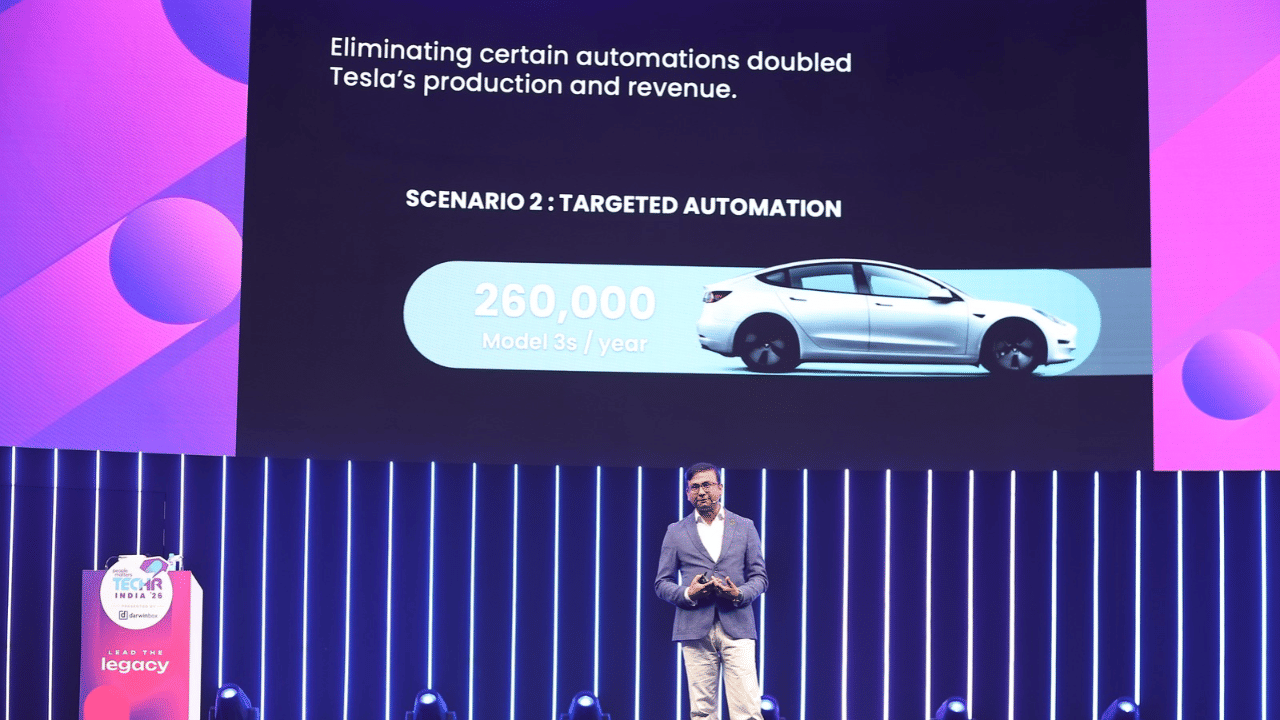
People Matters and HONO brought these leaders together on 16 October 2026 for an evening roundtable on "The Future of HR in the AI Era: Balancing Automation and Transformation." The discussion was moderated by People Matters together with Amandeep Singh Minhas, who heads Pre Sales and Operations at HONO. Participants came from sectors including manufacturing, healthcare, IT services, publishing, education, telecom, real estate and advertising.
AI is already inside everyday work
Leaders described AI as part of the working day, not a pilot programme. A leader from a research and advisory firm said HR teams there now practise performance conversations in an AI-led mock module that scores them and suggests how to improve. She said that after more than 15 years of holding such conversations, she only just cleared the pass mark. Her team also runs monthly AI challenges, and reviews documents with AI before a person signs off on them.
At a healthcare services company, the talent development lead sees AI replacing fixed monthly training calendars with individual ones built from performance data. A leader from a telecom company credited wide acceptance to structured training for every employee, from frontline sales to the board.
Amandeep traced how fast this has happened. ChatGPT launched publicly in November 2022. He said he recently built the software his entire pre-sales team now runs on, without ever having been a developer. Then he asked the question that shaped the rest of the evening: "AI seems to be able to do everything, but should we let AI do everything?"
Where the human has to stay
Most answers pointed to the moments that carry the most emotional weight: employee relations, grievances, counselling and conflict.
One leader described a disciplinary case in which the write-up, built on an AI-generated summary of statements, all but found the employee guilty of breaking policy. When the leader probed further, the employee had departed from process to serve a customer, not for personal gain. "You have to be really conscious about why you are using it," the leader said. Another leader used Copilot to summarise ten lengthy grievance emails from employees in another country, but then had to speak with each of them to reach a resolution.
A leader from a large IT services company, which he said loses and hires tens of thousands of people every year, said AI now flags who is likely to leave, but only a conversation keeps them. On mergers, he recalled addressing 400 employees of a newly acquired company. They wanted to know whether they would still have a job, whether their manager would change and whether their pay would fall. "All of this AI cannot answer," he said. In his view, AI "is going to become a co-pilot when we are the pilot, but it can never become the pilot."
The head of HR at an education group that also runs hospitals made the same point from healthcare. Machines can support diagnosis and surgery, but they cannot ask a patient whether the fever or the pain has gone.
A third said it was too early to assume AI will never handle emotional work. The most surprising evidence came from exit interviews. One organisation, whose workforce ranges from ITI graduates on site to employees close to retirement, has been running exit interviews through AI for about six months. Frontline employees took to it faster than senior staff. Answers became far more candid, and the leader linked this to anonymity and the absence of a person on the other side.
For the head of HR at an infrastructure company, the benefits are still to be proven: "For me, AI is like a mirage. Only when you go closer to it are you able to find how effective it is for you as an organisation."
Readiness needs guardrails, and a culture
Leaders agreed that employees want to learn. They were less sure who should train them, how far training should go, and whether today's programmes will work.
Guardrails came up again and again. A leader from a manufacturing company said the organisation has blocked ChatGPT and moved to a governed alternative because of data security and compliance. Another company now runs mandatory sessions on what employees must not do with AI, alongside its POSH training. The head of HR at another manufacturing company argued that HR's job is to build "a culture of AI readiness" and to put AI investment into work that adds value, not just work that is simpler.
One leader pointed to investor pressure on enterprises to spend heavily on AI and see results quickly. "Faster, I think we all agree," the leader said. "The debate is really around the better."
The real test: what happens to the saved time
Amandeep brought the discussion to its central point. "If with that saved time, and with the right guardrails in place, the same work is being done by the same people, then nothing is really transforming in an organisation."
Leaders described several uses for that time. The research and advisory firm's HR team has combined talent-review data with internal job applications and narrowed a group of about 200 associates to 30 high-impact people at risk of leaving. HR now holds stay conversations with them instead of waiting for resignations. Others pointed to monitoring AI models as they change, explaining HR decisions to business leaders, and countering what one leader called the "fear psychosis" around jobs. Computers in the 1990s and later Six Sigma and Kaizen were expected to destroy jobs but created them. "I think AI is going to create jobs," he said.
The head of HR at a publishing company, where the average employee is in their mid-twenties, said some job applicants now disclose that they take medication for depression. "I think the basic human connection is missing," he said. A leader from an analytics firm suggested HR leaders also invest time in themselves, and one CHRO closed by urging professionals to become more "deeply connected." Amandeep added that HONO is a Māori word meaning "to connect" or "to be connected."
The evening's conclusion was that AI will make HR faster. Whether it makes HR better depends on what leaders do with the time AI saves.