








India’s aviation industry is in the midst of a major expansion cycle, driven by fleet orders, network growth and rising passenger demand. Yet behind the headlines about aircraft and capacity lies a more complex challenge: building organisations capable of sustaining growth in a highly regulated, safety-critical environment.
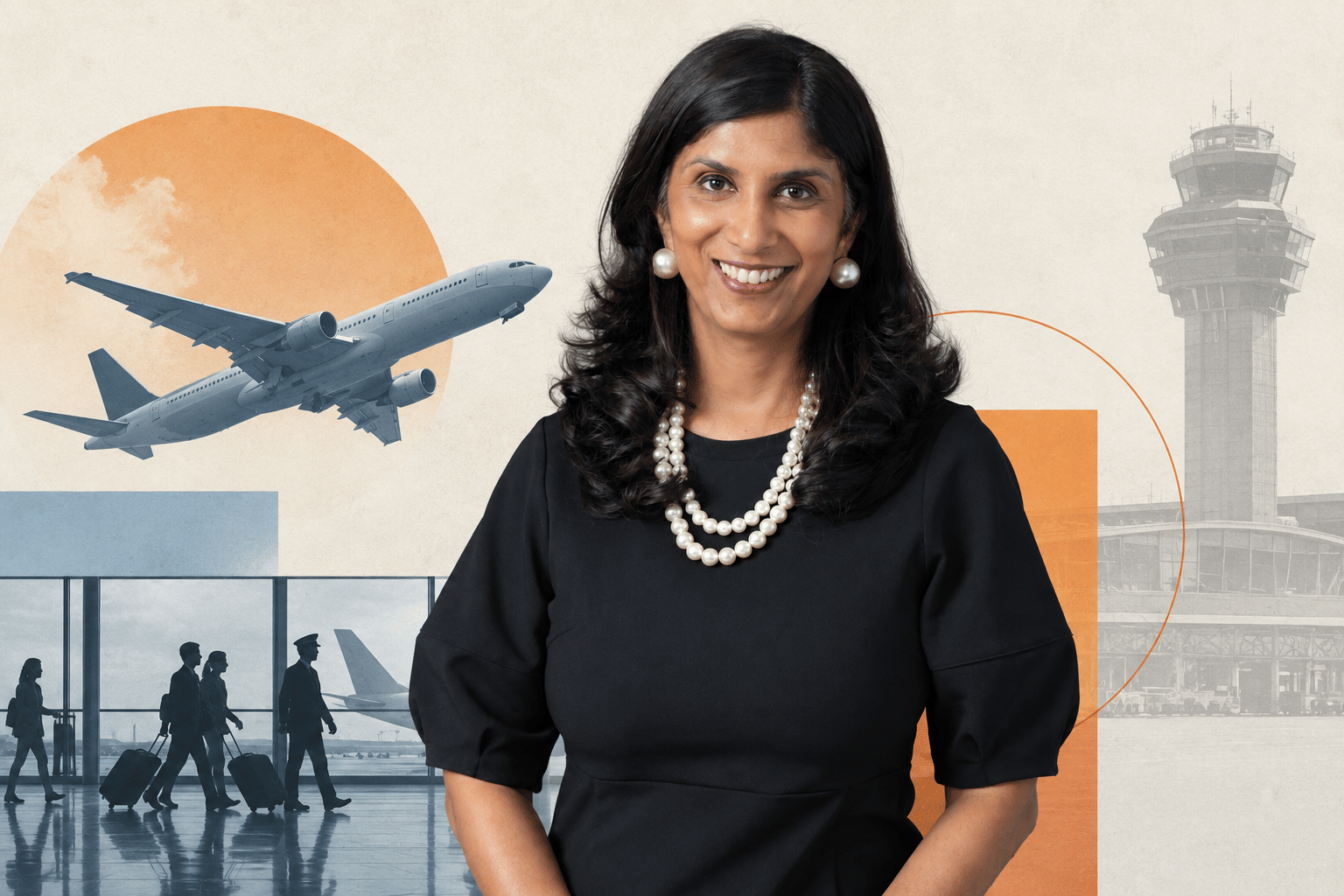
In an interview with People Matters, Sejal Haribhakti Mody, Chief Human Resources Officer at Akasa Air, said the industry's next phase of growth will depend as much on talent readiness, leadership capability and organisational design as it does on fleet expansion.
According to Mody, the conversation around aviation growth often focuses on visible indicators such as aircraft orders and route additions, while the organisational demands created by rapid expansion receive far less attention.
Building the organisation while running it
For fast-growing airlines, growth is not simply a question of increasing headcount.
“We are building the organisation while simultaneously running it. Every new aircraft, route and operating base creates additional interfaces across functions, increases the need for coordination and places greater demands on decision-making systems.”
Mody noted that airlines must address a gap between employability and operational readiness, particularly as aviation requires employees to perform in safety-critical, customer-facing environments.
“India has a large young workforce, but the gap between employability and operational readiness remains significant. In aviation, the standard is not just qualification; it is readiness.”
She said growth should be viewed as a broader organisational challenge encompassing skilling, socialisation and culture-building alongside recruitment.
Key organisational pressures emerging alongside aviation growth include:
- Scaling talent pipelines while maintaining operational standards
- Building capability in highly regulated environments
- Strengthening coordination across expanding functions
- Preserving employee experience during rapid growth
- Developing organisational culture alongside business expansion
“Ultimately, sustainable growth depends on an organisation's ability to build capability, culture and coordination at the same pace as it builds scale.”
When scaling becomes an organisational design challenge
Mody said that there is no fixed stage at which airlines need to redesign themselves. Instead, the shift occurs when leaders begin asking how to enable large numbers of employees to operate consistently and confidently.
“As organisations scale, the focus must shift from simply adding capacity to creating clarity, ensuring that teams understand decision rights, accountability is clearly defined, and operating structures enable faster execution rather than create friction.”
The challenge, she said, lies in creating systems that help employees succeed at scale rather than relying on hiring alone.
Areas requiring investment during rapid expansion include:
- Leadership capability
- Training and development pipelines
- Role clarity
- Communication mechanisms
- Feedback systems
- Organisational readiness programmes
“At some point, growth can no longer be sustained through enthusiasm alone. It requires thoughtful organisational design.”
Mody emphasised that the objective is not to create heavier structures but to establish simple, repeatable ways of working that support effective decision-making.
Leadership must move closer to the operation
As airlines evolve from startup-scale operations into larger enterprises, leadership models must evolve as well.
Mody described a shift from decision-making concentrated among a small leadership group towards broader leadership capability across the organisation.
“As airlines grow from startup-scale operations into larger and more complex enterprises, leadership has to evolve from a small group of people solving problems through proximity to a broader bench of leaders who can carry the culture, make timely decisions and build capability within their teams.”
She identified three priorities for leaders navigating this transition:
- Embedding organisational values in hiring, rewards and leadership behaviours
- Moving decision-making closer to operational teams
- Creating environments where employees feel safe raising concerns and learning from mistakes
“Ultimately, the transition is from leadership-driven decision-making to leadership-enabled decision-making, where leaders create the clarity, trust and capability for teams to take ownership while remaining aligned to a shared purpose and set of values.”
Why culture remains central to operational excellence
In aviation, where safety and compliance are non-negotiable, Mody said agility should not be confused with improvisation.
“In aviation, agility cannot mean improvisation. It has to mean responsiveness within discipline.”
While standard operating procedures remain essential, she believes organisational culture determines how effectively those processes are executed.
“Culture is not separate from process; it is what gives process life.”
Employees, she said, need to understand not only what procedures require but why they matter.
“When people feel that ownership, they are more likely to do the right thing even when no one is watching, speak up when something does not feel right, support one another through disruption and uphold the customer promise without compromising safety.”
This balance between discipline and ownership becomes increasingly important as organisations grow and operational complexity rises.
Fleet expansion requires enterprise-wide coordination
Mody highlighted how every aircraft induction creates ripple effects across multiple functions.
“A new aircraft is not just a fleet decision or an entry in a growth plan. It means pilots and cabin crew have to be hired and trained, airport teams have to be ready, engineering and maintenance preparedness has to be in place, crew planning and rostering assumptions have to work.”
She said successful expansion depends on structured collaboration rather than informal coordination.
Cross-functional alignment is required across:
- Flight operations
- Cabin crew
- Airport operations
- Engineering and maintenance
- Crew planning
- Customer experience
- Finance
- Communications
“Collaboration cannot depend solely on informal coordination. It has to be built through shared goals, clear accountability and outcome-oriented KPIs.”
Mody added that timely communication becomes increasingly critical in fast-growing organisations where delays can create confusion, rework and operational pressure.
Building capability ahead of growth
Reflecting on Akasa Air’s growth journey, Mody said one of the most important lessons has been the need to build organisational capability before growth demands it.
“One of the most important lessons from Akasa Air's growth journey is that the early years of scaling are not just about building size; they are about building muscle memory.”
She said culture must be actively reinforced through leadership behaviour, communication, training and recognition rather than left to evolve organically.
Mody pointed to the airline’s investment in the Akasa Air Learning Academy as an example of preparing capability ahead of future growth requirements.
“Organisational capability must be built ahead of growth rather than in response to it.”
Beyond technical and regulatory training, she said such initiatives help reinforce culture, service standards and leadership philosophy across the workforce.
The capabilities that will define the next phase of aviation growth
Looking ahead, Mody believes airlines will be differentiated less by access to aircraft or capital and more by their ability to develop institutional capability.
“The differentiator will not simply be access to aircraft, infrastructure or capital. It will be an airline's ability to build institutional capability alongside operational capacity.”
She expects workforce development to become increasingly important as fleet expansion creates demand across operational and customer-facing roles.
According to Mody, resilience will also become a defining organisational capability as airlines navigate weather disruptions, regulatory changes, geopolitical developments and evolving customer expectations.
“Organisations will increasingly need people who can stay calm under pressure, collaborate across functions and adapt quickly while maintaining operational discipline.”
For Mody, culture remains a strategic advantage rather than a soft organisational attribute.
“In the end, the airlines that scale successfully will be those that combine process with culture, speed with discipline, and growth with a deep investment in people.”