








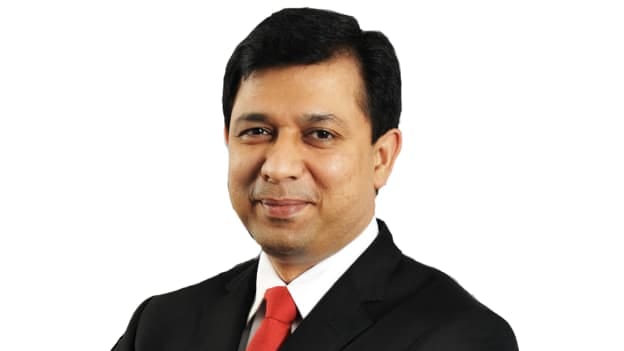
The second wave of COVID-19 has established the need to reinvent the way we work and manage our talent. In this exclusive interview with Kishore Poduri, Country Head- Human Resources, DBS India, we try to understand how strategies need to be ‘reinvented’ as he shares the steps DBS has taken to improve their employee centric strategies while discussing how leaders can synergize to keep their organizations on the path of the future.
The pandemic brought the C-Suite closer than ever to execute employee-centric policies. What else can HR leaders do to build a more employee-centric culture?
It's high time for organizations to be more employee-centric than ever. Employers must extend a social and psychological safety net to their staff. Employee wellbeing is no longer limited to the HR function - it has become a collective leadership responsibility. Senior leaders have to come together to ensure employee safety and wellbeing. It is an integral part of the organization's people strategy and a key tool for talent attraction and retention.
Our employees have always been at the core of everything we do. We introduced a series of initiatives to help our colleagues navigate the pandemic situation - from offering help with hospitalization, oxygen requirements, providing ambulance facilities and even arranging vaccination drives for employees and their families. We have also introduced financial benefits to enable employees to manage expenses, including salary advance guidance, COVID-19 lump sum insurance, among other initiatives.
Recognising that work-life balance has been challenging due to continued work from home, we regularly remind staff to take timely breaks. We have leveraged ‘My Insights', a feature in Outlook, to understand our employees' work patterns, productivity, and overall work-life balance. We have ensured that our employees engage in a regular dialogue with the leadership to identify and combat any work-life balance challenges.
Future oriented companies need to focus carefully on curating the employee wellbeing experience. They need to be agile in designing flexi working policies and adopt a customised approach towards delivering employee benefits. Many of us believed that the situation would soon go back to normal at the onset of the pandemic, and that work from home was a temporary working arrangement. We have learned that to thrive in this new normal, we must commit to culture remodelling across the organizations. For example, we have introduced 'Future of Work, Workplace and Workforce' (F3W), a set of culture tenets cum future-forward behaviours, rituals, and working arrangement- policy changes to prepare us for a thriving and more employee-centric future.
How have leadership practices and attitudes changed between the first wave and the second?
At the onset of the first wave, we had set up crisis management committees with daily monitoring of the evolving situation. We instituted work from home for employees – even for functions that had traditionally been office-based such as Treasury & Markets. Our response was centred on ensuring business continuity while maintaining employee safety and wellbeing.
We have discussed the future of work and a new operating model for the post-COVID-19 world. The new normal has also presented opportunities in the employee experience space. For instance, with virtual town halls and meets, we now have a wider reach and a better connection across branches and offices.
To align our culture with the realities of the new normal, we have instituted norms and practices such as flexible working/remote working up to 40% of the time.
The first wave prepared us to institute the right infrastructure, right benefits and right culture & practices. With the second wave and its severe impact, we prioritised employee wellbeing over business operations. The second wave required leadership to be more connected with employees through frequent communication, extending support at a personal level for requirements such as hospitalisation, arrangement of oxygen etc.
As broadening access to healthcare was the need of the hour, we joined hands with the Singapore High Commission, the Indian High Commission based in Singapore and Red Cross and imported three hundred oxygen concentrators. With the shortage of oxygen supplies across the nation, we expedited this initiative to help the community.
Hybrid models of work are still steadily catching up among organizations. What is your take on it as a leader? Is this practice here to stay for long?
The hybrid working model is here to stay! We have developed the hybrid working model based on extensive research and experiments. We conducted employee surveys and focused group discussions that revealed that with WFH, employees have increased flexibility, reduced expenses and time associated with travel. This model has democratised employee participation during meetings and enabled employees across different locations to be virtually present. Our research also helped us understand that WFH may be unsuitable for certain functions and can also lead to increased fatigue due to the blurring of work-life boundaries.
We firmly believe that a hybrid work model is the way to go. We have offered flexible work arrangements before COVID-19 as well, and now, it has become a mainstream work arrangement. An essential element in the successful implementation of hybrid working is embedding the right culture for thriving in the new normal. We call it culture by design which means that organizations have to be deliberate in the culture they want to shape.
As we go forward, we need to continue this journey by evolving our culture, so as to be best suited for the new world and ensure our culture tenets stay sharp and relevant.
What kind of trends do you as an HR Leader observe in the future amidst the growing idea of reinvention of workplace and workplace policies?
I believe that the following trends will be instrumental in shaping and reinventing workplaces and policies.
- A flexible and diverse workforce: With the flexibility of remote working, we will see a more diverse workplace. I also envision reinvention of employment contracts to include flexible work models. For instance, we are exploring concepts such as job sharing, part-time etc., as work models and are learning how to tap into these formats as part of our strategic workforce planning.
- More nimble and agile squads: With remote working and digital connectivity, I foresee restructuring operating models and workforce structures to be more collaborative, cross-functional and cross geographic. For instance, DBS is accelerating its transition to operating models characterised by project-specific squads formed with members from different functions and relevant areas of expertise. This helps us as we look to deepen our customer journey design thinking and create value beyond the usual confines of banking. This enables us to identify opportunities in adjacencies and industry ecosystems. While agile squads are already commonplace in some parts of the bank, primarily in the technology space, this approach will now be extended at scale to other functions.
- Equipping employees with skillsets of the future: Considering that the skills required in banking are fast evolving, and new types of roles are being introduced, organizations will have to become more future-forward in their workforce upskilling and reskilling approach. DBS is doubling down on its efforts to upskill and reskill employees. We aim to roll out training programs in emerging areas such as design thinking, data and analytics, artificial intelligence, machine learning and agile practices.
- Employee experience : With the blurring of work-life boundaries, it becomes important for CHROs to focus on employee experience, emphasising new work norms, new engagement tools & models, and new ways of collaboration. By leveraging technology, we can achieve better collaboration, engagement and a superior employee experience. This would also mean looking at roles with a new lens- collaboration, connectivity and so on.
- Data-driven everything : We have built a data-driven operating mindset in all that we do. We do it through instrumenting data, end-to-end application of data and analytics and an active control tower. The control tower tracks activities & drivers closely against outcomes, informs how we manage work and resources, and requires us to bring the right cross-functional members together to gather insights, make decisions and take action.
What are some of the ways in which talent management needs to be invented during these trying times?
The increased focus of companies on upskilling/reskilling their workforce over hiring new talent is a new trend we have observed. With business continuity being a priority and skills becoming obsolete so fast, companies are seeing merit in strengthening efforts to upskill/reskill their workforce. With remote working, there is a need to institutionalize a recognition and feedback-driven culture, as transparency and candor are extremely important. We have employed 'Anytime Feedback', a performance management and development tool that enables employees to give and receive feedback.
Tailoring the employee experience to align with the new ways of working is another trend that we see in talent management. Improving employee experience will now entail reimagining roles (WFH facilitator, virtual office managers, data coach etc.) and identifying ways to engage the transformed workforce and address their transformed needs. This also requires changing our workplaces- reconfiguring and optimising them for hybrid collaboration and celebrations, instituting team-based Joyspaces, using experiments via 'Living Labs' to finetune collaboration, celebration and virtual tools and assigning satellite offices, e.g. unused branches/social hub spaces.