








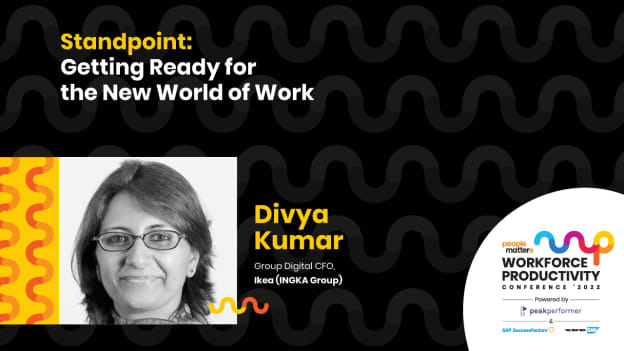
The pandemic has forced companies to adapt to a rapidly changing work environment. Where remote work was once an option that was available to very few, it has become the mandate today. Companies in turn have restored to digitalization to keep their business processes afloat and people connected. “We are working in a scenario that none of us would have imagined working a few years back,” noted Divya Kumar, Group CFO, IKEA (INGKA group). Speaking at the People Matters Workforce Productivity Conference 2022, Divya addressed the key issue of ‘getting ready for the new world of work.’ In her session, she explained the role of digitalization in the coming years, adding that 'the world has changed. it's important as coworkers, we are ready for what has happened and the changes that are yet to enter our workplace.'
For her, digitalization enables companies not only to address the needs of the current business ecosystem but also prepares companies for the challenges it is yet to face. But while digitalization is becoming a vital part of the modern-day workplace, it requires companies to properly embrace it to truly provide it with newer ways to grow and better ways to connect.
Digitalization in the current business world
To understand the impact of digitalization on companies, it is important to quantify what the term denotes. “To me, it means three things,” said Divya. “Firstly it is the use of digital technology to change and transform business models. It includes creating new revenue streams, newer ways of meeting customer demands.” This, according to Divya, is a key feature of digitalization. “Secondly,” notes Divya, ‘digitalization should transform processes.” By using technologies like automation, data analytics, blockchain, companies should be able to redefine the parameters of their business process and make them more efficient. The last factor that goes into defining digitalization for Divya is its impact on everyday work life. It is important to ensure all three factors are in play to make digitalization a successful endeavor for the company.
Cultural changes to make digitalization successful
“It's not just about how we work but how we embrace this new world of work.” explained Divya on the increasing role of digital tools and technologies that make for a successful business today. “For us at IKEA, our customers have become digital. This means our employees and coworkers also have to embrace digital capabilities to drive maximum consumer benefit.”
While digitalization requires companies to embrace the changes it brings about, for many, this is easier said than done. Companies still face challenges when it comes to adopting a digital-first approach. A similar concern was raised by Divya in her session who spoke about how companies today face a “complete change in how employees skills and expectations as today they need to become digital.” Successful digitalization for Divya requires the following shifts in how businesses operate.
- Shift in mindset: To change the mindset of employees to become comfortable using digital technology and learn is crucial. “fear of anything paralyzes,” explained Divya. “With digital becoming a part of life, fear of changing process, fear of jobs becoming obsolete in the future makes working difficult.” This mindset of fear needs to be tackled and replaced with an enthusiasm to learn and develop new skills. “Technological shifts have happened for centuries, but we're still working,” she added, “for me, it's all about how do we change that mindset to step up our love for learning. It’s important to open our minds to technology make the best use of its opportunity.”
- Make coworkers comfortable with change: A direct impact of digitalization is that business processes are going to develop and shift. It is crucial for its successful adoption that companies work with their employees to ensure they are ready to embrace the change
- A digital-first approach: Company culture has to shift to prioritize digital tools. “Interactions,” noted Divya, “have evolved. People nor require either a chat or instant responses in places of emails.” By addressing such needs, a company can enable its workforce to shift towards embracing digitalization. Customer demands also dictate these concerns. ‘With customers across the globe today shifting to a way of interacting, companies need to keep up,’ noted Divya.
While digitalization is primed to make business processes easy and more efficient, its adoption can take time. By increasing digital literacy, adapting the company’s culture, deploying human-centric digital tools, and tackling information asymmetry regarding technology companies can greatly increase their chance of successfully digitizing their processes. Additionally, Divya noted that “companies need to to ensure their employees’ data is being used ethically.”