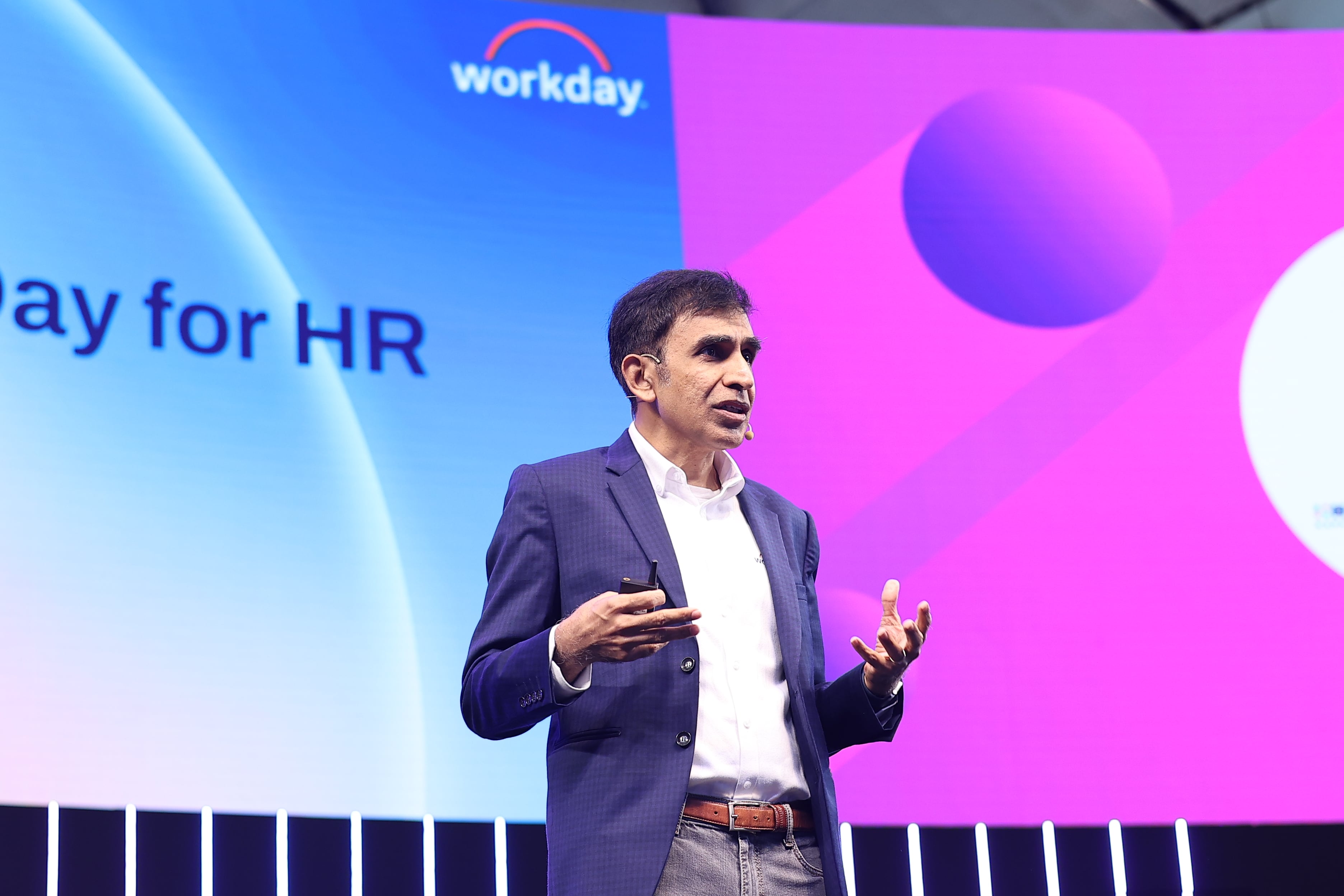
“AI assistants, chatbots, and copilots can only assist with individual or team productivity. Enterprise productivity will be driven by agents,” said Raghu Prasad, VP- Solution Consulting at Workday, at a session on Orchestrating At Speed: Building Capability and Capacity for Excellence at People Matters TechHR India 2026.
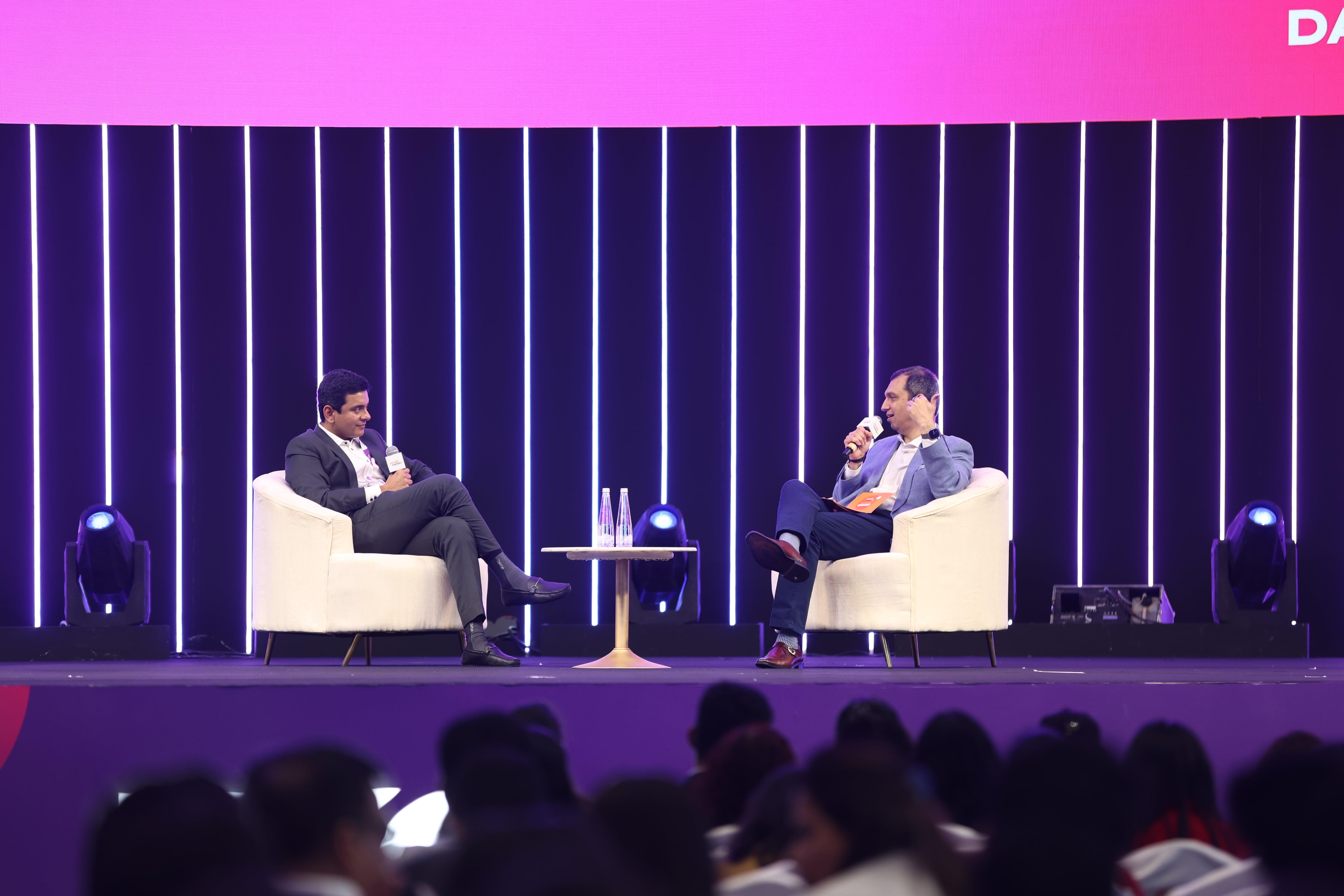
Prasad spoke about his experience working with AI agents and AI automation at Workday for the last couple of years, the key areas that have helped them become AI native, being able to execute Agentic AI workflows effectively while keeping the employee experience at the centre of it, and concluded the session with inputs from Seema Nair, CHRO, Flipkart, on how AI is being used in business workflows and the key role of HR in this transition.
The session was introduced with a statistic that every day, 500 jobs are being replaced with AI across the world. The data directed the attention to AI’s impact on the most important resource organisations have till date, its people. Organisations can make use of the technology to augment their workforce capability and realise productivity gains that can be deployed to business growth. Three key areas that helped Workday in their Agentic AI journey were discussed: being the custodians of the digital workforce, how to responsibly execute Agentic AI, and lastly, how to reinvent employee experience in organisations.
Being custodians of the digital workforce
Prasad said, “It is important to look at agents as extensions of the human workforce, and by that corollary, you've got to start treating agents as something that has a life cycle, pretty similar to employees.” It is important that an exhaustive database is prepared that can track every agent's capabilities, workflows, utilisation, and performance, similar to how organisations keep track of their workforce’s performance.
Additionally, there also needs to be guardrails on permissions and security for agents that can ensure that Agents are not misused. These control measures and management systems can be designed in collaboration between HR and IT, or either of the two. Workday has created an agent system of record that gives them the exact information about an agent, their utilisation, capabilities and their record of deployment and offboarding. Being able to monitor these records makes the process more efficient.
Being better executors of Agentic AI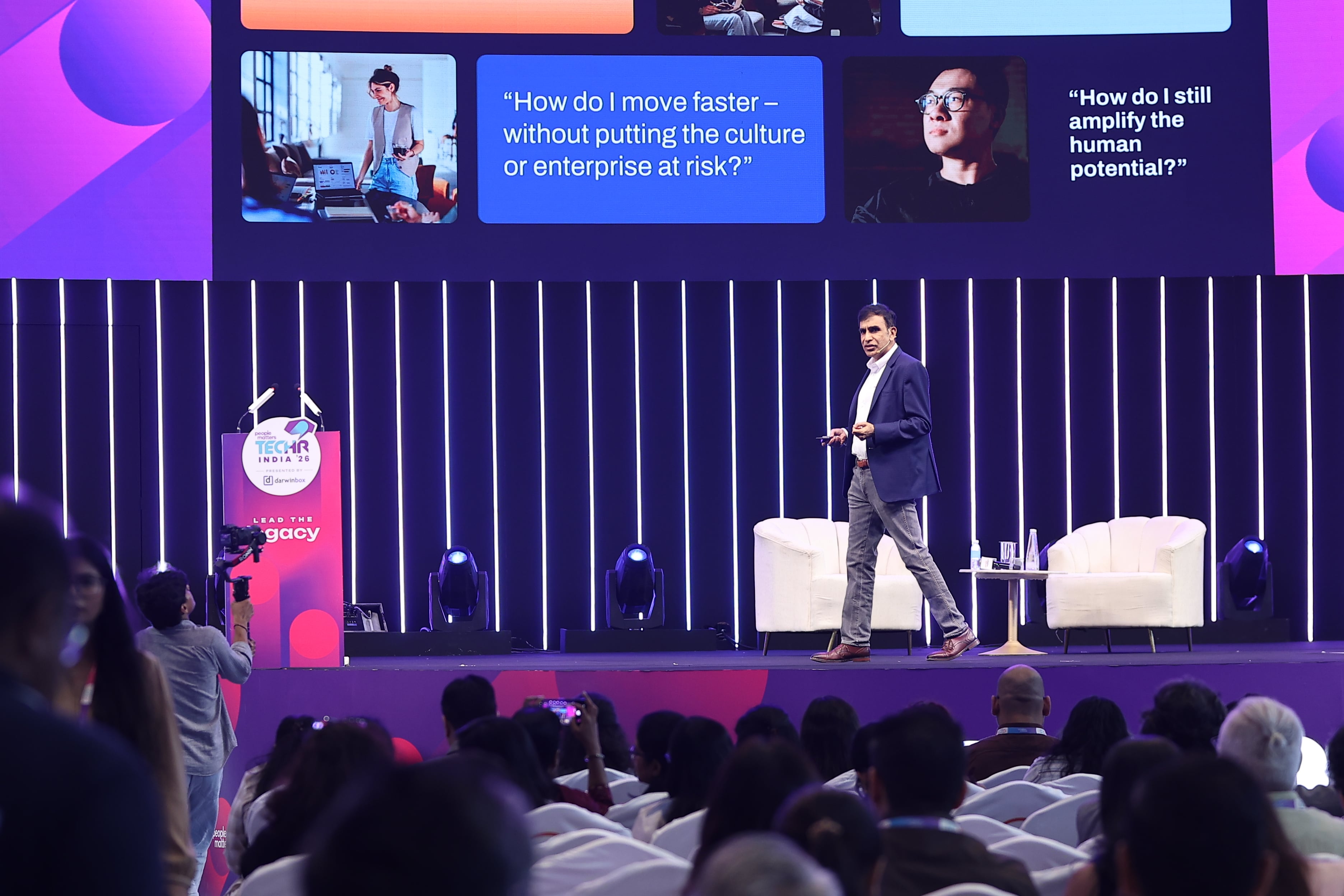
While working with agents at Workday, Prasad noted, “Everyone talks about data, and data being the fuel for AI, but data alone is not enough. What is equally important is context.” For an agent, context is the organisation structure, its policies, information on job architecture, information that may be changing every two to three years. The LLM tools are not that effective in getting this context, as it is mostly historical and embedded in the way an organisation operates.
An example was shared on how a job architecture agent functions. While the agent researches the details of the assignment and the different job roles required, suggests which job structure supports these roles, drafts job descriptions, and even goes on to create job requisitions, it is interacting with a human at every touchpoint.
The human intervention ensures that the organisation context is preserved and, conversely, the agent is also able to amplify the potential of the human employee involved in the workflow. Tangible results can be achieved with up to 20% productivity gains, almost equivalent to freeing up a day in the week for the employees.
Reinventing the employee experience
The expectations in the business are changing with the introduction of AI agents. While individual productivity is driven by chatbots and co-pilots, enabling employees to create their own agents is where organisations can unlock enterprise-level productivity. Prasad shares an example workflow from Sana, a company Workday recently acquired that helps employees create their own agents.
The example cites the use case of creation of expense reports that takes up time from an employee which can be alternatively used for more impactful work. The agent is able to identify expense receipts from the employee’s inbox, collate them, and create an expense report, directed to the reviewer at a periodic cycle. While all of this is happening, the employee does not have to engage in the exercise of searching for all expense receipts in their inbox and is able to deploy the time savings to other tasks. This is what can be achieved from citizen creation of agents in an organisation.
How Flipkart is bringing AI into their workflows
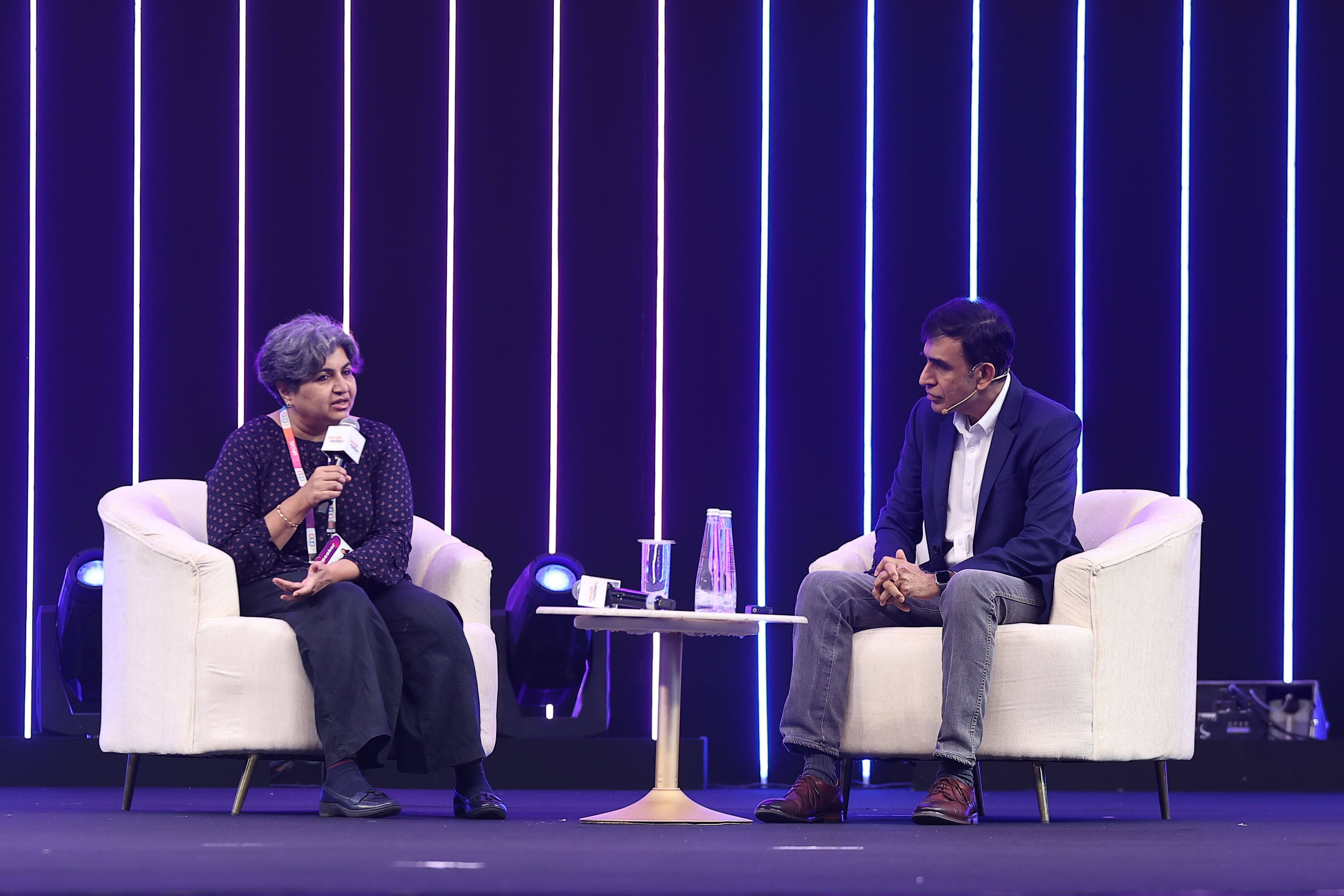
Prasad invited Flipkart’s Nair to share her experience on AI transformation at Flipkart. Flipkart has been working on integrating AI in their business operations for a while. According to Nair, the company has focused on improving the seller experience through automated reporting of metrics and enabling automated dashboards for better decision-making.
On the buyer side, they have been using AI to make better pricing and promotion decisions across the country based on demand and supply changes to ensure the buyers are able to get the best value out of their purchases.
While measuring the return on their investments in technology, Flipkart is prioritising tracking the incremental value gained in the business by deploying AI and technology to the workflows. As the organisation progresses on its journey from experimentation to scaled adoption, Flipkart wants to build the right partnerships between the business, technology, and HR to ensure successful outcomes.
Technology might own the automation process, but it will be HR who will have the expertise on the role responsibilities, feasibility of automation of select tasks, and what the workforce can deliver with the time savings, said Nair.
“Being the architects of organisation design, workforce redesign, workforce planning, all of that becomes fundamentally important in HR work in this journey towards AI adoption,” concluded Nair.
The session discussed important themes of managing Agentic AI efficiently as an organisation will manage its own workforce, refining the execution with the right organisational context through human inputs and delivering a superior employee experience through Agentic AI workflow augmentation. All of which will be necessary to build an Agentic AI success story at any organisation.