Employee monitoring has entered a new phase.
What began as attendance systems, CCTV cameras and internet usage logs has evolved into a broad ecosystem of technologies capable of tracking activity, movement, communications and behaviour across both physical and digital workplaces. The growth of remote and hybrid work has accelerated adoption.
According to reporting by Computerworld citing research from MIT, around 80% of organisations monitor remote or hybrid employees in some capacity.
Employers say monitoring supports productivity, security, compliance and operational efficiency. Employee advocates, regulators and labour groups continue to raise concerns around privacy, transparency and workplace trust.
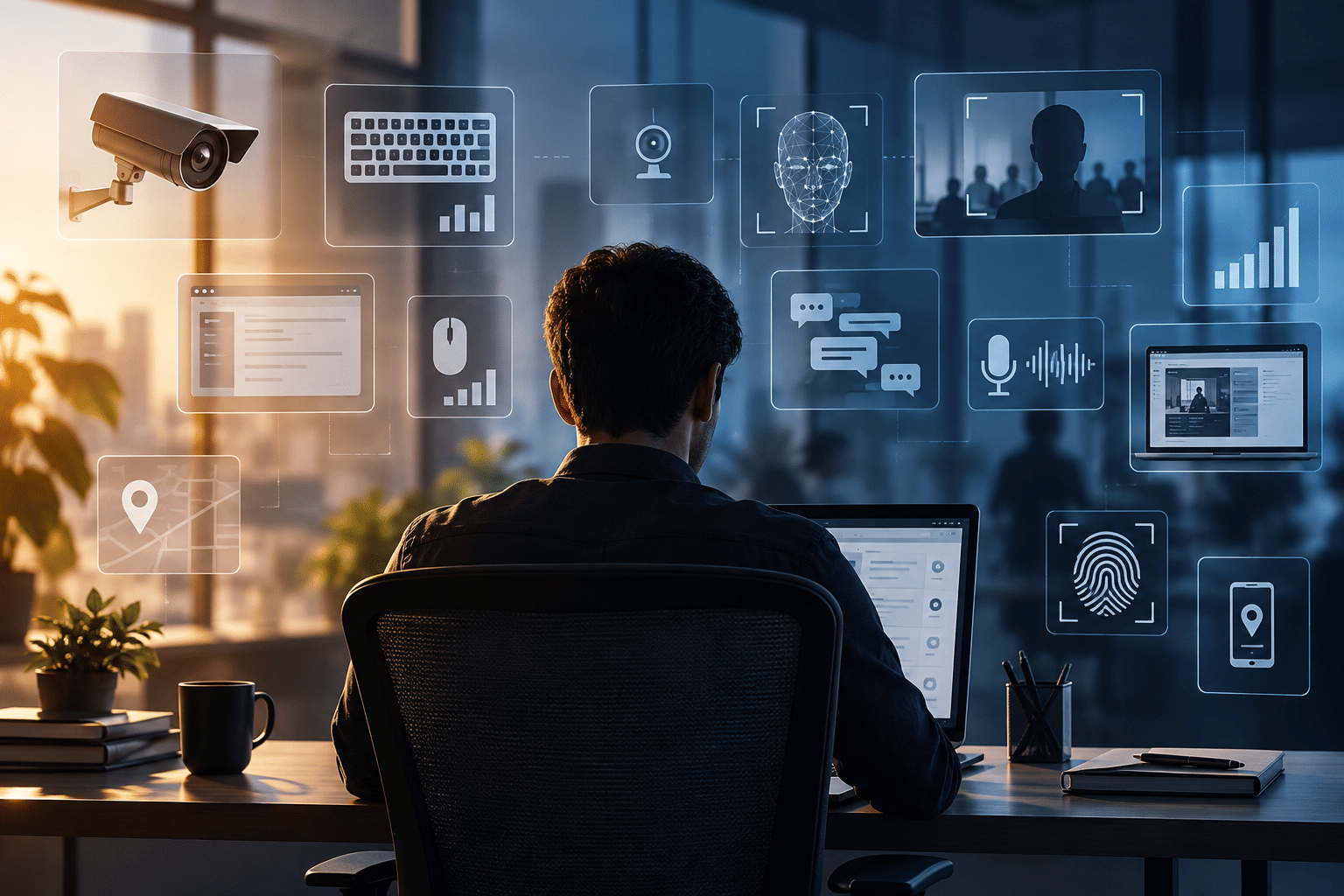
Here are 10 workplace surveillance technologies employers are using in 2026 and why they matter.
1. Keystroke logging and typing analytics
Keystroke monitoring tools record keyboard activity and measure how actively employees are working on company systems.
These systems can:
- Track typing speed
- Measure active versus inactive periods
- Record keyboard inputs
- Generate productivity scores
The technology became increasingly common during the shift to remote work, particularly among organisations seeking visibility into work patterns outside traditional office environments.
2. Mouse movement monitoring
Many employee monitoring platforms track mouse activity alongside keyboard usage.
The technology can measure:
- Cursor movement
- Click frequency
- Idle periods
- Activity levels throughout the workday
Supporters view it as a simple indicator of engagement. Critics point out that meaningful work often happens away from a keyboard or mouse, particularly in strategic, analytical and creative roles.
3. Automated screenshot capture
Screenshot monitoring remains one of the most widely used surveillance mechanisms in remote work environments.
The technology periodically captures images of an employee's screen throughout the day. Some systems take screenshots at fixed intervals while others use random capture schedules.
Employers often use screenshot data to:
- Verify work activity
- Support compliance audits
- Monitor outsourced teams
- Review operational workflows
The practice continues to generate debate because screenshots can inadvertently capture personal information and sensitive employee data.
4. Continuous screen recording
A more intensive version of screenshot monitoring involves full session recording.
Instead of periodic images, these systems create a continuous record of desktop activity.
Organisations typically deploy screen recording in environments involving:
- Financial services
- Customer support operations
- Regulatory compliance requirements
- Sensitive data handling
Privacy experts have repeatedly highlighted the importance of clear governance policies when deploying such systems.
5. Application and website tracking
Application monitoring tools record which software, websites and digital platforms employees use during working hours.
Employers use these systems to understand:
- Software utilisation
- Time spent on specific applications
- Workflow bottlenecks
- Technology adoption rates
Workplace analysts have noted that usage metrics may reveal activity patterns but do not necessarily reflect performance, quality or business impact.
6. Webcam and attention-tracking systems
Advances in computer vision have enabled monitoring technologies capable of analysing webcam feeds.
These systems can:
- Verify physical presence
- Detect screen engagement
- Monitor eye movements
- Identify periods of absence
Few workplace technologies illustrate the tension between productivity oversight and employee privacy as clearly as AI-powered attention tracking.
The use of webcam surveillance remains particularly controversial in hybrid and remote work environments.
7. AI-powered message analysis
Natural language processing technologies are increasingly being applied to workplace communications.
These systems can analyse:
- Emails
- Internal chat messages
- Collaboration platform conversations
- Shared workplace content
Employers often use message analysis to identify compliance risks, security threats, data leakage concerns and inappropriate workplace conduct.
The US Government Accountability Office, in its review of public comments submitted to the White House Office of Science and Technology Policy, identified communication monitoring as one of the most frequently discussed forms of digital worker surveillance.
8. Voice analytics and sentiment monitoring
Customer service operations have become a major testing ground for AI-driven workplace surveillance.
Voice analytics tools analyse:
- Tone of voice
- Speech patterns
- Conversation pace
- Call quality indicators
Many organisations use the technology to improve customer service outcomes and support coaching initiatives.
However, questions remain around the reliability of systems attempting to infer emotions, stress levels or employee sentiment solely from voice characteristics.
9. GPS and geolocation tracking
Location monitoring has become standard practice across logistics, transportation, field services and delivery operations.
GPS-enabled systems can track:
- Employee location
- Travel routes
- Driving behaviour
- Vehicle utilisation
- Route efficiency
According to the Government Accountability Office's review of workplace surveillance submissions, geolocation technologies are among the most frequently cited digital monitoring tools used by employers.
10. Biometric surveillance and facial recognition
Biometric monitoring represents one of the fastest-growing segments of workplace surveillance.
Common technologies include:
- Facial recognition
- Fingerprint authentication
- Iris scanning
- Biometric time clocks
Employers use these systems for access control, attendance management, workforce verification and security purposes.
The use of biometric technologies has also attracted increasing regulatory scrutiny. Several US states, including Illinois, Texas and Washington, have enacted biometric privacy laws governing how organisations collect, store and use biometric information.
The Colorado Privacy Act, for example, requires employer consent practices and limits specific uses of biometric surveillance.
Why workplace surveillance remains controversial
The debate around workplace monitoring extends beyond technology.
In 2023, the White House Office of Science and Technology Policy sought public input on digital worker surveillance. The Government Accountability Office subsequently reviewed 217 public comments submitted by workers, unions, researchers, advocacy groups, technology developers and trade associations.
The review found sharply differing perspectives:
- Some stakeholders said surveillance improves productivity, security and workplace safety.
- Others reported increased stress, anxiety and lower morale.
- Several respondents raised concerns about privacy and data collection practices.
- Others highlighted potential risks of discrimination and bias, particularly for workers with disabilities.
The Government Accountability Office also found that cameras, computer monitoring software, geolocation technologies and wearable devices were among the surveillance tools most frequently referenced by respondents.
The next chapter in employee monitoring
Workplace surveillance is becoming more intelligent, automated and predictive. AI is enabling organisations to move beyond simple activity tracking towards behavioural analysis, risk detection and workforce insights.
For employers, the challenge is no longer whether monitoring technology exists. It is how to deploy these tools responsibly. As regulators pay closer attention and employees become more aware of how workplace data is collected, transparency and governance are likely to become as important as the technologies themselves.
The organisations that succeed may not be those that monitor the most. They may be those that build the strongest balance between visibility, accountability and trust.