








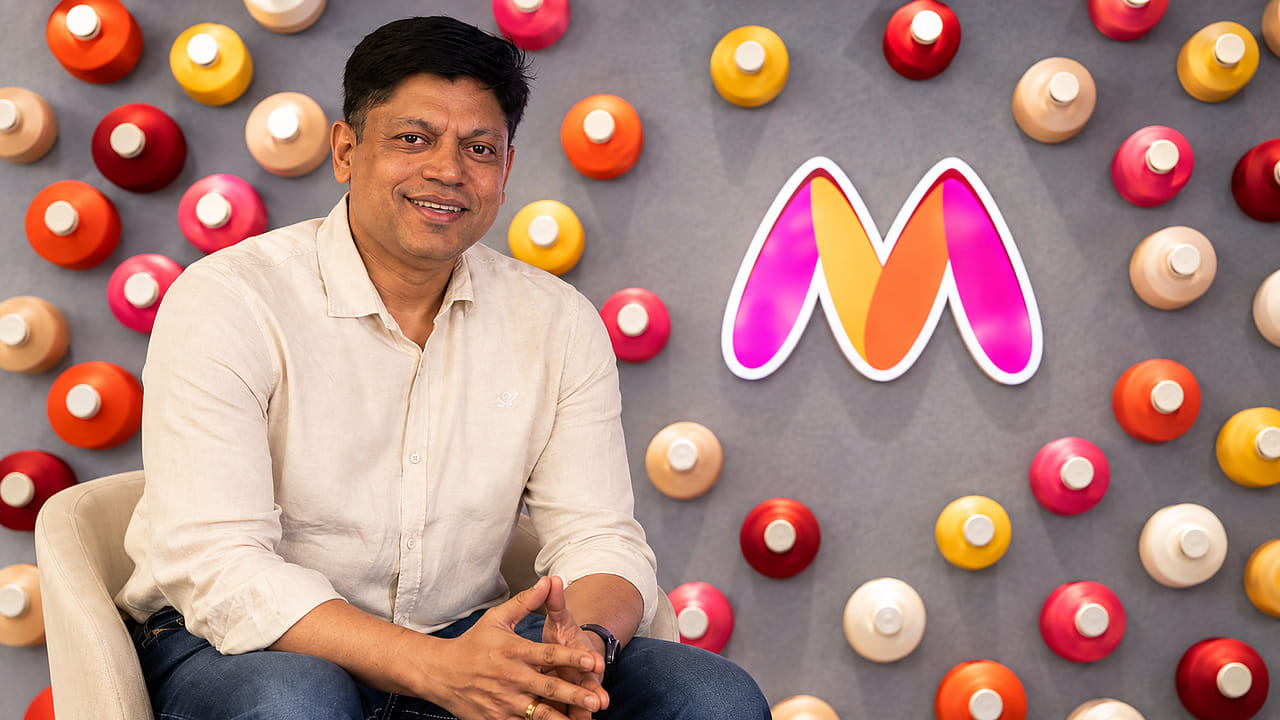
AI may be accelerating work, but it is not reducing the value of human expertise. If anything, it is making context, judgement and the ability to challenge machine-generated answers more important, according to Govindraj M K, Chief Human Resources Officer at Myntra.
The conversation inside organisations has also moved forward. Last year was dominated by what AI might do; the focus is now shifting towards actual use, investment decisions and measurable value.
“AI is a very effective tool. If you don’t have context, you will not know how to use it well,” Govindraj told People Matters in an interview.
For employees, this means knowing how to use AI will not be enough. Functional depth, critical thinking, curiosity and empathy will increasingly differentiate those who can turn its outputs into better decisions.
“Your actual knowledge, experience and context about a particular area, your functional expertise and skills, will become very important,” he said. “Your core skills are going to become even more important.”
Expertise will matter more, not less
AI can already reduce the time spent collating information, conducting analysis and preparing reports. But faster output does not automatically translate into a better outcome.
Employees must still define the right problem, understand the business context and assess whether an AI-generated response is reliable. Govindraj sees the ability to recognise hallucinations and validate outputs becoming an essential workplace capability.
Empathy will be equally important, particularly when employees use technology to solve problems for customers or colleagues.
“You need to put yourself in the shoes of the user you are thinking about,” he said.
The workforce advantage, therefore, will not come from access to AI tools alone. It will come from combining those tools with deep expertise and the ability to move knowledge across different contexts.
Careers are moving beyond the vertical ladder
As roles evolve faster, employees will need to build capabilities for opportunities that may not sit directly above their current positions.
This is pushing companies to reconsider career architecture. At Myntra, roles have been mapped to technical, functional and leadership skills, while career paths have been divided into individual-contributor and people-management tracks.
The distinction is important because advancement has traditionally pushed strong specialists towards team management, even when their strengths or interests lie elsewhere.
“If you are an expert, it is not necessary that you want to lead people. You can continue to grow in your expertise and continue to grow in your career path,” Govindraj said.
Myntra is also connecting skill assessments with learning, mentorship, internal projects and job opportunities through Skillverse. The broader objective is to give employees clearer visibility into the capabilities they need for their current roles and the experiences required to move into future ones.
An employee could, for example, take up a project in another function, build relevant experience and later apply for a role in that area. This allows career growth to move laterally or across functions rather than depending entirely on promotion within the same team.
The real barrier is manager behaviour
Creating transparent career opportunities is only one part of internal mobility. The harder challenge is persuading managers to release their strongest performers.
“It is a big mindset shift for managers because if you have built a team over the years and there are very smart people in your team, it is tough to let them go to another team,” Govindraj said.
Myntra is asking its managers to become “talent magnets”, leaders known for developing people and enabling them to take up opportunities elsewhere in the organisation.
The argument is that managers who help people grow will eventually attract talent from other teams. But this exchange works only when mobility is supported consistently across the organisation.
Data can provide accountability. Myntra can identify employees who have remained under the same manager or within the same team for three or four years without movement and initiate conversations where necessary.
“To get good talent, you need a good exchange of talent across the organisation,” Govindraj said.
Internal mobility must deliver more than activity
Platform adoption, completed skill assessments, learning hours and mentoring sessions can show whether employees are participating. They do not, by themselves, prove that mobility is working.
The more consequential measures are whether a higher proportion of roles is filled internally, whether employees are building proficiency, and whether people stay because they can access meaningful growth without leaving the company.
Myntra will also examine whether its workforce is becoming more versatile. Employees who have worked across functions retain institutional knowledge while gaining the context needed to collaborate more effectively.
“The more a person knows about a few other functions because they have worked in those areas, the better the solutioning will become,” Govindraj said.
The expected business outcomes are faster decisions, stronger collaboration and greater innovation, not simply increased learning-platform usage.
HR must prepare for more fluid organisations
The shift towards skills could eventually reshape how organisations structure work. Govindraj expects conventional pyramids and matrices to give way to more fluid teams or pods assembled around specific missions.
That change will create fresh questions around accountability, performance and recognition. Employees may contribute across multiple teams, making it harder to assess success through traditional reporting relationships.
HR will consequently need to move beyond producing dashboards and towards interpreting data, anticipating workforce needs and advising managers.
“The role of HR will become much more about being an adviser and a coach,” Govindraj said. “It will move towards insights and prediction.”
Technology will support that shift, but critical judgement will remain central. The larger challenge for HR will be designing systems that enable people to move, contribute and grow as roles and organisational boundaries become less fixed.