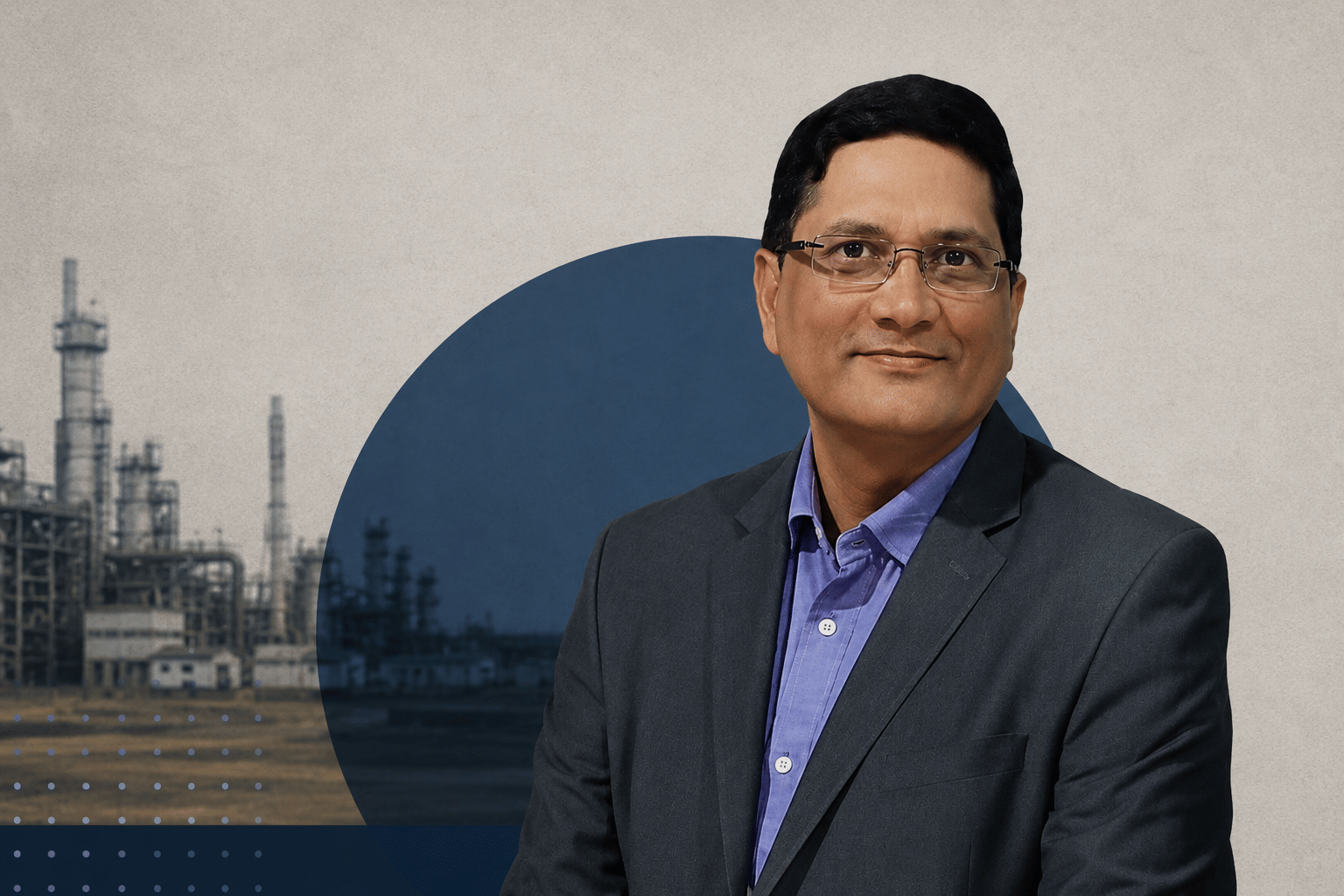
Manufacturing's gender diversity challenge is often framed as a recruitment issue. N. Srinivas, CHRO, BirlaNu, believes the real barriers emerge much earlier and continue long after hiring.
In this conversation with People Matters, Srinivas outlines why limited talent pipelines, legacy plant design, leadership mindsets and weak retention ecosystems continue to hold back women's participation.
He also shares how BirlaNu is approaching inclusion across recruitment, infrastructure, managerial capability and career development, while arguing that meaningful industry-wide progress will require structural change rather than isolated diversity initiatives.
The problem starts before hiring
Many organisations continue to focus on increasing women's hiring numbers. Srinivas believes this addresses only one part of a much larger challenge.
"The barriers exist at several levels and they compound each other," he says.
According to him, the qualified pipeline of women seeking engineering and shop-floor roles is genuinely limited, meaning the challenge begins well before organisations make recruitment decisions.
He identifies several interconnected issues.
Key barriers include:
- A limited pipeline of women pursuing engineering and manufacturing careers.
- Plant infrastructure designed around assumptions that have remained unchanged for years.
- Mobility constraints, particularly in remote manufacturing locations.
- Leadership mindsets and unconscious biases influencing who gets considered for technical roles.
- A lack of visible role models, making manufacturing careers appear less attainable for women.
"The absence of visible role models reinforces this. When women cannot see others like them in technical or senior manufacturing roles, the signal about what is possible is discouraging well before any formal barrier is encountered."
At BirlaNu, he says, leadership teams at both plant and corporate levels work together "to ensure barriers are anticipated and addressed proactively."
Hiring is measurable. Retention is systemic.
Srinivas makes a clear distinction between attracting women and ensuring they remain and grow within organisations.
"Hiring and retention are different problems, and most organisations have invested more seriously in one than the other."
He explains recruitment can be driven through focused targets. Retention, however, depends on everything employees experience after joining.
"The first few months after joining are where the trajectory is typically set." He believes many manufacturing organisations underestimate the influence of direct managers.
"A manager who lacks the awareness to create an inclusive environment, without any deliberate intent, can produce an experience where the person feels disrespected, stuck, or out of place." For sustained participation, he advocates moving beyond recruitment targets.
"Sustainable participation requires moving from a recruitment orientation to an ecosystem approach that combines inclusive culture, equitable opportunity, and supportive leadership."
At BirlaNu, he says candidates are largely hired from areas surrounding plant locations to encourage long-term employment, while team leaders regularly participate in structured diversity and inclusion programmes.
Infrastructure matters because everyday experiences matter
While workplace policies receive significant attention, Srinivas believes practical working conditions influence inclusion far more.
"The changes that make the most practical difference are those that address the daily working experience rather than those that are most visible in policy documents."
He highlights three foundational requirements:
- Adequate sanitation facilities
- Safe commuting arrangements
- Shift structures that reflect practical realities outside work
Without these, he says, efforts to attract and retain women have limited impact. He identifies shift flexibility as particularly important.
"Rigid structures that do not account for responsibilities outside of work create friction that accumulates over time."
Where organisations have introduced greater flexibility while maintaining production continuity, he says retention outcomes have improved.
"The constraint in most cases is not the nature of the work. It is whether the environment has been designed with the workforce in mind rather than retrofitted as an afterthought." BirlaNu, he adds, designs its plants and offices with these considerations in mind.
Culture is harder to change than infrastructure
Physical facilities can be upgraded. Leadership behaviour is considerably more complex.
For Srinivas, organisational culture ultimately determines whether structural interventions succeed.
"Culture and mindset are where the most consequential enabling or restricting happens, and where change is also slowest because it is harder to measure and mandate."
He believes inclusion should be treated as a business priority rather than simply a values statement.
"Leadership commitment to inclusion must be framed as a business priority." He also places significant emphasis on psychological safety.
"Women who do not feel safe raising concerns or asking for what they need will not stay regardless of what policy documents say."
Creating such an environment, he says, is a managerial responsibility requiring deliberate capability building.
He also differentiates sponsorship from mentorship.
"Managers who advocate for their people, put them forward for opportunities and use their own positioning to advance others create a measurably different experience from those who provide guidance without advocacy."
Within BirlaNu, Srinivas says the company's Diversity, Equity & Inclusion framework focuses on four pillars:
- Attracting women talent
- Creating exemplars
- Communicating and celebrating progress
- Fostering a culture of inclusion and equity
Each pillar is led by a designated leader across the organisation.
He also points to internal examples including an entire production line operated by women and departments such as Quality and Secretarial comprising all-women teams.
Women's expectations have changed
Srinivas believes today's workforce is more intentional about career choices than previous generations.
"Women entering manufacturing today are more deliberate about what they are looking for and more willing to leave environments that do not deliver it."
Career growth has become a central expectation.
"There is a clear demand for transparency about development pathways and evidence that advancement decisions are made equitably."
Safety expectations have also expanded.
"Safety expectations have expanded beyond physical safety to include psychological safety."
Flexibility, meanwhile, has become increasingly important.
"The expectation is less about working fewer hours and more about having some agency over how work fits alongside the rest of life."
According to Srinivas, manufacturing has responded more slowly than several other sectors, affecting its ability to attract qualified talent. He notes that pharmaceuticals and light engineering have generally been more successful than other manufacturing segments in increasing women's participation on shop floors.
Remote plants require broader solutions
Operating in remote manufacturing locations presents challenges extending beyond organisational policy.
"Remote plant locations present challenges that cannot be addressed through policy alone."
Mobility remains one of the biggest constraints.
"Where public transport is inadequate and where safety concerns make independent commuting difficult, the organisation has to take direct responsibility for travel arrangements rather than leaving individuals to manage."
Community attitudes also influence workforce participation.
"In many areas where manufacturing plants operate, there are social norms around women working in industrial roles, particularly on shifts, that shape family and community attitudes."
Srinivas says organisations making progress have engaged communities over extended periods instead of expecting immediate acceptance.
At BirlaNu, he says safety is non-negotiable, while work allocation is scheduled between sunrise and sunset to support safe working conditions.
Manufacturing jobs are changing
Automation has altered the nature of many shop-floor roles, prompting organisations to reconsider long-held assumptions.
"Role definitions in manufacturing have historically been built around assumptions about who is doing the job."
He believes automation has significantly reduced many physical demands traditionally associated with manufacturing.
"The traditional profile of who can perform them is less relevant than it once was." Srinivas cites BirlaNu's Golan plant model as an example.
"By designing a production line with the infrastructure, shift structure, and managerial support required for women to manage it end to end, we found that the constraint was never capability. It was design intent."
He says broader industry changes now include more deliberate role design, greater shift flexibility and separating physical requirements from actual role requirements.
Inclusion requires coordinated interventions
Asked about programmes improving hiring and retention, Srinivas avoids pointing to a single initiative. "No single intervention moves the needle."
Instead, he describes a connected system covering recruitment, onboarding, development and culture.
Among BirlaNu's initiatives are:
- Gender-intentional role definitions for specific positions.
- Return-to-work programmes for women re-entering after career breaks.
- Flexibility provisions during different life stages.
- Managerial capability programmes focused on inclusive leadership.
"Our collective effort across HR, managers, and senior leadership is what makes the difference between a programme on paper and a measurable shift in outcomes."
The industry's next challenge lies beyond recruitment
Looking ahead, Srinivas believes manufacturing's next phase of progress depends on solving structural issues before hiring begins.
"The shifts that will matter most are those that address the problem before it reaches the recruitment stage."
He calls for stronger engagement with educational institutions, communities surrounding manufacturing facilities and greater visibility of women already working in the sector.
Within organisations, he believes attention must shift from hiring metrics to long-term career progression.
"The organisations that will be ahead in five years are those investing now in managerial capability, sponsorship culture, and infrastructure adjustments that make plant environments workable for women across different career stages."
He also sees an opportunity for industry-wide collaboration.
"At the industry level, collaboration on shared infrastructure challenges, particularly in remote locations, would accelerate progress in ways that no single employer can achieve working independently."
As manufacturing seeks to widen its talent pool, Srinivas' assessment is clear. Increasing women's participation will depend less on ambitious recruitment campaigns and more on redesigning systems, workplaces and leadership practices that determine whether women choose to join and stay.