







Talent Management
The power sector needs a skills upgrade, not just a hiring spree: CPO, POWERCON Group
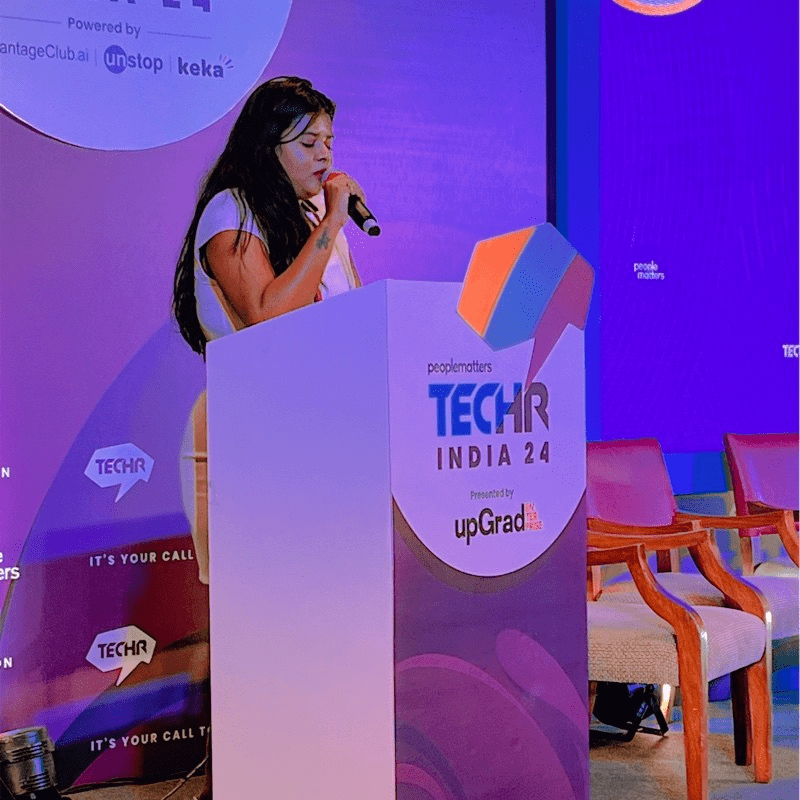


As renewable integration and grid modernisation reshape India's power infrastructure, POWERCON Group Chief People Officer Deepika Chavan discusses the growing demand for hands-on engineering expertise, multidisciplinary teams and industry-aligned learning. She explains why closing the gap between academic knowledge and project readiness requires sustained investment in skills development and career pathways.
India’s energy transition is changing the skills required across power infrastructure, from transmission and substations to renewable integration and digital grid operations. As projects become more technology-intensive, the challenge for employers is shifting beyond recruitment to building practical capabilities within the existing and incoming workforce.
For Ms. Deepika Chavan, Chief People Officer, POWERCON Group, the central issue is the gap between engineering education and the hands-on expertise required to execute modern power infrastructure projects. She points to growing demand for professionals who can combine conventional engineering knowledge with digital skills, cross-functional collaboration and experience of emerging grid technologies.
Chavan brings close to two decades of experience across IT, renewable energy, FMCG and EPC sectors. Her areas of expertise include talent strategy, organisational design, leadership development, performance management and learning and development.
The changing skill requirements of power infrastructure
The expansion of renewable energy is reshaping workforce requirements across the power sector. According to Chavan, EPC hiring was traditionally centred on civil and electrical engineers with experience in conventional grid infrastructure. Project requirements have since widened to include professionals capable of working across multiple technologies and stages of execution.
“The shift towards renewables is moving faster than many anticipated, and it is fundamentally reshaping workforce requirements across the power infrastructure sector,” she says.
She identifies transmission, substations, renewable grid integration and Battery Energy Storage Systems (BESS) as areas increasingly requiring integrated expertise. Demand is also rising for grid integration specialists and professionals who can connect EPC execution with digital monitoring and analytics.
For organisations, the priority is not to replace traditional engineering knowledge but to build additional capabilities on established technical foundations.
“From a people perspective, the focus is no longer on replacing traditional engineering expertise but on continuously building new capabilities on top of strong technical foundations,” Chavan says.
Why engineering graduates are not always project-ready
The availability of engineering graduates does not necessarily translate into the availability of professionals equipped to work on modern grid technologies. Chavan identifies hands-on experience as one of the sector’s most significant talent gaps.
“The biggest challenge today is not the availability of engineering graduates but the shortage of professionals with hands-on experience in modern grid technologies,” she says.
Digital substations, SCADA integration, protection systems and grid-scale power electronics require practical exposure that many engineers have not acquired during their education. This creates a gap between academic understanding and the demands of live project environments.
Chavan believes organisations must take greater responsibility for developing these capabilities internally.
“The gap between academic knowledge and field readiness is still significant, making structured onboarding, experiential learning and continuous technical upskilling critical,” she says.
This places greater importance on practical training and structured learning after recruitment, rather than relying exclusively on the external talent market to supply project-ready professionals.
Workforce planning moves beyond functional silos
The changing nature of infrastructure projects is also influencing how organisations structure teams. Electrical, civil, mechanical and digital engineering professionals increasingly need to collaborate from the early stages of project execution.
Chavan says traditional function-based structures are giving way to multidisciplinary teams, requiring organisations to reconsider both hiring priorities and employee development.
“Beyond technical expertise, professionals increasingly need the ability to collaborate across disciplines, understand adjacent functions and adapt to rapidly evolving technologies,” she says.
Cross-functional learning, project rotations and collaborative problem-solving are becoming important elements of workforce planning. These approaches can help employees understand how different technical functions contribute to a project's overall execution.
The shift also changes the profile of talent organisations need. Technical specialisation remains important, but professionals must increasingly be able to work beyond the boundaries of their immediate disciplines.
Building a bridge between classrooms and project sites
Engineering institutions continue to provide graduates with technical fundamentals, but Chavan believes traditional curricula have not kept pace with changes in the power sector.
Many graduates enter the workforce with limited exposure to digital substations, SCADA systems and other modern grid technologies. Industry-academia partnerships, therefore, have a role in connecting academic learning with practical requirements.
At POWERCON Group, its education arm, Centre Of Renewable Energy (CORE) Academy, has partnered with YCMOU to offer industry-relevant learning programmes combining technical education with project-oriented exposure.
Chavan says: “At POWERCON Group, through its education arm – Centre Of Renewable Energy (CORE) Academy, we have partnered with YCMOU, the fifth-largest open university in the world, to provide industry-relevant learning programmes that combine technical education with practical, project-oriented exposure.”
She sees such partnerships as a way to address the gap between classroom learning and workplace readiness, while developing a more relevant talent pipeline for the sector.
Learning pathways must reflect emerging roles
As infrastructure projects become larger and more technology-intensive, generic training programmes may not adequately prepare employees for specialised responsibilities. Chavan says organisations need to align learning pathways with evolving project requirements and career progression.
“At POWERCON, we've moved beyond generic training programmes and adopted role-based learning pathways aligned to evolving project requirements,” she says.
The approach includes simulation-based learning, cross-functional project exposure and on-site assignments. These methods are intended to give engineers and frontline professionals practical experience with emerging technologies.
Career progression is another part of the equation. Chavan says clearly defined pathways can help employees understand how continuous learning can support movement into specialised and leadership roles.
The emphasis is on connecting skill development with opportunities to take on more complex responsibilities, rather than treating training as a standalone organisational activity.
Retention depends on specialised capabilities and career growth
Competition for experienced engineering and project talent spans power, renewable energy and infrastructure. Chavan believes organisations need to distinguish themselves through application-specific capability building.
“Application specific capacity building is the key,” she says.
She points to a gap between theoretical engineering knowledge and the depth of expertise required to handle specialised industry applications. Organisations that develop relevant curricula can help graduates acquire the skills needed for the power industry.
“The said add-on professional qualification that carries an accreditation with NSQF-framework and relevance would further grant recognition of so developed high quality professionals.”
Alongside technical development, she identifies career progression as an important retention factor. Clear career paths, technical certifications, leadership development, cross-functional exposure and continuous learning all contribute to employee growth.
She also highlights the importance of recognising technical excellence and connecting individual contributions with the organisation’s larger purpose to strengthen employees’ sense of belonging.
Preparing for a more digital and connected grid
Looking ahead, Chavan expects the power infrastructure workforce to combine technical depth with digital fluency, adaptability and the ability to collaborate across disciplines.
Automation, advanced analytics and intelligent grid systems are among the technologies she identifies as shaping future skill requirements. Engineers will need to keep developing their capabilities as these technologies become more widely integrated into power infrastructure.
For employers, the preparation begins with sustained investment in upskilling, industry-academia partnerships and early leadership development.
“India's energy transition will be driven not only by technology but also by the quality of talent supporting it,” Chavan says.
Her assessment places workforce development alongside infrastructure and technology as a consideration for the sector’s long-term requirements. The ability to develop talent continuously, rather than depend solely on external hiring, will remain central to preparing for India's evolving power grid.
Author
Loading...