







Talent Management
Future of semiconductor hiring will be driven by skills, not experience: HCLTech's Global TA Head
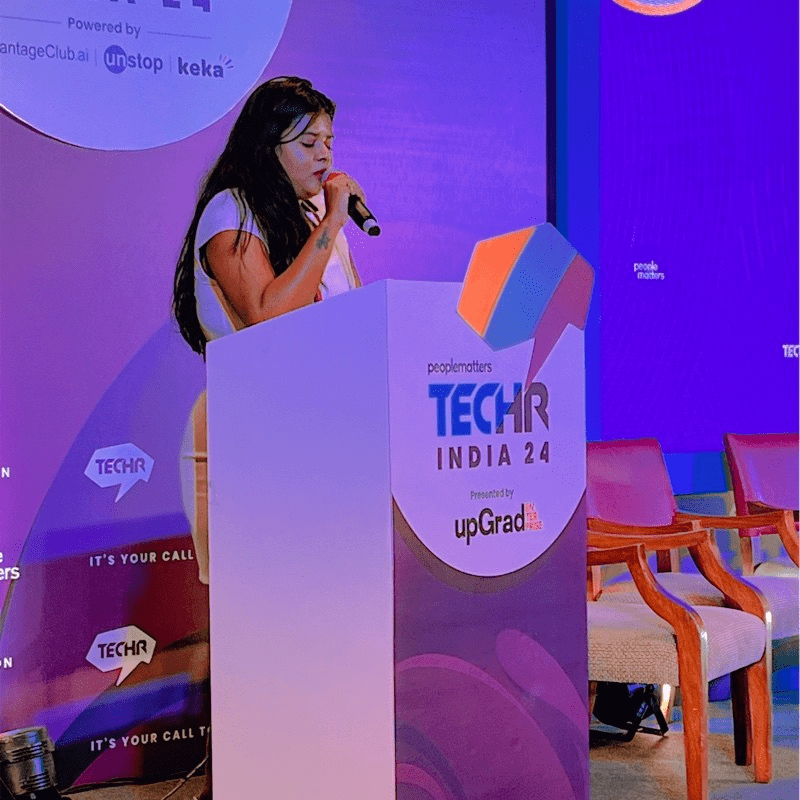


As AI reshapes semiconductor engineering, Prince Jayakumar, Global Head of Talent Acquisition at HCLTech, explains why companies must prioritise technical judgement, cross-domain expertise and practical exposure over years of experience.
India's semiconductor ambitions are creating new demands on engineering talent, shifting the industry's focus from hiring specialised professionals to developing engineers with broader technical capabilities.
As artificial intelligence and automation reshape engineering workflows, companies increasingly need professionals who can make complex technical decisions, understand interconnected systems and take ownership of product development.
In an interview with People Matters, Prince Jayakumar, Global Head of Talent Acquisition at HCLTech, discusses the changing semiconductor talent landscape, India's engineering skills gap and the capabilities employers will increasingly prioritise. He believes the industry's biggest challenge is no longer simply finding engineering capacity, but identifying professionals who can combine technical depth with architectural thinking, problem-solving and end-to-end ownership.
Semiconductor hiring is moving beyond specialised execution
The growing adoption of chips across smartphones, vehicles, connected devices and AI-powered systems is increasing the complexity of semiconductor engineering. Consequently, employers are looking beyond professionals who can execute individual design tasks.
Jayakumar identifies SoC architects, technical leaders, methodology experts and engineers capable of balancing power, performance, area and thermal requirements among the most difficult profiles to hire.
"The real demand is for experienced talent who can think at the product and system level," he says.
He also points to the growing influence of AI and automation on engineering responsibilities. As repetitive tasks become increasingly automated, professionals with capabilities in architecture, product definition and complex problem-solving are becoming more important.
"The biggest talent gap today is not in engineering capacity, but in experienced professionals who can architect products, make critical design decisions, and lead programs from concept to delivery," Jayakumar says.
The skills gap extends across the semiconductor value chain
The talent shortage is not restricted to chip design, verification, physical design or firmware engineering. Instead, Jayakumar sees an evolving capability gap across the semiconductor value chain.
As AI and automation take over repetitive and process-driven activities, engineers are increasingly expected to demonstrate judgement, problem-solving and technical decision-making.
"Organisations need talent that can define specifications, evaluate trade-offs, understand system-level implications, and ensure solutions meet performance, power, memory, and thermal requirements," he says.
He believes the shift is particularly relevant for India, where much of the engineering talent pool has traditionally focused on structured execution roles.
The next phase requires professionals who can operate in ambiguous environments, think architecturally and assume responsibility for broader product outcomes.
"The gap is not really about design versus verification versus firmware. It's about finding engineers who can move from execution to judgment, from following a flow to making the decisions that define the flow," Jayakumar explains.
Engineering graduates need practical exposure and cross-domain knowledge
India's engineering graduates bring an understanding of semiconductor fundamentals, but translating theoretical knowledge into practical industry capabilities remains a challenge.
Jayakumar identifies two significant gaps in graduate preparedness: hands-on practical exposure and cross-domain understanding.
He observes that engineering education has traditionally been theory-driven, leaving many graduates without sufficient familiarity with real-world chip design, industry tools and the challenges encountered during development.
"Semiconductor engineering looks very different in practice, where specifications evolve, trade-offs need to be made, and engineers must understand how design decisions ultimately impact the product," he says.
The second gap concerns the interconnected nature of modern chip development. Engineers increasingly need to understand how decisions within their specialisations influence other stages of the design process.
For instance, RTL engineers need to understand the physical design implications of their decisions, while physical design engineers benefit from understanding design intent. Verification engineers, meanwhile, require a strong grasp of product architecture and behaviour.
Jayakumar believes AI integration makes this broader perspective even more important.
"The opportunity is to move graduates from understanding how semiconductor design works in theory to applying it in practice, while developing engineers who can think beyond their individual domain and understand the chip as a complete system," he says.
Hiring strategies need to prioritise capability over experience
Competition for experienced semiconductor professionals is intensifying as companies seek talent with increasingly specialised and multidisciplinary capabilities.
However, Jayakumar believes organisations have sometimes contributed to the talent shortage by placing excessive emphasis on years of experience rather than actual expertise.
"While experience matters, it is not always the best indicator of expertise, exposure, or ability to take ownership," he says.
He suggests employers should evaluate whether candidates possess the capabilities required to solve specific engineering problems, rather than relying primarily on their professional tenure.
The same principle applies to retaining experienced professionals. Although compensation remains important, competing exclusively through salary increases can create a continuous cycle without addressing employees' broader expectations.
"Experienced engineers also look for challenging work, opportunities to learn and innovate, meaningful ownership, and a strong work environment," Jayakumar says.
He believes companies must communicate the nature of their technology, engineering challenges, growth opportunities and workplace culture more effectively.
Ultimately, he sees the need for a shift towards capability-driven hiring and retention strategies built around professional value rather than compensation alone.
Industry-academia collaboration will shape India's semiconductor talent pipeline
Building a stronger semiconductor workforce requires closer collaboration between industry, educational institutions and government, according to Jayakumar.
He notes that industry-academia relationships in India have traditionally been transactional, with companies primarily engaging universities for recruitment. Semiconductor talent development, however, requires more sustained participation from employers.
Jayakumar outlines distinct responsibilities for each stakeholder:
Industry: Companies need to engage with universities earlier, introduce real-world engineering problems, collaborate on research and projects, improve curriculum relevance and provide practical exposure.
Academia: Universities must maintain strong theoretical foundations while strengthening industry connections so learning and research translate into real-world applications.
Government: Policymakers should enable ecosystem development through access to infrastructure, tools, technology, learning opportunities and research support.
For India, the larger opportunity extends beyond producing engineers for semiconductor services and execution-oriented roles.
"India has had a strong semiconductor engineering presence for many years. The next step is to move beyond being primarily a service and execution-oriented ecosystem and create greater value through research, innovation, product development, and semiconductor ownership," he says.
He believes this transition requires industry to provide practical opportunities, academia to strengthen research and skills development, and government to create an enabling environment.
The complete engineer will be in greater demand over the next five years
Looking ahead, Jayakumar expects semiconductor employers to increasingly seek professionals who combine deep technical expertise with an understanding of multiple engineering disciplines.
He describes this emerging profile as the "complete engineer", someone capable of understanding architecture, design, verification, physical implementation, software and systems.
Working effectively with AI will also become an important capability. However, he distinguishes between simply using AI tools and possessing the technical judgement needed to assess their outputs.
"Another critical capability will be working effectively with AI. This is not just about using AI tools, but about understanding the engineering problem, evaluating AI-generated outputs, and applying sound technical judgment," he says.
Strong engineering fundamentals will remain essential even as AI capabilities advance. Professionals must still assess whether solutions meet architecture, power, performance and implementation requirements.
Over the next five years, Jayakumar expects the strongest demand for engineers who combine three capabilities: depth in engineering fundamentals, breadth across semiconductor domains and the ability to use AI effectively.
For India's semiconductor talent ecosystem, the challenge will therefore extend beyond increasing the number of qualified engineers. Developing professionals who can connect technical disciplines, make independent decisions and contribute to product innovation will become increasingly important.
Author

Loading...