








The most transformative ideas do not always emerge from technology labs or business schools.
Sometimes, they come from communities that have learnt to innovate with limited resources and limitless determination.
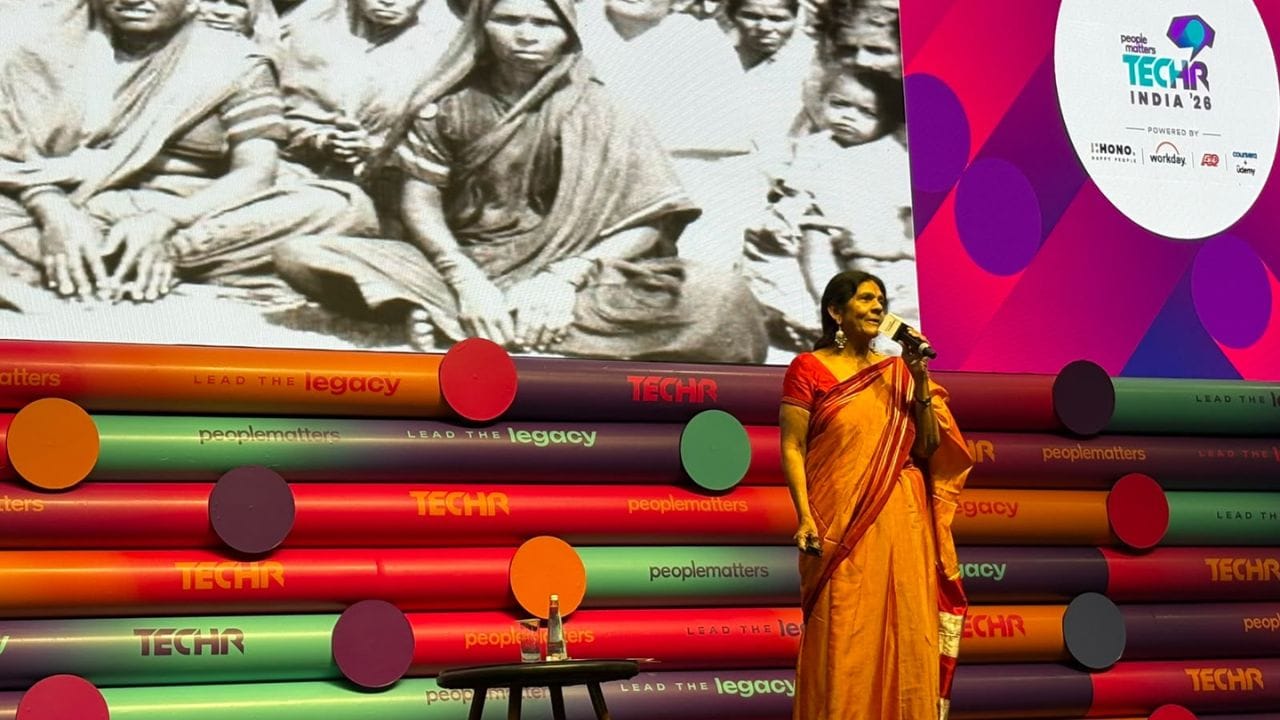
Speaking at TechHR India 2026, Chetna Gala Sinha shared how rural women have shaped her understanding of leadership, inclusion and innovation.
Drawing from over three decades of working with rural women, Sinha shared how some of her most valuable leadership lessons came not from universities or corporations, but from women in villages who challenged conventional thinking about finance, entrepreneurship, technology and innovation.
Redefining access
Sinha recounted how the journey of establishing India's first rural women's bank began after banks refused to open savings accounts for women working as daily wage labourers because they were considered unprofitable customers.
When the Reserve Bank of India initially rejected their banking licence application because many of the women were illiterate, they responded by learning to read and write. They then travelled to Mumbai and confidently demonstrated that while they could not read or write, they could calculate interest faster than many bank officials.
"The greatest leadership lessons I have learnt did not come from universities. They came from women in rural India who refused to accept the limitations placed upon them," she said.
Innovation with dignity
For Sinha, innovation succeeds only when it respects the people it serves.
She described how rural women embraced digital banking, while insisting on biometric authentication because it offered greater security than PIN numbers. The experience challenged common assumptions about technology adoption among underserved communities.
"Never provide poor solutions to poor people. They are smart. Never underestimate them," she said.
The lesson, she noted, extends beyond banking. Organisations that design products, services or workplaces must build with people rather than for them.
Beyond AI
Sinha also challenged organisations to rethink where knowledge comes from.
She spoke about rural women whose deep understanding of indigenous seeds, farming patterns and weather cycles is now helping enrich artificial intelligence models.
Their lived experience, she argued, represents knowledge that modern datasets often fail to capture.
"In the age of Artificial Intelligence, we also need Ancient Intelligence," she said.
She urged leaders to recognise that technology becomes more valuable when it incorporates local wisdom rather than replacing it. Rural communities possess insights that can make AI more inclusive, accurate and relevant.
Creating entrepreneurs
Beyond financial inclusion, Mann Deshi also established a business school that equips rural women with entrepreneurial skills.
Unlike traditional management education, Sinha said, the goal is not to prepare women to look for employment, but to create enterprises that generate jobs within their communities.
"Our women do not become job seekers. They become job creators," she said.
She also highlighted initiatives that have enabled thousands of girls to continue their education through bicycle financing, with many going on to achieve success in sports and higher education, demonstrating how small interventions can unlock long-term transformation.
Leading with courage
Closing the session, Sinha reflected on a conversation she had with rural women before attending the World Economic Forum.
While global leaders would discuss billions of dollars in capital, the women offered her a different perspective.
"For us, capital is not money. Our courage is our capital."
Sinha said this insight continues to define her approach to leadership.
Organisations that invest in people's courage, capability and aspirations create far greater and more sustainable impact than those that invest only in financial capital.
For leaders navigating business transformation, her message was clear. The future will not be built solely through technology or investment.
It will be shaped by organisations that recognise human potential where others see limitation, and create systems that enable people to turn courage into lasting change